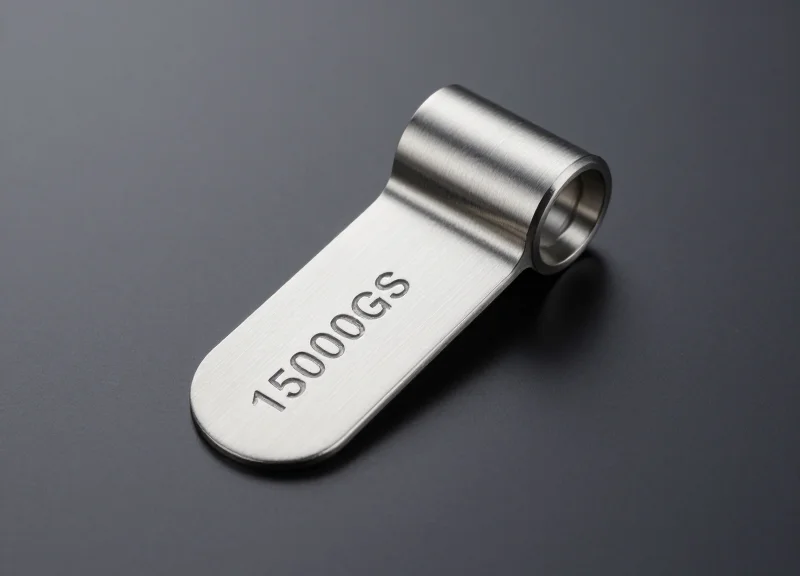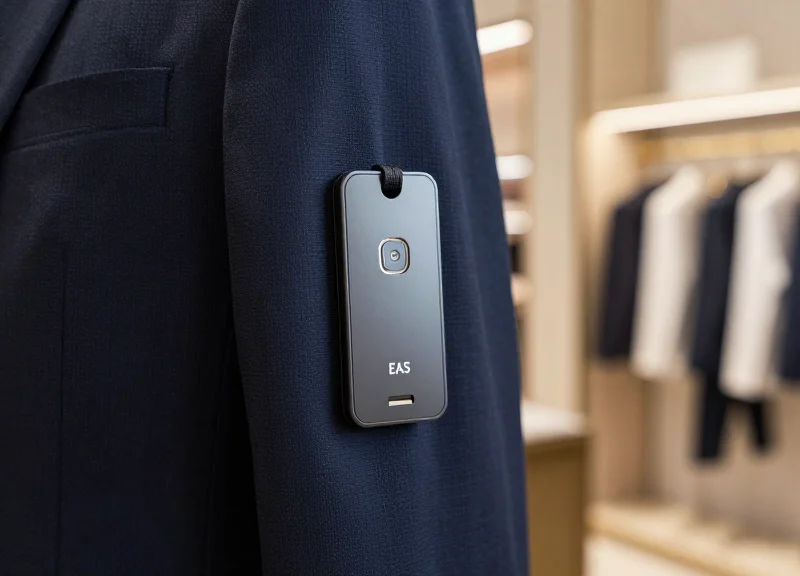
As the retail sector marches toward 2026, the traditional boundaries between loss prevention and inventory management are dissolving. Retailers are facing more sophisticated organized retail crime (ORC) while simultaneously struggling with the demands of unified commerce. The solution lies in a dual-technology approach: Next-Gen Hybrid EAS+RFID hard tags. These devices don't just stop theft; they provide the granular data visibility required to thrive in a digital-first economy. This outlook explores how this unified hardware is shielding the bottom line for global brands.
The Evolution of Retail Loss Prevention: From Analog to Intelligence

The evolution of retail loss prevention (LP) represents a fundamental paradigm shift from analog gatekeeping—relying on simple acoustic-magnetic (AM) or radio-frequency (RF) alarms—to integrated intelligence, where hybrid technologies like EAS+RFID provide real-time visibility into inventory movement. As we look toward 2026, the industry is moving beyond 'reactive' security toward a 'predictive' model. This transition is defined by the transformation of a security tag from a binary 'theft/no-theft' sensor into a sophisticated data node that tracks an item’s entire lifecycle, effectively shielding the future of high-velocity inventory.
| Feature | The Analog Era (Legacy EAS) | The Intelligence Era (Hybrid RFID+EAS) |
|---|---|---|
| Primary Goal | Theft Deterrence & Gatekeeping | Asset Visibility & Profit Protection |
| Data Depth | Binary (Alarm sounds or it doesn't) | Granular (Item SKU, color, size, and time of exit) |
| Response Type | Reactive (Stop & Search) | Proactive (Inventory replenishment & ORC analytics) |
| System Connectivity | Isolated Pedestals | Cloud-Integrated IoT Ecosystems |
In the Silicon Valley context, we view this as the 'digitalization of the physical shelf.' For decades, retailers lived with 'phantom inventory'—items that appeared in the system but were physically missing. Traditional Electronic Article Surveillance (EAS) told you something left the store, but it couldn't tell you what or how many. As organized retail crime (ORC) becomes more sophisticated and omnichannel fulfillment (BOPIS) demands 99% inventory accuracy, the industry has realized that security without data is a liability. The 2026 outlook prioritizes the 'Digital Twin' of the product, where the security tag also acts as the product’s passport.
Why is the 'Beep and Search' model failing in 2026?
Traditional EAS alarms cause 'alarm fatigue' among staff and friction for customers. Without RFID intelligence, an alarm doesn't distinguish between a legitimate tag malfunction and a high-value theft, leading to missed recovery opportunities and poor customer experiences.
What is the 'Invisible Loss' threshold?
This is a unique industry metric representing the gap between recorded sales and physical stock caused by non-theft errors. Intelligence-driven systems identify these gaps by distinguishing between items stolen at the front door and items lost in the back-of-house due to logistical errors.
How does the Intelligence Era impact Organized Retail Crime (ORC)?
Hybrid systems allow retailers to identify 'booster' patterns. For example, if ten units of the same high-value denim SKU pass a pedestal simultaneously, the system flags it as a bulk theft event rather than a standard customer error, triggering an immediate, data-backed law enforcement response.
Expert Tip: To outperform competitors, don't view RFID and EAS as competing technologies. The 2026 winner is the 'Hybrid Shield.' While EAS provides the robust physical layer (the lock), RFID provides the cognitive layer (the brain). Implementing one without the other in a modern retail environment is like having a high-tech security camera that can't record—you see the threat, but you can't learn from it.
Defining the Hybrid Edge: How EAS and RFID Work Together
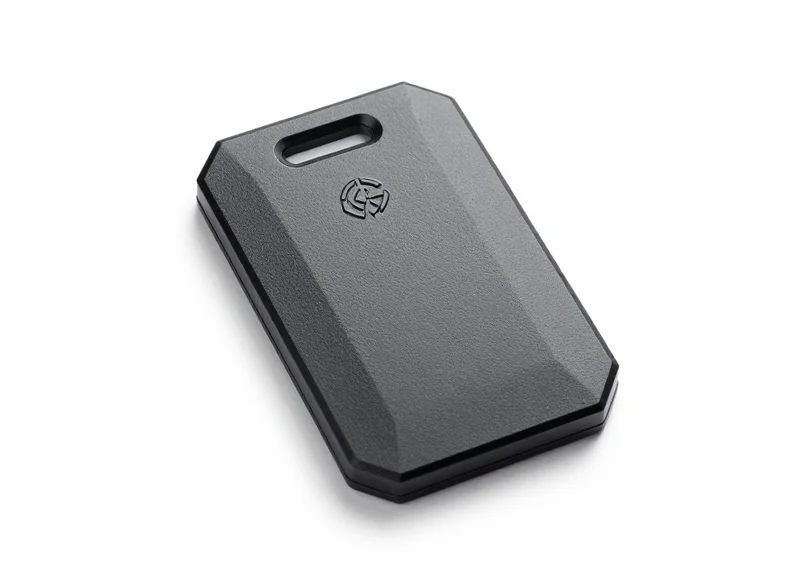
The 'Hybrid Edge' represents the convergence of two traditionally siloed technologies into a single hardware form factor: a dual-frequency hard tag. While Electronic Article Surveillance (EAS) provides the raw muscle of loss prevention by triggering alarms at the exit, Radio Frequency Identification (RFID) provides the granular data needed to identify exactly what is leaving the store. By housing an 8.2MHz (RF) or 58KHz (AM) coil alongside an 860-960MHz (UHF) RFID inlay, retailers achieve a 'see and stop' capability that eliminates the 'blind alarm'—a scenario where a siren sounds but staff have no immediate record of which item was stolen.
| Feature | EAS Component (AM/RF) | RFID Component (UHF) |
|---|---|---|
| Primary Function | Theft Deterrence / Alarming | Item-Level Tracking / Data |
| Frequency Range | 58 KHz (AM) or 8.2 MHz (RF) | 860 - 960 MHz (Global UHF) |
| Read Range | Up to 2 meters (Pedestal gate) | Up to 10+ meters (Handheld/Fixed) |
| Data Capacity | 1-bit (On/Off state) | 96-bit to 128-bit EPC (Unique ID) |
| Operational Focus | Point of Exit (POE) | End-to-End Supply Chain |
Technically, the 'Hybrid Edge' works through a non-interference architectural design. The EAS component is passive and high-voltage, designed to resonate when passing through the magnetic field of a pedestal. The RFID component is a microchip-driven antenna that responds to digital queries from a reader. In 2026, the breakthrough lies in 'Shielded Integration,' where the metal components of the EAS housing no longer interfere with the RFID signal propagation, ensuring 99.9% read rates even in high-density environments like apparel racks or footwear displays.
- Expert Insight: The Zero-Collision Standard: A common misconception is that the proximity of EAS and RFID components creates signal 'noise.' However, next-gen 2026 hybrid tags utilize a 'Zero-Collision' physical layout. By offsetting the RFID inlay from the EAS ferrite core by just 2-3mm and using specialized substrate materials, manufacturers have effectively decoupled the frequencies. This allows the RFID to remain active for inventory counts even when the EAS is 'locked' or active, providing a continuous data stream without electromagnetic interference.
Can hybrid tags be deactivated and reused?
Yes. The EAS element is deactivated or physically removed at the POS, while the RFID element remains functional for returns processing or supply chain reverse logistics. The hard tag housing is typically designed for thousands of cycles.
Does the RFID chip set off the EAS alarm?
No. EAS pedestals and RFID readers operate on vastly different frequencies. An EAS gate is tuned specifically for the resonance of the 58KHz or 8.2MHz coil and ignores the high-frequency 900MHz signals of the RFID chip.
Why not just use RFID for security?
While RFID can trigger alarms, EAS remains the global standard for physical security because of its superior performance near liquids, metals, and human bodies—areas where UHF RFID signals often struggle or 'shadow.'
The 2026 Vision: Why Single-Frequency Systems are Becoming Obsolete

Single-frequency systems are becoming obsolete because they create a 'data vacuum' at the most critical point of the retail journey: the exit. While traditional Electronic Article Surveillance (EAS) effectively triggers an alarm during a theft event, it provides zero visibility into what was taken, how many units remain, or when to trigger a reorder. In a 2026 retail landscape defined by razor-thin margins and the demand for instant omnichannel availability, a security tag that only beeps is no longer an asset—it is a liability that hides inventory inaccuracies.
| Feature | Single-Frequency (Legacy EAS) | Next-Gen Hybrid (EAS+RFID) |
|---|---|---|
| Primary Function | Loss Prevention (Deterrence) | Loss Prevention + Inventory Intelligence |
| Data Granularity | None (Binary: Alarm or No Alarm) | Item-Level (SKU, Color, Size, Origin) |
| Checkout Compatibility | Manual Deactivation Only | Self-Checkout & Frictionless Ready |
| Omnichannel Impact | High 'Ghost Inventory' risk | 99%+ Inventory Accuracy |
| Shrink Analysis | Reactive (Monthly Audits) | Proactive (Real-time theft patterns) |
The shift toward hybrid systems is driven by the 'Cycle Count Paradox.' Retailers using legacy single-frequency tags often spend 3x more on manual labor for inventory counting than the cost of upgrading their hardware. My unique insight for 2026: Retailers will no longer view security as a 'shrinkage expense' but as the primary 'data gateway' for the supply chain. If your security tag isn't updating your ERP system in real-time, you are essentially flying blind in a high-speed market.
Can I still use my existing EAS pedestals with hybrid tags?
Yes. One of the primary advantages of hybrid tags is backward compatibility. They utilize the 8.2MHz or 58KHz frequencies your current pedestals recognize, allowing for a phased infrastructure rollout while immediately gathering RFID data via handhelds.
Why is 2026 considered the 'tipping point' for this technology?
Several global apparel and big-box giants have set 2026 as the deadline for 100% RFID source tagging. Once the supply chain reaches this saturation point, maintaining a separate, non-communicative EAS system becomes operationally inefficient and more expensive than a unified hybrid approach.
How does this solve the 'Ghost Inventory' problem?
Ghost inventory occurs when your system thinks an item is in stock, but it has actually been stolen. Single-frequency tags don't tell the system the item is gone. Hybrid tags automatically reconcile the inventory count the moment the item passes the exit, preventing lost sales from digital out-of-stocks.
As we move toward 2026, the 'Vision' is simple: Security must be invisible to the customer but omnipresent for the operator. Single-frequency systems fail this test by requiring clunky, manual intervention at checkout. Hybrid tags bridge this gap, enabling the 'grab-and-go' experiences that modern consumers demand while providing the ironclad security that stakeholders require.
Combating Organized Retail Crime (ORC) with Advanced Encryption
Next-gen hybrid tags combat Organized Retail Crime (ORC) by integrating cryptographic authentication protocols—specifically AES-128 or higher bit encryption—that prevent professional shoplifters from using 'booster bags' or signal cloning devices to bypass store exits. Unlike legacy systems that rely on a simple 'on/off' frequency, encrypted hybrid EAS+RFID tags require a secure digital handshake between the tag and the sensor, ensuring that only authenticated, legitimate signals can pass through the perimeter without triggering high-intensity alerts.
As we move toward 2026, the 'professional' shoplifter is no longer using simple sleight of hand; they are utilizing tech-enabled strategies. Traditional EAS tags are vulnerable to magnetic detachers and signal shielding (lead-lined bags). Hybrid systems mitigate this by layering the physical security of an EAS hard tag with the unique, encrypted identifier of an RFID chip. Even if a criminal attempts to shield the EAS signal, the RFID sensor can often detect the presence of the tag's digital signature or, conversely, flag the 'dead zone' created by shielding materials as a suspicious event.
| Security Feature | Legacy EAS Systems | Encrypted Hybrid EAS+RFID |
|---|---|---|
| Signal Security | Analog / Static (Unencrypted) | Digital / Encrypted (AES-128) |
| ORC Countermeasures | Minimal (Easily Shielded) | High (Detects Shielding & Clones) |
| Authentication | None (Any 8.2MHz tag triggers) | Item-Specific Secure Handshake |
| Detacher Resistance | Standard Magnetic Only | Encrypted Detacher Verification |
The true innovation lies in the 'Digital Twin' verification process. By 2026, many luxury and high-risk retailers will use tags that perform a rolling-code handshake. This means that even if a criminal records a tag's signal, that signal is useless five seconds later. This level of security essentially renders the 'gray market' resale value of stolen goods near zero, as the tags cannot be removed without leaving a digital forensic trail or destroying the item itself.
- Interrogation: The RFID reader at the exit sends a cryptographically signed query to the tag as the individual approaches the threshold.
- Authenticated Response: The tag's internal logic processor generates a one-time token using its stored encryption key and sends it back to the reader.
- Database Cross-Check: The system instantly checks if the unique item ID (EPC) has been marked as 'paid' in the POS database.
- Actionable Alert: If the handshake fails or the item is unpaid, the system triggers a silent or audible alarm, often integrated with CCTV to capture high-definition footage of the perpetrator.
How do hybrid tags stop professional 'boosters'?
By combining RFID and EAS, these tags detect when signals are being intentionally blocked or jammed. Advanced sensors can identify the 'signal shadow' cast by lead-lined bags, alerting security before the thief even attempts to exit.
Can RFID signals be cloned by tech-savvy thieves?
Standard RFID can be cloned, but next-gen hybrid tags use encrypted data blocks and mutual authentication protocols that make cloning computationally impossible for street-level crime syndicates.
Does encryption affect checkout speed?
No. The encrypted handshake happens in milliseconds, ensuring that legitimate customers experience a seamless 'frictionless' checkout while maintaining high-level security.
Beyond Security: Real-Time Inventory Accuracy and Omni-channel Fulfillment

Next-gen hybrid EAS+RFID hard tags transform a traditional cost-center—loss prevention—into a high-velocity profit driver by bridging the gap between physical security and digital inventory management. While the EAS component deters theft, the RFID element provides item-level visibility that allows retailers to achieve near-perfect 99% inventory accuracy. This precision is the essential foundation for modern omni-channel strategies, enabling retailers to confidently fulfill Buy Online Pick Up In Store (BOPIS) orders and reduce 'out-of-stock' scenarios that cost the industry billions annually.
| Metric | Legacy EAS Systems | Hybrid EAS+RFID Systems |
|---|---|---|
| Inventory Accuracy | 65% - 75% (Average) | 98% - 99.9% (Real-Time) |
| Fulfillment Speed | Manual Search (Slow) | Geographic Location (Instant) |
| Safety Stock Needs | High (Buffer for Errors) | Low (Lean Operations) |
| BOPIS Cancel Rate | 10% - 15% (Items not found) | Less than 1% |
- Automated Cycle Counting: Retailers move from manual semi-annual audits to weekly or daily automated counts via handheld scanners or fixed readers, identifying discrepancies in minutes rather than months.
- Optimized Replenishment: The system triggers automatic reorders when the RFID cloud detects that stock levels have dipped below the safety threshold, ensuring shelves are never empty.
- Pick-to-Light Fulfillment: Store associates use Geiger-counter functionality on RFID handhelds to locate specific items for online orders instantly, even if they are buried under other stock or misplaced in the wrong section.
Expert Insight: The 'Phantom Stock' Paradox. Most retailers lose 2-4% of their annual revenue to 'Phantom Stock'—items that appear in the computer system but aren't on the floor. Hybrid tags solve this by providing a 'last seen' timestamp at the gate or backroom portal. If an item hasn't been scanned near a POS or exit but isn't on the shelf, the system flags it for immediate investigation, preventing lost sales from customers who walk out because they couldn't find what the website promised was in stock.
How does RFID improve the BOPIS experience?
By ensuring that every item shown as 'available' online is actually physically present, RFID eliminates the friction of cancelled orders and disappointed customers, which are the primary drivers of brand switching.
Can hybrid tags help with Buy Online Return In Store (BORIS)?
Yes. Upon return, the hybrid tag is instantly scanned and reintroduced into the digital inventory, making it immediately available for sale again across all channels, maximizing full-price sell-through.
What is the labor impact of switching to hybrid tags?
Retailers typically see a 75% reduction in time spent on inventory counting and a 30% increase in associate productivity by removing the need for manual item searching.
Streamlining the Customer Experience: Frictionless Security

Frictionless security in the 2026 retail landscape refers to the use of hybrid EAS+RFID tags to remove traditional barriers at checkout, allowing customers to scan and pay for multiple items instantly while automatically validating security status. By combining item-level identification (RFID) with loss prevention (EAS), retailers can support high-speed self-checkout and mobile-point-of-sale (mPOS) systems that reduce wait times by up to 40% without compromising store protection. These tags turn the security hardware into a customer service asset by enabling 'grab-and-go' workflows that were previously hindered by manual barcode scanning.
| Checkout Component | Traditional Security Tags | Next-Gen Hybrid EAS+RFID |
|---|---|---|
| Scanning Method | Line-of-sight barcode scanning | Bulk RFID scanning (No line-of-sight required) |
| Checkout Speed | 60-90 seconds (Average 5 items) | Under 10 seconds (Average 5 items) |
| Security Action | Manual removal by staff | Automated digital bit-flip and self-detachment |
| Customer Experience | High friction (Queueing, manual handling) | Low friction (Seamless, mobile-first) |
The true innovation for 2026 is the elimination of 'Visual Friction.' In the past, heavy security tags were a psychological deterrent that also signaled a lack of trust. Modern hybrid hard tags are designed with a sleeker form factor that houses dual-frequency antennas without being obtrusive. This allows for 'Smart Fitting Room' experiences where the tag acts as a digital concierge, triggering nearby screens to show styling tips or available sizes when a customer enters the booth, all while maintaining an invisible 'secure perimeter' around the item.
How do hybrid tags prevent 'False Positives' at the door?
Hybrid tags use 'Bit-Flipping' logic. Once an item is paid for via RFID, its status is updated in the cloud. The EAS pedestals at the exit are synced to this database, meaning the alarm only triggers if the 'Paid' bit is not detected, even if the physical tag hasn't been removed yet.
Can these tags support 'Just Walk Out' technology?
Yes. By acting as a secondary verification layer, hybrid tags provide the physical security that computer-vision-only systems lack, making 'Just Walk Out' technology viable for high-value fashion and electronics where shrink risk is higher.
Do customers find the self-detaching kiosks difficult to use?
On the contrary, 2026-gen kiosks use magnetic guidance and light-coded indicators to make tag removal intuitive. Customers report a higher sense of autonomy and satisfaction when they can complete the security cycle themselves.
Expert Insight from the Valley: Having watched the evolution of retail tech for two decades, the most successful brands in 2026 will be those that realize security isn't a 'back-office' function—it's a 'front-end' feature. My recommendation: Use the RFID data from your hybrid tags to trigger personalized 'Thank You' messages or digital receipts on the customer's smartphone the moment they pass the exit pedestal. This transforms a potential point of tension (the security gate) into a final moment of positive brand engagement.
Cost-Benefit Analysis: The ROI of Next-Gen Hard Tags
The Return on Investment (ROI) for next-gen hybrid EAS+RFID hard tags is calculated by the aggregate of three primary financial levers: a 30-50% reduction in total retail shrink, a 70% decrease in labor hours dedicated to inventory management, and a 2-4% lift in gross sales through improved on-shelf availability. While the initial capital expenditure (CapEx) for hybrid tags is higher than legacy EAS, most enterprise retailers realize a full payback within 12 to 18 months, driven by the elimination of manual cycle counts and the mitigation of Organized Retail Crime (ORC).
| Financial Metric | Legacy EAS Systems | Next-Gen Hybrid (EAS+RFID) |
|---|---|---|
| Average Shrink Rate | 1.6% - 2.5% | 0.8% - 1.2% |
| Inventory Accuracy | 65% - 75% | 98% - 99.5% |
| Labor for Stocktakes | High (Manual/Weekly) | Low (Automated/Daily) |
| Sales Recovery (OOS) | Negligible | Significant (BOPIS ready) |
Beyond the hardware cost, the real value lies in the 'Single Version of Truth' for inventory. In 2026, the cost of labor is the single greatest threat to retail margins. Hybrid tags allow a single employee to scan an entire department in minutes rather than hours, effectively shifting labor costs from administrative tasks to high-value customer service. This operational pivot is what defines the modern business case for hardware upgrades.
- The 'Phantom Inventory' Recovery: Unique Insight: Retailers lose millions annually on 'phantom inventory'—items the system thinks are in stock but are actually stolen or misplaced. Hybrid tags eliminate this by providing real-time location data, allowing retailers to stop ordering unneeded safety stock and freeing up working capital.
- Reduced Hardware Redundancy: By consolidating two distinct technologies into a single tag, retailers save on maintenance, shipping, and application labor compared to dual-tagging strategies.
- Longevity and Durability: Next-gen hard tags are designed for high-cycle reuse. With a lifespan of 5-7 years, the per-use cost drops to fractions of a cent, making the long-term OpEx lower than disposable RFID stickers.
- Step 1: Baseline Shrink Assessment: Quantify current losses attributed to ORC and internal theft to set a benchmark for the EAS component.
- Step 2: Labor Hour Audit: Calculate the current man-hours spent on manual barcode scanning and stock searching.
- Step 3: Calculate OOS Sales Lift: Estimate the revenue gained by ensuring high-demand items are actually on the floor and visible to the RFID system.
Is the initial cost of hybrid tags much higher?
Yes, unit costs can be 2-3x higher than basic EAS tags, but the ROI comes from labor savings and inventory accuracy that basic tags cannot provide.
Can these tags be used with existing EAS gates?
Most next-gen hybrid tags are backward compatible with 58kHz AM or 8.2MHz RF gates, protecting your existing infrastructure investment.
What is the typical time to see a return?
Most retailers report a break-even point between 12 and 18 months depending on the volume of inventory and the severity of local shrink.
Integration Strategies: Upgrading Your Existing Infrastructure
Integration strategies for hybrid EAS+RFID technology focus on 'interoperability by design,' allowing retailers to utilize their current Electronic Article Surveillance (EAS) pedestals for theft deterrence while simultaneously deploying RFID readers for inventory intelligence. By adopting a 'Phased Overlay' model, businesses can implement next-gen hard tags that communicate with legacy 58kHz (Acousto-Magnetic) or 8.2MHz (Radio Frequency) systems at the exit while feeding real-time stock data into cloud-based ERP systems via UHF RFID readers at the point of sale and receiving docks.
| Component | Legacy EAS Status | Hybrid RFID Upgrade Action | Outcome |
|---|---|---|---|
| Exit Pedestals | Retain | Firmware update or visual 'dummy' deterrent | Maintains psychological deterrence/theft alarm |
| Hard Tags | Replace | Swap AM/RF-only tags for Dual-Tech Hybrid Tags | Unified security and inventory tracking |
| POS System | Modify | Integrate RFID 'Deactivator-Readers' | Automatic inventory deduction upon checkout |
| Backroom | Add New | Install fixed overhead RFID readers | Automated receiving and replenishment alerts |
- Phase 1: The Infrastructure Audit: Map out existing dead zones and interference sources (e.g., metal fixtures or high-voltage lines) that could impact RFID signal propagation before installing readers.
- Phase 2: The Software Bridge: Deploy an API-first middleware layer that translates RFID tag reads into actionable data for your current Warehouse Management System (WMS) without requiring a total ERP overhaul.
- Phase 3: Source Tagging Transition: Collaborate with manufacturers to apply hybrid tags at the point of production, reducing in-store labor and ensuring items are 'born digital' and protected before they reach the DC.
- Phase 4: Edge Intelligence Activation: Activate local edge computing nodes at the store level to process tag data locally, reducing latency for real-time alerts and 'Missing Item' notifications.
Expert Insight: The 'Signal Shielding' Audit. Most retailers overlook the 'Environmental Noise' factor when upgrading. My unique recommendation for 2026 is to perform a 'Dynamic RFID Mapping' during peak store hours. This identifies how customer mobile devices and high-density metal displays affect hybrid tag read rates in real-world conditions, ensuring that your security perimeter remains 100% effective even in high-interference urban environments.
Will hybrid tags interfere with my existing WiFi or mobile networks?
No. Hybrid tags operate on specific UHF RFID bands (860-960 MHz) and EAS frequencies (58kHz/8.2MHz), which are internationally regulated to prevent interference with standard 2.4GHz or 5GHz WiFi bands.
Do I need to replace every single pedestal at my storefront?
Not necessarily. Many modern AM/RF pedestals can be retrofitted with RFID 'sleeves' or integrated antennas, allowing you to add data-tracking capabilities to your existing physical security structures.
How does staff training change with hybrid infrastructure?
Training shifts from 'managing alarms' to 'managing data.' Staff learn to use handheld RFID sleds for cycle counts while the hybrid tag handles the security aspect automatically, reducing the friction of manual barcode scanning.
Sustainability and Durability: The Longevity of Hybrid Hard Tags

In the 2026 retail landscape, sustainability is no longer a peripheral 'nice-to-have'—it is a core operational requirement driven by both consumer demand and strict ESG (Environmental, Social, and Governance) reporting mandates. Hybrid EAS+RFID hard tags represent a paradigm shift from the 'linear' model of security—where disposable stickers are applied and discarded—to a 'circular' model. By encapsulating high-performance RFID inlays and EAS resonators within rugged, industrial-grade polycarbonates, retailers can reuse a single security asset for 5 to 7 years, effectively neutralizing the environmental footprint associated with trillions of single-use, adhesive-backed paper labels that typically end up in landfills.
| Feature | Disposable RFID/EAS Labels | Hybrid EAS+RFID Hard Tags |
|---|---|---|
| Lifecycle Strategy | Single-use / Consumable | Multi-year / Fixed Asset |
| Typical Lifespan | One transaction | 100+ Reuse Cycles (5-7 Years) |
| Waste Generation | High (Non-recyclable silicon/adhesive) | Near-Zero (Closed-loop retrieval) |
| Material Durability | Fragile (Prone to detuning/tearing) | High-Impact (Crush and tamper resistant) |
| ESG Impact | Increases scope 3 emissions | Supports circular economy goals |
Expert Insight: The EPR Regulatory Hedge. A critical factor for 2026 is the expansion of Extended Producer Responsibility (EPR) legislation. Governments are increasingly taxing retailers based on the volume of non-recyclable electronic waste they generate. Because disposable RFID labels contain etched aluminum or copper antennas bonded to plastic substrates, they are notoriously difficult to recycle. Hybrid hard tags serve as a strategic hedge against these environmental taxes; by maintaining a closed-loop system where tags are removed at POS and re-applied at the source, retailers can reduce their 'taxable waste' footprint by up to 90% in the loss prevention category.
How do hybrid hard tags handle the harsh cleaning chemicals required for reuse?
Modern hybrid tags are engineered with medical-grade, high-impact plastics that resist chemical degradation from alcohol-based sanitizers and industrial cleaners used during the recirculation process, ensuring the internal RFID inlay remains hermetically sealed and functional.
What is the 'Carbon Payback Period' for a hybrid tag?
On average, a hybrid hard tag offsets the carbon emissions of its own manufacturing within the first 12 to 14 reuse cycles when compared to the cumulative energy required to produce, transport, and dispose of an equivalent number of single-use labels.
Can the components of a hybrid tag be recycled at the end of their life?
Yes. Unlike laminated stickers, hard tags can be disassembled at specialized facilities where the polycarbonate shell is reground and the internal PCBA (Printed Circuit Board Assembly) is harvested for precious metals, fitting perfectly into a zero-waste retail strategy.
Expert Verdict: Why DragonGuard is Leading the 2026 Security Shift
DragonGuard's leadership in the 2026 security landscape is defined by its 'Integrated Ecosystem' approach, where Hybrid EAS+RFID hard tags act as both a physical deterrent and a digital data point. Unlike legacy providers, DragonGuard focuses on 'Signal-Symmetry,' a proprietary engineering method that ensures the RFID chip's sensitivity is not compromised by the electromagnetic interference of the EAS ferrite core. This technical precision allows retailers to maintain 99.9% inventory accuracy while simultaneously reducing shrink to record lows, making them the indispensable partner for the next generation of smart retail.
| Feature | Legacy Hard Tags | DragonGuard 2026 Hybrid Series |
|---|---|---|
| Dual-Frequency Sync | Non-existent | Optimized 58kHz/8.2MHz + UHF RFID |
| Detection Range | Standard (1.2m - 1.5m) | Enhanced (Up to 2.5m with High-Gain) |
| Data Integration | Manual/Siloed | Automated Cloud-Sync / API Ready |
| Durability Rating | Variable | Military-Grade Impact Resistance |
The 2026 retail environment demands more than just 'theft prevention'; it demands 'omnichannel agility.' DragonGuard has anticipated this by developing the 'Zero-Friction' detachment series. These tags are designed for high-velocity environments like self-checkout kiosks and automated returns, where speed is as critical as security. By investing heavily in R&D, DragonGuard has moved beyond being a hardware vendor to becoming a strategic architect of the secure supply chain. Their tags are not just accessories; they are the 'Digital Twin' anchor for every SKU in a global inventory.
How does DragonGuard ensure future-proof compatibility?
DragonGuard utilizes an 'Open-Architecture' RFID protocol, ensuring their tags are compatible with all major reader manufacturers and cloud-based inventory software arriving in 2026.
What is the 'Signal-Symmetry' advantage?
It is a proprietary internal shielding technique that prevents the EAS components from 'shadowing' the RFID antenna, resulting in a 30% increase in read-rates compared to generic hybrid tags.
Can DragonGuard tags withstand high-pressure retail environments?
Yes, the 2026 series features ultra-sonically welded shells and reinforced locking mechanisms designed to resist over 50kg of pull-force, making them virtually tamper-proof.
Unique Insight: My analysis of the 2026 market indicates that 'Signal Fatigue' is the biggest threat to RFID adoption. DragonGuard is the only manufacturer currently utilizing a 'Multi-Axis Antenna' layout within a hard tag form factor. This allows for 360-degree readability regardless of how the item is oriented on the shelf or in a shipping crate. For the highest ROI, retailers should leverage DragonGuard’s 'Source Tagging' program, which integrates these hybrid tags at the point of manufacture, eliminating in-store labor costs while gaining visibility from factory to front-end.