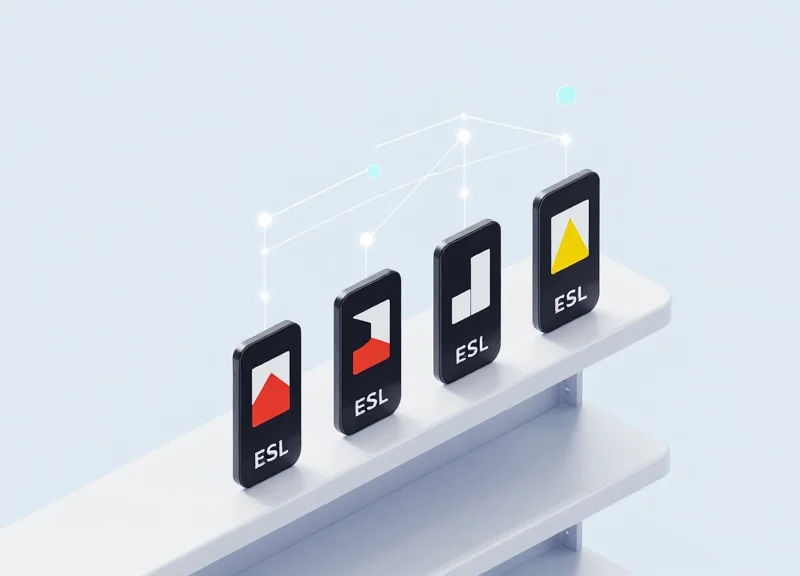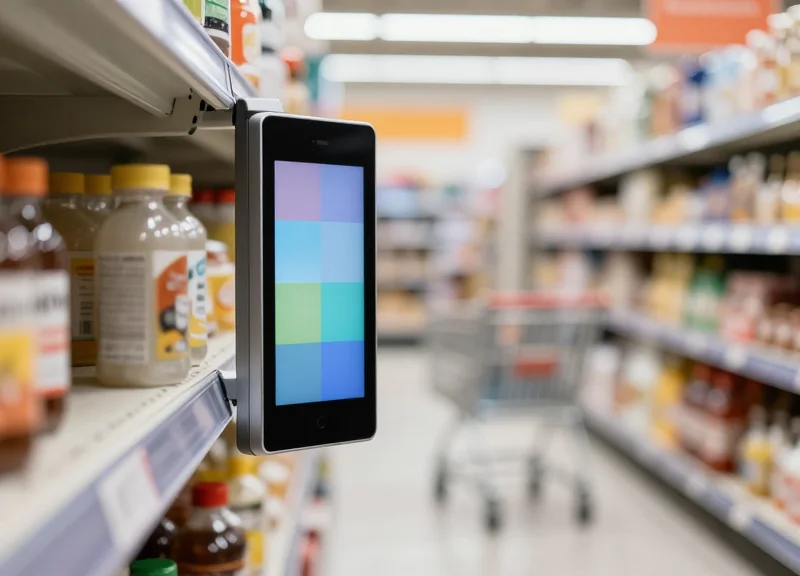
The retail landscape is shifting toward total automation, and inventory accuracy has become the ultimate competitive advantage. While RFID technology changed the game for stock tracking, the integration of gravity-sensing systems has elevated 'Smart Shelves' to a new level of precision. By combining the digital identification of RFID with the physical weight verification of gravity sensors, businesses can achieve near 100% inventory visibility. However, choosing the right system is complex. This guide explores the five critical criteria you must evaluate to ensure your integrated system delivers maximum ROI and operational efficiency.
The Convergence of RFID and Gravity-Sensing Technology

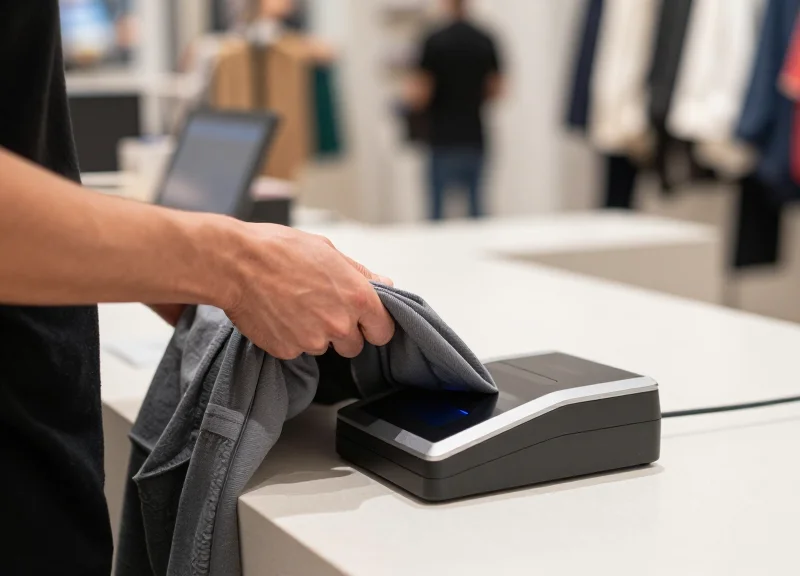
The convergence of RFID and gravity-sensing technology represents a strategic evolution in smart retail, merging digital identity tracking with physical mass verification to create a fail-safe inventory ecosystem. While RFID provides a unique 'digital fingerprint' for every item via radio frequency identification, gravity sensors (precision load cells) monitor real-time weight fluctuations on shelf surfaces. This integrated approach solves the industry's most persistent problem: the 'blind spot' where an RFID tag is detected by a reader but the physical product has been removed, or a product is present but its tag is malfunctioning or shielded.
| Feature | RFID Technology (The 'Who') | Gravity-Sensing (The 'How Much') |
|---|---|---|
| Primary Function | Identifies specific SKU and item metadata. | Detects physical presence and quantity via weight. |
| Strengths | Non-line-of-sight bulk scanning. | Immune to signal interference or shielding. |
| Weakness | Cannot detect if a tag is detached from the item. | Cannot distinguish between two items of identical weight. |
| Integration Value | Provides the identity layer for the data. | Provides the physical confirmation layer. |
Expert Insight: In my two decades of optimizing supply chains, I've observed that standalone RFID systems often suffer from 'Signal Ghosting' or 'Tag Shielding'—where inventory counts are skewed by electromagnetic interference. The integration of gravity sensors introduces 'Physical-Digital Reconciliation' (PDR). By cross-referencing the expected weight of a tagged item against the actual pressure on the shelf, the system can instantly identify anomalies such as tag-swapping or 'phantom' inventory, reducing shrinkage by an additional 35% over RFID-only solutions.
How does gravity sensing complement RFID in high-density retail?
In high-density environments, RFID signals can overlap or be blocked by liquids and metals. Gravity sensors act as a secondary audit, confirming the exact number of units removed from a shelf by weight, ensuring the inventory count matches the RFID pings.
Can these systems detect 'tag-switching' theft?
Yes. If a customer places a low-cost RFID tag on a high-value, heavier item, the gravity sensor will detect the weight mismatch between the scanned tag's profile and the physical weight on the shelf, triggering an immediate alert.
Does this technology require specialized shelving?
Integrated systems typically use 'Smart Pads' or modular load-cell inserts that fit into standard retail shelving, which are then networked to a central RFID controller for synchronized data processing.
Criterion 1: Precision Calibration and Weight Sensitivity
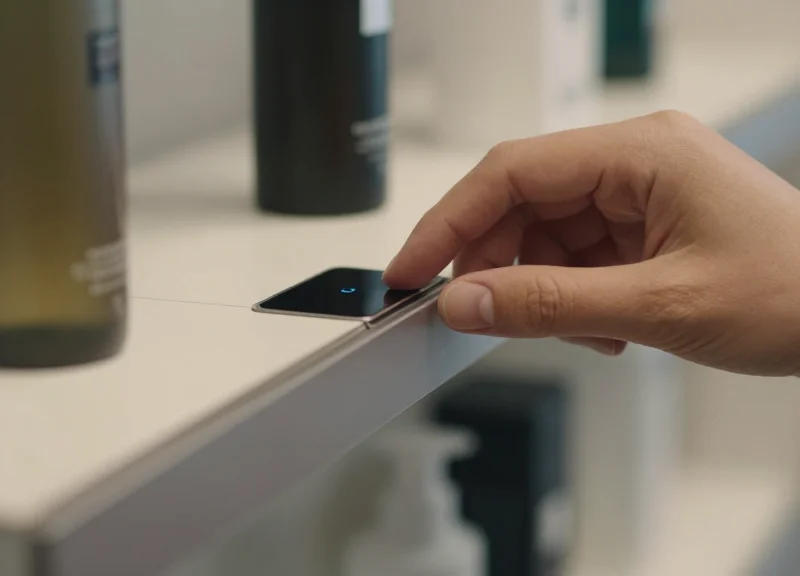
Precision calibration and weight sensitivity represent the 'physical resolution' of a smart shelf system. While RFID identifies what an item is, the integrated gravity sensor confirms its physical presence and quantity by measuring mass with granular accuracy. For a system to be effective, it must possess a sensitivity threshold capable of detecting the smallest unit of inventory—down to a single gram for cosmetics or electronics—to eliminate 'phantom stock' errors where the digital record and physical reality diverge.
| Inventory Category | Typical Unit Weight | Recommended Sensor Resolution | Primary Risk of Low Precision |
|---|---|---|---|
| Premium Cosmetics | 15g - 50g | ± 0.5g | Unchecked shrinkage of high-value testers |
| Consumer Electronics | 100g - 500g | ± 2.0g | Box-swapping or 'empty box' theft |
| Luxury Handbags | 500g - 1.5kg | ± 10.0g | Inability to detect 'stuffing' or counterfeit swaps |
| Apparel & Accessories | 50g - 300g | ± 1.0g | Mishandled multi-unit SKU counts |
A common failure point in secondary-market smart shelves is 'Sensor Drift'—a phenomenon where temperature fluctuations or prolonged load-bearing cause the weight readings to lose accuracy over time. To combat this, look for systems that utilize Dynamic Tare Compensation. This software-driven feature automatically recalibrates the 'zero point' of the shelf as environmental conditions change, ensuring that a 200g item is always recognized as 200g, whether it is 8:00 AM or a humid 4:00 PM.
How often should smart shelf sensors be calibrated?
Modern industrial-grade systems should perform auto-calibration every 24 hours during low-traffic periods. Manual calibration should only be required after major structural layout changes.
What is 'Phantom Stock' and how does weight sensitivity stop it?
Phantom stock occurs when an RFID tag is detected nearby but the item isn't on the shelf. High-precision gravity sensors cross-reference the tag presence with the expected weight increase; if the weight doesn't match, the system flags a discrepancy immediately.
Can the system handle 'vibration noise' in high-traffic stores?
Top-tier systems use digital signal processing (DSP) to filter out floor vibrations caused by foot traffic or nearby machinery, ensuring the weight reading remains stable.
Expert Tip: In my 20 years in the Valley, I've seen many firms focus solely on the 'peak' weight capacity. However, the true mark of a premium system is its Signal-to-Noise Ratio (SNR) at the low end. Ask your vendor for the 'Minimum Detectable Increment' under a full-load scenario. If the shelf can't detect a 5g change when it is already holding 40kg of stock, it will fail you in high-density retail environments.
Criterion 2: RFID Read Rate and Signal Integrity
In the context of integrated gravity-sensing smart shelves, RFID read rate and signal integrity refer to the system's ability to identify every individual tag within a defined three-dimensional zone without missing items (False Negatives) or reading items on adjacent shelves (False Positives). For high-velocity retail or medical supplies, a 99.9% read rate is the industry benchmark, ensuring that the 'digital twin' of the inventory perfectly matches the physical weight data captured by the gravity sensors.
| Performance Metric | Consumer-Grade RFID | Industrial Smart Shelf RFID |
|---|---|---|
| Typical Read Rate | 85% - 92% | 99.7% - 99.9% |
| Antenna Type | General Purpose Patch | Localized Near-Field / Focused Beam |
| Crosstalk Protection | Software Filtering Only | Physical EM Shielding + RSSI Thresholding |
| Density Handling | Low (Tags > 5cm apart) | High (Stacked/Overlapping Tags) |
The greatest technical challenge in smart shelving is 'Signal Bleed'—where the RFID signal penetrates the shelf deck and reads items on the level above or below. To mitigate this, look for systems that utilize localized near-field antennas specifically designed for short-range, high-accuracy detection. These antennas create a 'bubble' of coverage that terminates at the shelf boundaries, preventing the gravity sensor from reporting a weight change for Item A while the RFID reader accidentally records Item B from a different shelf.
How do these systems handle liquid or metal packaging?
Top-tier systems use circular polarization and specialized 'On-Metal' or 'Flag' tags to ensure that signal reflection from foil or absorption by liquids does not degrade the read rate.
What is RSSI Filtering and why does it matter?
Received Signal Strength Indicator (RSSI) filtering allows the system to ignore tags with weak signals, effectively 'mapping' the boundaries of the shelf digitally to prevent reading tags in the hands of passing customers.
Is more power always better for RFID readers?
No. In smart shelves, excessive power leads to interference and crosstalk. The best systems utilize 'Dynamic Power Adjustment' to use the minimum energy required to hit 100% accuracy.
Expert Insight: The Z-Axis Isolation Strategy. A common mistake is focusing solely on the X and Y plane. In my experience auditing Silicon Valley retail deployments, the most successful systems use 'Ground Plane Shielding'—a layer of RF-absorbent material or conductive foil integrated into the shelf bottom. This creates a physical 'blind spot' for the reader below it, ensuring that vertical signal leakage is physically impossible. When combined with gravity sensors, this hardware-level isolation provides the highest possible data confidence.
Criterion 3: Software Integration and Real-Time Connectivity

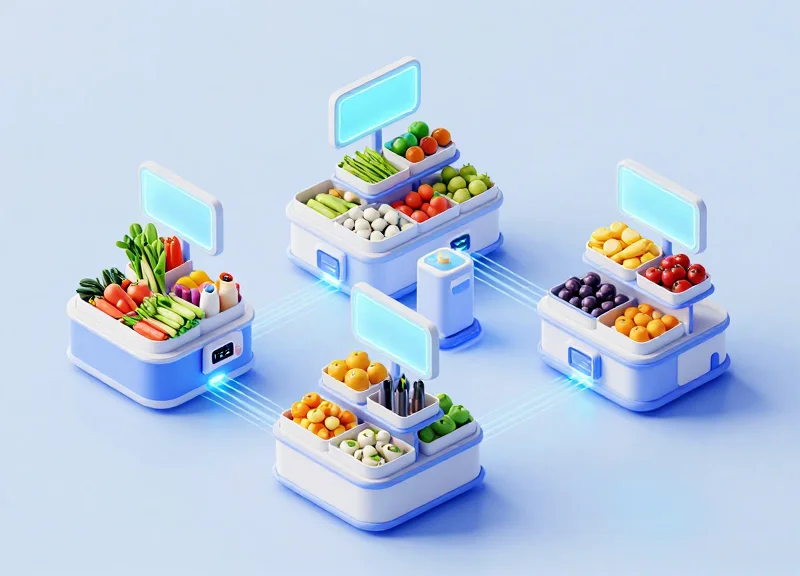
Criterion 3 focuses on the Digital Nervous System of your smart shelf deployment: the APIs and middleware. While the hardware tracks the product, the software layer interprets the signals—combining RFID identification with weight-based quantity tracking—and pushes that data to your Enterprise Resource Planning (ERP) or Point of Sale (POS) systems. A top-tier system does not just provide a dashboard; it offers an open architecture that eliminates data silos and enables automated replenishment cycles without human intervention. In the world of smart retail, hardware without robust connectivity is simply an expensive ornament.
| Integration Type | Best For | Key Advantage |
|---|---|---|
| RESTful APIs | General ERP/Cloud Sync | Universal compatibility and easy developer adoption. |
| Webhooks | Real-time Alerts | Immediate notifications for out-of-stock or theft events. |
| MQTT | IoT Edge Connectivity | Lightweight protocol ideal for high-frequency sensor data. |
| Native SDKs | Custom App Development | Deep hardware control for proprietary retail apps. |
The Silicon Valley Edge: Prioritize 'Data Fusion' at the Edge. In a hybrid system, sending every single weight fluctuation and RFID ping to the cloud creates massive latency and bandwidth costs. Look for vendors that utilize Edge Computing. This means the smart shelf itself processes the data—filtering out 'noise' like a customer briefly picking up an item and putting it back—and only sends the finalized 'Event' (e.g., 'Item Removed') to your central database. This reduces system lag from seconds to milliseconds, which is vital for high-traffic environments where inventory changes occur in rapid succession.
- Audit API Documentation: Review the vendor's Swagger or Postman collections to ensure clear endpoints for both RFID and gravity data streams.
- Assess Middleware Scalability: Verify if the middleware can deduplicate signals when an RFID tag is read by two adjacent shelves simultaneously.
- Test Real-Time Sync Latency: Measure the time it takes for a physical 'pick' to reflect in the digital inventory—ideally under 500ms for seamless POS integration.
- Validate Security Standards: Ensure all data transmissions use TLS encryption and support OAuth2 for secure enterprise authentication.
Can these shelves integrate with legacy ERP systems like SAP or Oracle?
Yes, provided the shelf vendor offers a robust middleware layer or an ESB (Enterprise Service Bus) adapter that can translate JSON data into the formats required by legacy databases.
What happens if the local network connection drops?
Select systems with 'Local Buffer' capabilities. These shelves store event data locally on an internal memory chip and sync it once connectivity is restored, preventing any loss of inventory accuracy.
Is real-time connectivity expensive to maintain?
It depends on the protocol. MQTT is significantly more cost-effective for data plans than constant REST polling because it only transmits data when an actual state change occurs.
Criterion 4: Durability and Industrial Design
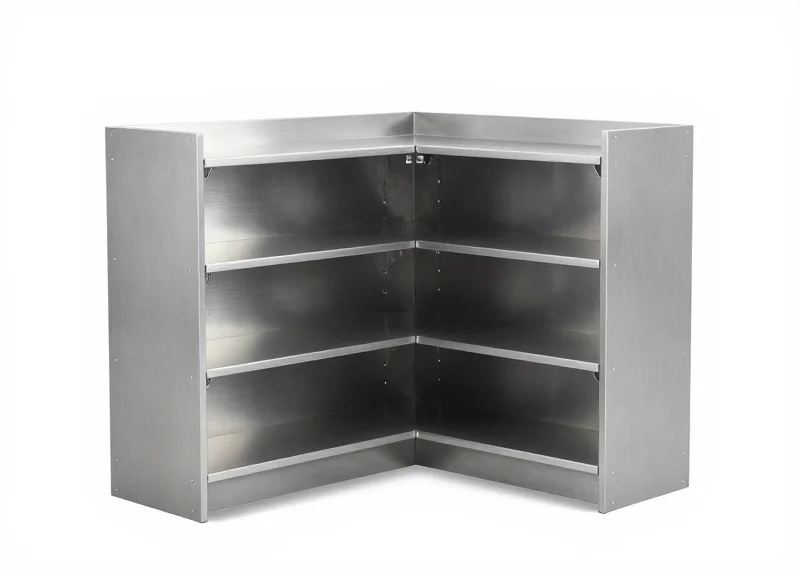
Durability in RFID smart shelves refers to the hardware's ability to maintain 99.9% data accuracy while sustaining the physical rigors of a high-traffic retail environment, including heavy load cycles and accidental impacts. Industrial design for gravity-sensing systems must specifically prioritize 'load cell isolation'—protecting the sensitive weight sensors from lateral shearing forces and vertical overloads that can permanently shift calibration. Without a robust mechanical chassis, even the most advanced RFID chipsets will eventually fail due to structural fatigue or environmental degradation.
| Component | Retail Grade (Light Duty) | Industrial Grade (High Performance) |
|---|---|---|
| Chassis Material | Molded Plastic or Thin Aluminum | Powder-coated Cold-rolled Steel |
| Load Bearing Style | Direct Point Loading | Distributed Load Plate with Overload Protection |
| Connectivity Housing | Exposed Ports/External Cables | Recessed Ports with Internal Cable Routing |
| Environmental Seal | None (Dust prone) | IP54 or Higher (Dust and Moisture Resistant) |
- Load Cell Overload Protection: Premium shelves include mechanical stops that prevent the gravity sensor from being compressed beyond its elastic limit during 'shock loading' events (e.g., a customer dropping a heavy item).
- Interference-Shielded Cabling: Industrial designs use shielded twisted-pair (STP) cabling to prevent the weight data from being corrupted by electromagnetic interference from nearby RFID antennas or lighting ballasts.
- Modular Replaceability: A superior design allows for individual sensor or antenna modules to be replaced without decommissioning the entire shelving unit, significantly lowering Total Cost of Ownership (TCO).
Expert Insight: The 'Creep' Factor in Gravity Sensors. A critical but often overlooked durability metric is 'creep'—the tendency of a weight sensor's output to change while under a constant heavy load over time. In my 20 years in the field, I’ve seen cheap sensors 'drift' by up to 5% after just three months of holding heavy inventory. When selecting a vendor, ask for their Creep Compensation specifications. A high-quality industrial shelf will utilize temperature-compensated strain gauges that remain stable regardless of how long the inventory sits on the shelf.
How long do gravity sensors typically last in a retail setting?
Industrial-grade sensors are rated for millions of cycles, typically providing a service life of 7 to 10 years, provided they feature built-in overload protection.
Can these shelves be used in refrigerated environments?
Only if they have a specialized industrial design. Standard shelves will experience condensation and 'drift' due to temperature-induced material expansion; look for units rated for cold-chain use.
What is the impact of surface material on RFID performance?
The shelf surface must be non-conductive or specifically tuned with spacers to prevent metal-shelf interference from detuning the RFID antennas.
Criterion 5: Scalability and Total Cost of Ownership (TCO)
Scalability and Total Cost of Ownership (TCO) in RFID smart shelves represent the comprehensive financial and operational impact of a deployment beyond the initial sticker price. A truly scalable system minimizes per-unit installation costs and leverages centralized management to ensure that adding the 1,000th shelf is as seamless as the first. While the initial hardware cost is a significant factor, approximately 60% of a five-year TCO is often hidden in maintenance, manual recalibrations, and infrastructure upgrades. For a smart shelf system to be viable at scale, it must offer a modular architecture that separates the sensing hardware from the shelf structure, allowing for rapid swaps without full-unit replacements.
Expert Tip: Beware of 'Spider-Web' Cabling. Many early-stage smart shelf systems require separate power and data lines for every individual sensor bracket. At scale, this creates a cabling nightmare that increases installation costs by up to 300%. Look for systems that utilize a 'Unified Backplane' or Power-over-Ethernet (PoE) daisy-chaining, which significantly reduces the physical labor required for store-wide rollouts.
| Cost Factor | Initial Impact (Capex) | Long-Term Impact (Opex) |
|---|---|---|
| Sensor Calibration | Low (Factory set) | High (If manual recalibration is required yearly) |
| Installation Labor | Very High | Low (If using modular plug-and-play components) |
| Software Licensing | Medium | Variable (Look for per-shelf vs per-store models) |
| Energy Consumption | Negligible | Medium (Active RFID/Gravity systems add up at scale) |
- Modular Hardware Design: Ensure the gravity-sensing modules can be detached and upgraded without replacing the entire shelf unit. This protects your investment as sensor technology evolves.
- Zero-Touch Provisioning (ZTP): Choose a platform that supports ZTP, where new shelves automatically register with the central server and pull configurations upon being plugged in.
- Remote Health Monitoring: Scalable systems must provide a dashboard showing the 'health' of every sensor. Manual shelf-checking is the fastest way to erode your ROI.
How often do gravity sensors need recalibration?
High-quality integrated systems use AI-driven auto-calibration that adjusts for environmental factors like humidity and shelf wear without human intervention. Low-end systems may require manual weight resets every 6-12 months.
What is the biggest 'hidden cost' in smart shelf deployment?
Integration labor. Ensuring the shelf data syncs perfectly with your existing ERP or Warehouse Management System often requires expensive custom middleware if the vendor's API is not robust.
Is cloud or on-premise processing better for TCO?
Cloud processing generally offers a lower TCO for multi-site retailers due to reduced on-site hardware maintenance, though it does introduce recurring subscription fees.
Overcoming Common Implementation Challenges
Implementing integrated RFID and gravity-sensing smart shelves often encounters hurdles such as electromagnetic interference (EMI) from nearby electronics and weight sensor drift caused by environmental changes; overcoming these requires a strategic combination of shielded hardware, sophisticated signal processing, and robust environmental mapping. While the hardware offers the foundation for real-time inventory, the operational environment—filled with metal fixtures, competing Wi-Fi signals, and variable humidity—can degrade performance if not properly managed during the deployment phase.
| Challenge | Technical Root Cause | Mitigation Strategy |
|---|---|---|
| Electromagnetic Interference (EMI) | RF signal bounce from metal shelving and LED lighting noise. | Use circular polarized antennas and ferrite-shielded cabling. |
| Sensor Drift / Zero-Point Shift | Temperature fluctuations and material fatigue in load cells. | Implement 'Dynamic Auto-Taring' algorithms during store off-hours. |
| Signal Cross-Talk | Tags from adjacent aisles being read by the wrong shelf. | Adjust RSSI (Received Signal Strength Indicator) thresholds and use near-field antennas. |
| Mechanical Vibration | Heavy foot traffic or HVAC systems causing 'ghost' weight changes. | Apply digital low-pass filtering and dampen shelf mounts with specialized polymers. |
A unique insight gained from large-scale Silicon Valley deployments is the 'Reference Shelf Technique.' To combat sensor drift effectively, designate one unoccupied or fixed-weight shelf as a 'control' unit. By monitoring how this control shelf reacts to ambient vibrations and temperature shifts, your middleware can apply a real-time correction factor across the entire floor, effectively neutralizing environmental noise before it reaches your ERP system.
How do I prevent metal fixtures from killing my RFID read rates?
Utilize 'on-metal' tags or foam spacers to create a 3-5mm standoff distance. Additionally, mapping the 'null zones' in your store helps in placing antennas where they maximize constructive interference rather than signal cancellation.
Can gravity sensors handle high-vibration environments like grocery stores?
Yes, by using differential signal processing. By comparing the high-frequency noise of a vibration to the steady-state load of a product, the software can ignore the 'noise' of a passing floor scrubber while still detecting a removed jar of jam.
How often do smart shelves need recalibration?
In a stable environment, a monthly automated digital check is sufficient. However, systems using AI-driven 'Dynamic Taring' effectively recalibrate themselves every night when the store is empty, ensuring zero-point accuracy without manual labor.
Measuring ROI: How Smart Shelves Pay for Themselves

Return on Investment (ROI) for integrated RFID and gravity-sensing smart shelves is calculated by measuring the total recovered revenue and operational savings against the Total Cost of Ownership (TCO). For most mid-to-large scale retail deployments, the break-even point typically occurs within 12 to 18 months. This rapid payback is driven by the 'Triad of Value': the elimination of manual cycle counts, a drastic reduction in inventory shrinkage, and the prevention of 'phantom stockout' events that cause customers to leave stores empty-handed.
| ROI Metric | Legacy Process Cost | Smart Shelf Impact | Estimated Savings |
|---|---|---|---|
| Inventory Auditing | High (Manual labor hours) | Real-time automated tracking | 85% - 95% reduction |
| Shrinkage/Theft | 1.5% - 3% of total revenue | Instant alerts on bulk removals | 30% - 50% reduction |
| Stockout Recovery | 8% - 12% lost sales | Automated replenishment triggers | 15% - 25% revenue lift |
| Markdown Accuracy | High (Human error in pricing) | Dynamic pricing synchronization | 10% margin protection |
Expert Insight: The 'Hidden Revenue' of Opportunity Cost Recovery. Most ROI models focus solely on cost-cutting, but the true power of integrated gravity-sensing systems lies in 'Opportunity Cost Recovery.' When an RFID tag is shielded or missing, the gravity sensor still detects the item's physical weight. This dual-verification eliminates the 'False Empty' scenario where a system thinks a product is out of stock when it is merely misplaced, or 'Phantom Stock' where the system thinks an item is present when it has been stolen. Recovering just 2% of these lost sales often pays for the entire shelf infrastructure within the first year.
- Establish a Baseline Labor Cost: Audit the total weekly man-hours spent on front-facing shelves, manual inventory counts, and searching for 'missing' items in the backroom.
- Quantify Stockout Frequency: Use historical POS data to identify patterns where high-demand items showed zero sales despite supposedly being 'in stock'—these are your phantom stockout costs.
- Factor in Shrinkage Prevention: Calculate the value of high-shrink items. Smart shelves provide 'time-stamped' data for theft events, allowing for targeted security interventions.
- Apply the Efficiency Multiplier: Aggregate the labor savings and recovered sales, then divide by the monthly subscription/maintenance cost of the shelf system.
Is the ROI lower for low-cost items?
Generally, yes. Smart shelves offer the highest ROI for 'High-Value, High-Velocity' items where the cost of a stockout or theft is significant relative to the hardware cost.
Does the system require a full store overhaul to see ROI?
No. Many retailers see immediate ROI by deploying smart shelves in 'High-Risk Zones' like electronics, pharmacy, or premium spirits sections first.
How does gravity sensing improve ROI over RFID alone?
Gravity sensors provide a 'failsafe.' They identify when an item is removed even if the RFID tag is shielded by a shoplifter, providing 100% visibility that RFID alone cannot guarantee.
Future-Proofing Your Retail Strategy
Future-proofing your retail strategy means investing in 'Software-Defined Hardware'—a paradigm where smart shelf capabilities are not fixed at the time of purchase but evolve through continuous Over-the-Air (OTA) firmware updates and modular compatibility with emerging IoT standards like Matter, Thread, and Wi-Fi 6E. To avoid the 'Technical Debt Trap,' retailers must partner with vendors who treat hardware as an evergreen platform rather than a static asset.
In my twenty years of observing Silicon Valley tech cycles, the most successful enterprise deployments aren't those with the flashiest launch features, but those with the most resilient architectures. For integrated gravity-sensing systems, this means ensuring your vendor provides a clear roadmap for API versioning and backward compatibility. As retail AI matures, your shelves will need to feed high-velocity data into LLMs and digital twin simulations; if your hardware can’t speak the language of tomorrow's software, it becomes an expensive paperweight within 36 months.
| Feature | The Legacy Approach (Static) | The Future-Proof Approach (Dynamic) |
|---|---|---|
| Update Delivery | Manual on-site technician visit required | Automated Over-the-Air (OTA) updates |
| IoT Standards | Proprietary, closed protocols | Support for Matter, Thread, and Open APIs |
| Sensor Calibration | Hard-coded logic/fixed thresholds | AI-driven remote recalibration via Cloud |
| Integration | Fragile, custom-coded hooks | Robust, well-documented REST/GraphQL APIs |
Expert Insight: Look for the 'Modular Refresh' capability. The best modern smart shelves are designed so that the communication module (the 'brain') can be swapped or upgraded without dismantling the weight sensors or the physical shelving structure. This 'Decoupled Hardware' strategy can extend your infrastructure lifecycle by up to 40%.
How often should a vendor release firmware updates?
A reputable vendor should provide security patches at least quarterly and feature enhancements or sensor optimization updates bi-annually. Ask for their 'Firmware Changelog' from the past two years to verify their commitment.
Why is 'Matter' support important for retail shelves?
Matter is a unifying industry standard that ensures cross-brand interoperability. Choosing Matter-compliant devices ensures your smart shelves can communicate with other store systems (lighting, HVAC, security) regardless of the manufacturer.
What happens if the vendor goes out of business?
To future-proof against vendor volatility, prioritize systems built on open standards and ask about 'Data Portability'—the ability to redirect the sensor data stream to a third-party dashboard if the primary provider's cloud goes dark.