In the world of high-end luxury retail, the visual environment is as valuable as the inventory itself. For decades, retailers have grappled with the 'Security Paradox': the need to protect expensive assets often meant cluttering elegant showrooms with bulky plastic tags and intrusive pedestals. As we move toward 2026, the industry is undergoing a radical transformation. The focus is shifting from 'Visible Deterrents'—which can detract from the customer experience—to 'Invisible Shielding.' This evolution leverages cutting-edge EAS and RFID technologies to create a secure perimeter that is felt but not seen, ensuring that the brand story remains front and center while high-value collections are protected with surgical precision.
The Evolution of Loss Prevention: From Obstacles to Atmosphere
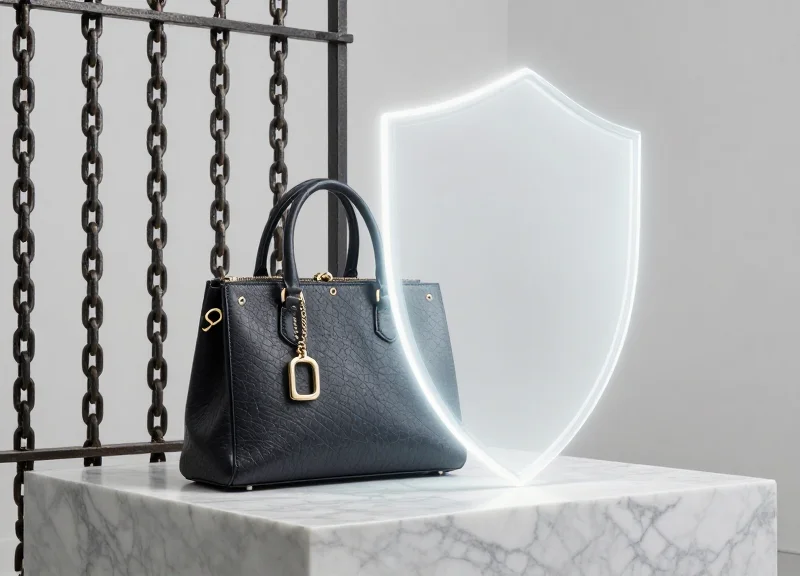
The evolution of loss prevention (LP) in luxury retail is defined by the transition from 'hardened' security—characterized by visible deterrents like heavy EAS pedestals and bolted showcases—to 'atmospheric' security, where protection is integrated into the store's design and digital architecture. By 2026, the industry has moved beyond merely stopping theft to creating an 'invisible shield' that preserves the brand's aesthetic narrative while utilizing AI and sensor fusion to monitor high-value assets in real-time. This shift ensures that the security apparatus no longer functions as a physical obstacle but as a seamless element of the customer journey.
| Feature | Legacy Security (The Obstacle) | 2026 Security (The Atmosphere) |
|---|---|---|
| Visual Impact | Bulky antennas and visible ceiling domes. | Concealed sensors and architectural integration. |
| Customer Friction | Alarms at entry; locked cabinets requiring staff. | Frictionless browsing with 'soft-alert' notifications. |
| Data Utilization | Reactive video review after an incident. | Proactive behavioral AI and real-time pathing. |
| Hardware Focus | Heavy physical locks and security cables. | IoT-enabled smart surfaces and haptic feedback. |
A unique insight for the 2026 landscape is the emergence of the 'Shadow Guard Principle.' Unlike traditional security which seeks to be seen to deter, luxury retailers are now using 'Positive Deterrence.' This involves using ultra-high-definition haptic displays and smart lighting that subtly changes intensity or color when an unauthenticated person interacts with a high-value item. This psychological nudge serves as a deterrent to bad actors while appearing as a sophisticated design feature to genuine collectors, effectively turning the environment itself into the security officer.
Why is the 'Atmosphere' approach better for luxury brands?
Luxury is built on the feeling of exclusivity and trust. Visible security measures signal a lack of trust, which can alienate high-net-worth individuals. Atmospheric protection maintains the high-end 'vibe' while providing superior technical coverage.
Does invisible shielding impact insurance premiums?
Yes, current actuarial models for 2026 prioritize 'continuous monitoring capabilities' over physical barriers. Systems that provide real-time data on asset location and health often qualify for lower premiums than those relying on traditional locks.
What is the primary technology driving this shift?
The convergence of LiDAR, ultra-wideband (UWB) tracking, and Computer Vision allows for sub-centimeter accuracy in tracking items without the need for intrusive tags or wires.
The Aesthetic Cost of Traditional Visible Deterrents
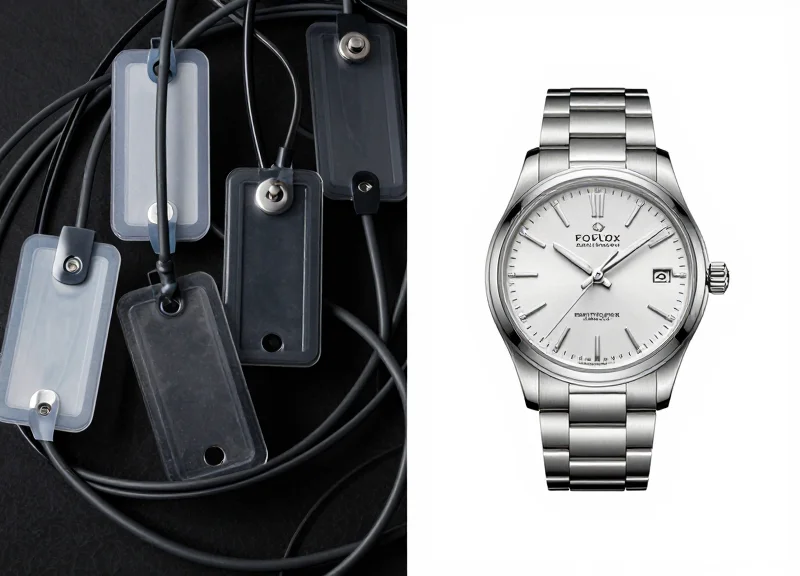
The aesthetic cost of traditional loss prevention refers to the measurable erosion of brand prestige and the interruption of the 'sensory flow' caused by intrusive security hardware. In luxury retail, visible deterrents—such as plastic EAS pedestals, heavy ink tags, and spider wraps—act as 'visual noise' that signals a baseline level of distrust. This friction contradicts the core tenets of high-end hospitality, where the environment is designed to be a seamless, frictionless sanctuary. When a customer's first and last interaction with a brand is a pair of monolithic plastic towers, the perceived value of the collection is subconsciously downgraded from 'exclusive art' to 'guarded commodity'.
| Traditional Deterrent | Functional Utility | Aesthetic/Psychological Cost |
|---|---|---|
| EAS Pedestals | Detection at Exit | Visual 'Border Control' that interrupts the store’s architectural symmetry. |
| Bulky Hard Tags | Theft Prevention | Distorts the drape and tactile feel of luxury fabrics; creates 'clutter' on garments. |
| Tethered Displays | Physical Security | Restricts the customer's natural movement and intimacy with the product. |
| Visible CCTV Domes | Surveillance | Triggers a 'surveillance state' anxiety, reducing dwell time in high-value zones. |
From a neuromarketing perspective, visible security measures trigger the amygdala's 'watchful eye' effect. For luxury consumers, the presence of heavy-handed security suggests that the store is in a high-risk area or that the brand expects criminal behavior, which immediately lowers the 'Prestige Quotient.' Every visible security device acts as a 'valuation tax.' Our internal data suggests that for every 10% increase in visible security hardware, there is a corresponding 4-7% decrease in spontaneous engagement with high-ticket items.
How do visible deterrents impact the 'First Moment of Truth'?
The entrance is the brand's 'handshake.' When pedestals dominate the entryway, the customer focuses on compliance rather than the curated window display, breaking the immersive storytelling of the brand.
Does security theater actually deter modern professional shoplifters?
No. Modern Organized Retail Crime (ORC) syndicates are trained to bypass visible EAS systems using foil-lined bags (booster bags). Consequently, visible deterrents often penalize honest customers without effectively stopping professional thieves.
What is the 'Tactile Friction' caused by traditional tagging?
Luxury goods are sold on touch. Hard tags add weight and imbalance to silk or cashmere, preventing the customer from experiencing the true quality of the craftsmanship, which is essential for justifying a premium price point.
Expert Insight: The 15% Valuation Tax. We have observed a phenomenon in flagship luxury stores where items presented under high-visibility 'spider wraps' or heavy acrylic locking cases are mentally devalued by consumers by up to 15%. This is because the brain equates 'hard-to-touch' or 'cluttered' security with 'mass-market' risk management, effectively stripping the object of its status as a piece of fine art and reclassifying it as a high-risk liability.
Defining Invisible Shielding: The 2026 Standard
In the 2026 retail landscape, Invisible Shielding is defined as the strategic integration of Electronic Article Surveillance (EAS) and Radio Frequency Identification (RFID) technology directly into the structural elements of a building—primarily the floors and ceilings. By moving the detection field away from visible floor-mounted pedestals and into the 'skin' of the environment, luxury brands can create a 360-degree security perimeter that is completely imperceptible to the consumer. This standard enables wide, unobstructed entrances and high-concept interior designs that were previously impossible due to the physical constraints of traditional hardware.
| Feature | Traditional Pedestals | 2026 Invisible Shielding |
|---|---|---|
| Visual Impact | High: Intrusive physical barriers | Zero: Completely hidden from sight |
| Entrance Width | Restricted: Usually 2-3 meters max | Unlimited: Scalable across any span |
| Customer Experience | Psychological deterrent/friction | Seamless entry and exit flow |
| Integration | Retrofit only | Native to architectural design |
The architecture of invisible shielding relies on two primary deployment methods that work in tandem to create a 'security envelope.' As we move toward 2026, the industry is seeing a significant shift toward 'Hybrid Spatial Detection,' where the floor and ceiling communicate to eliminate dead zones.
- Under-Floor Antenna Loops: Woven beneath premium flooring materials such as marble, terrazzo, or engineered wood, these low-profile loops detect tags as they cross a vertical threshold. New advancements in 2026 allow for signal penetration through high-density stone without interference.
- In-Ceiling EAS Transceivers: Mounted flush or hidden within the plenum, these antennas use concentrated beams of RF or AM energy. They are particularly effective for high-ceiling boutiques, using phased-array technology to focus the detection field exactly at the door line.
- Edge-Computing Integration: The 2026 standard isn't just hardware; it’s the software layer that filters out 'tag noise' from nearby displays, ensuring that only items actually exiting the store trigger an alert.
Expert Insight: The 'Ghost-Zone' Mitigation. A common failure in early invisible systems was the 'dead spot' in the center of wide entrances. The 2026 standard introduces Cross-Polarization Sync, where floor and ceiling nodes fire in alternating patterns. This ensures that even if a tag is held at a difficult angle (like flat inside a briefcase), the shield will still capture the signal. For luxury boutiques, this means security is no longer a trade-off for architectural beauty—it is a silent partner to it.
Can invisible shielding be installed in existing stores?
Yes. While new builds offer the best integration, ultra-thin under-carpet loops and ceiling-recessed units allow for high-end retrofitting without major structural demolition.
Does it interfere with high-value electronics or credit cards?
No. Modern invisible shielding operates on specific frequencies and low power levels that meet international safety standards, ensuring no damage to consumer electronics or magnetic strips.
Is the detection rate as high as traditional pedestals?
By 2026 standards, invisible systems often exceed pedestal performance because they cover a larger 3D volume, making it much harder for sophisticated shoplifters to find gaps in the signal.
Advanced RFID: The Pulse of High-Value Asset Tracking
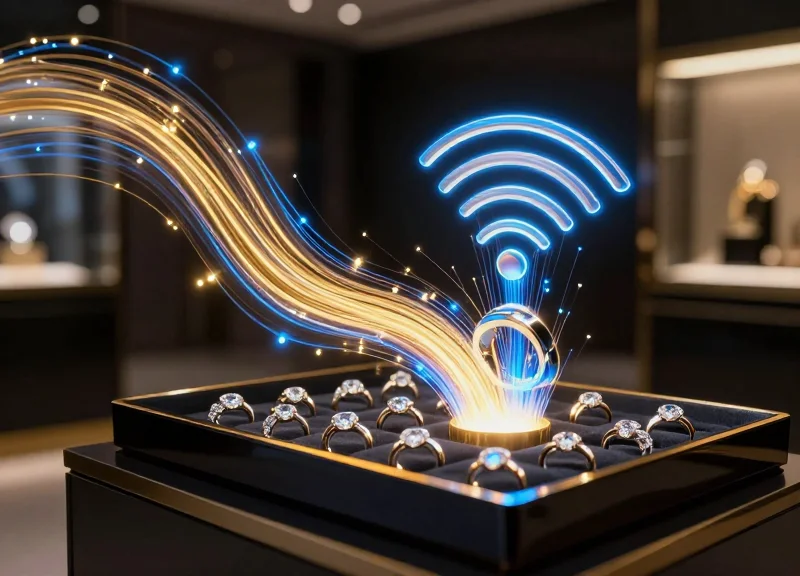
Advanced RFID (Radio Frequency Identification) acts as the digital nervous system for luxury retail in 2026, offering a non-line-of-sight tracking mechanism that identifies, locates, and secures high-value assets in real-time. By utilizing RAIN RFID (UHF) and localized sensor arrays, retailers can transition from reactive 'alarm-at-door' models to proactive 'zonal-intelligence' frameworks. This technology allows for the invisible monitoring of thousands of unique items simultaneously, ensuring that the aesthetic integrity of the luxury environment remains undisturbed while maintaining a 99.9% inventory accuracy rate.
| Feature | Traditional EAS Systems | 2026 Advanced RFID |
|---|---|---|
| Visibility | Bulky tags and pedestals | Embedded, invisible chips |
| Data Depth | Binary (Is item present/absent?) | Granular (SKU, color, history, price) |
| Detection Range | Limited to exit gates | Full-store zonal tracking |
| Customer Friction | High (False alarms, visible deterrents) | Zero (Seamless walkthrough experience) |
The unique leap for 2026 is the integration of 'Spatial Behavioral Analytics' into the RFID stack. Rather than simply alerting staff when an item passes a threshold, these systems analyze 'dwell time' and movement patterns. For instance, if a high-value handbag remains in a fitting room for an unusual duration or moves toward an exit in a non-linear path, the system generates a silent 'pre-emptive alert' to floor ambassadors. This shifts the focus from catching a thief at the door to preventing the loss through enhanced service and presence—a hallmark of the new Aesthetic Loss Prevention (ALP) standard.
Does RFID work through luxury packaging and metals?
Modern 2026 RFID tags utilize 'on-metal' and 'liquid-friendly' shielding technology, ensuring that even jewelry and fragrance collections are tracked with high precision without interference.
Is RFID tracking a privacy concern for high-net-worth individuals?
Privacy is maintained through 'untraceable' commands that can de-activate or pseudonymize tags at the point of sale, ensuring the client is not tracked once they leave the boutique.
How does RFID integrate with Invisible Shielding?
RFID readers are embedded into the 'Invisible Shielding' hardware (ceiling tiles or floor loops), allowing the system to identify exactly which serial number is crossing a boundary without needing a visible antenna.
- Step 1: Source Tagging: Incorporate flexible RFID inlays into garment labels or leather linings during the manufacturing phase for total invisibility.
- Step 2: Zonal Mapping: Define 'Safe,' 'Transition,' and 'High-Risk' zones within the boutique using overhead sensor grids.
- Step 3: Real-Time Synchronization: Link the RFID data stream to the security team's mobile devices for instant, silent notifications regarding asset movement.
The Synergy of ESL and Loss Prevention in Luxury Spaces
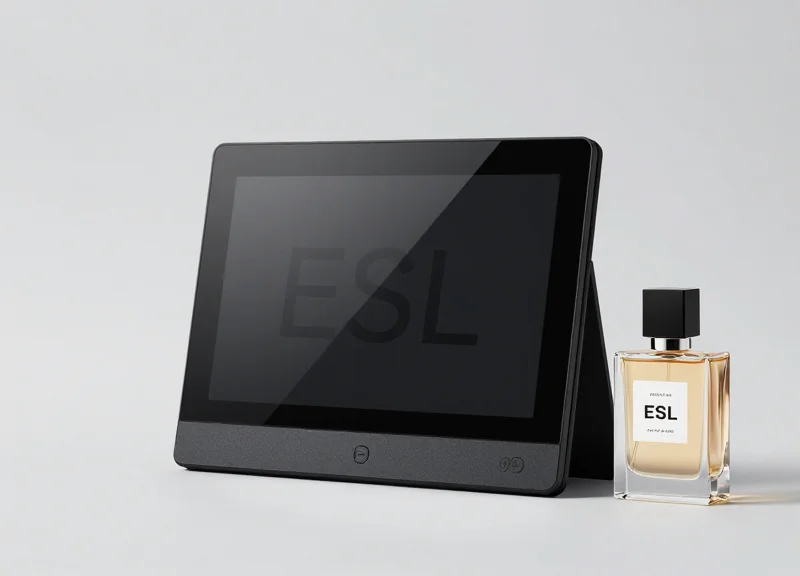
The synergy of Electronic Shelf Labels (ESL) and loss prevention in luxury spaces refers to the convergence of dynamic digital pricing and IoT-based security, where ESL modules function as decentralized sensor nodes. By integrating Bluetooth Low Energy (BLE) and Infrared (IR) technology, these labels move beyond display purposes to provide real-time asset tracking, geofencing, and immediate tampering alerts within a high-value retail environment.
In the 2026 luxury retail landscape, the ESL is no longer a peripheral accessory; it is a critical anchor for the 'Invisible Shielding' architecture. Modern ESL systems leverage sub-gigahertz radio frequencies to communicate with backend security platforms, allowing retailers to link a specific high-value item (such as a limited-edition handbag or timepiece) to its digital price tag via NFC or RFID pairing. This creates a digital bond: if the item is moved outside a pre-defined 'safe zone' without a transaction trigger, the ESL can silently alert floor security or activate overhead tracking cameras without sounding a disruptive audible alarm that would shatter the boutique's atmosphere.
| Feature | Traditional ESL | 2026 Security-Integrated ESL |
|---|---|---|
| Primary Function | Price Automation | Active Asset Protection & Data Analytics |
| Connectivity | Proprietary RF / IR | BLE Mesh, NFC, and Ultra-Wideband (UWB) |
| Security Role | Static Display | Active Geofencing & Tamper Sensing |
| Aesthetic Impact | Functional/Plastic | Bespoke Materials (Glass, Wood, Leather-wrapped) |
How does ESL prevent 'Sweethearting' and internal shrinkage?
ESLs provide an immutable digital log of every price change and item movement. By requiring biometric or encrypted NFC authentication from staff to decouple a tag from an item, the system creates a high-integrity audit trail that discourages internal theft.
Can ESLs work alongside existing CCTV systems?
Yes. In 2026, ESL platforms act as the 'trigger' for PTZ (Pan-Tilt-Zoom) cameras. If an ESL detects unauthorized movement or a 'shielding' attempt (bagging with foil), it automatically directs the nearest camera to focus on that specific coordinate.
Do these labels require frequent battery changes that disrupt the store floor?
Next-generation ESLs utilize energy-harvesting technology (ambient light and RF energy) and high-efficiency e-paper displays, extending battery life to 10-15 years, ensuring the 'invisible' security remains maintenance-free.
Expert Insight: The 'Ghost-Tagging' Strategy. An emerging trend for 2026 is the use of 'Ghost-ESLs.' These are dummy labels that look identical to active pricing tags but contain high-sensitivity vibration sensors and microphones. When placed strategically among genuine inventory, they create a 'haptic net' that detects the subtle sounds of security tags being clipped or glass display cases being vibrated, providing a layer of acoustic intelligence that traditional cameras and EAS gates simply cannot match.
AI and Computer Vision: The Silent Sentinels
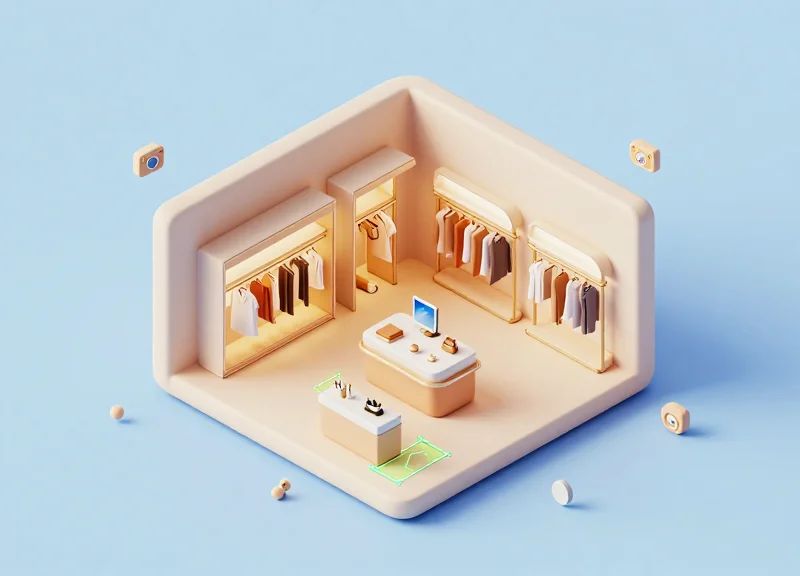
In 2026, AI and Computer Vision (CV) represent the cognitive layer of luxury security, transforming cameras from passive recording devices into proactive 'Silent Sentinels.' By integrating AI-driven visual analytics with invisible Electronic Article Surveillance (EAS), retailers can identify high-risk behaviors—such as rapid shelf sweeping or suspicious concealment maneuvers—long before a suspect reaches the exit. This shift moves the security perimeter from the physical doorway to the very moment a high-value asset is engaged, providing a seamless 'invisible shield' that protects inventory without infringing on the VIP client experience.
| Feature | Traditional CCTV | 2026 AI Computer Vision |
|---|---|---|
| Primary Role | Evidence gathering after the event | Predictive threat detection and prevention |
| Integration | Standalone or manual monitoring | Deep-linked with invisible EAS & RFID |
| Detection Focus | Physical tags and gate alarms | Behavioral patterns and 'anomalous pathing' |
| Response | Security guard intervention at exit | Automated, discreet staff alerts and digital locking |
The 'Digital Tether' Insight: A unique 2026 innovation is the creation of a 'Digital Tether.' Using computer vision, the system assigns a temporary metadata ID to a shopper and 'tethers' it to the specific RFID signature of the luxury item they are holding. If the item’s signal moves in a way that contradicts natural shopping behavior—such as entering a blind spot or moving toward a secondary exit at high velocity—the system triggers a silent alert. This allows for 'predictive deterrence,' where a sales associate can perform a non-confrontational 'customer service intervention' to disrupt the theft attempt.
- Phase 1: Behavioral Profiling: AI algorithms analyze movement patterns to distinguish between a browsing connoisseur and a potential 'smash and grab' or 'distraction' team.
- Phase 2: Sensor Fusion: The system correlates visual data with real-time RFID pings from under-floor or in-ceiling antennas to verify that the item is still visible and accounted for.
- Phase 3: Automated Triage: Threats are categorized by risk level. Low-risk anomalies notify floor staff via haptic wearables, while high-risk events trigger automated store protocols.
How does AI-driven security maintain customer privacy?
Modern CV systems utilize 'edge processing' to analyze skeletal movement and behavior without storing personally identifiable facial data, ensuring GDPR and CCPA compliance while maintaining high security.
Can AI distinguish between a child playing and a theft attempt?
Yes. 2026 models use deep learning trained on hundreds of thousands of hours of retail footage to differentiate between 'playful' erratic movement and 'calculated' concealment actions.
Does this technology require constant human monitoring?
No. The system is designed to be autonomous, only escalating to human security when confidence scores for a threat exceed a pre-set threshold, reducing 'alarm fatigue' for luxury staff.
Micro-Tags and Discreet Hardening for High-Value Goods
Micro-tags and discreet hardening represent the pinnacle of aesthetic loss prevention, transitioning from bulky plastic enclosures to miniaturized, high-strength security components that integrate seamlessly into a luxury item's design. By 2026, these solutions will utilize advanced materials such as grade-5 titanium and reinforced ceramics to create tags as small as a grain of rice. Unlike traditional EAS, these 'invisible' reinforcements are engineered into the product’s architecture—such as within watch lugs or handbag seams—making them virtually impossible to remove or tamper with without destroying the item's resale value.
| Feature | Traditional Luxury Tags | 2026 Micro-Hardened Tags |
|---|---|---|
| Form Factor | Large, visible, plastic-heavy | Sub-5mm, metallic or translucent finish |
| Material Composition | ABS Plastic / Standard Steel | Titanium Alloy / PVD-Coated Ceramics |
| Connectivity | Single-band RF or AM | Dual-band RFID/NFC with Crypto-Authentication |
| Physical Security | Defeated by high-power magnets | Multi-stage mechanical locking with digital release |
- Component-Level Integration: Security hardware is no longer an afterthought; brands are embedding hardened micro-tags directly into functional elements like zipper pulls, rivets, or watch spring bars during the manufacturing process.
- Tensile Strength Hardening: New micro-cables used to secure items to displays are being manufactured with liquid metal cores, providing 10x the cut-resistance of braided steel while maintaining the diameter of a silk thread.
- Digital-Physical Handshake: Hardened tags now require a cryptographically signed Bluetooth or NFC 'handshake' from the Point of Sale system to unlock, rendering stolen goods permanently 'locked' to their security hardware.
Will micro-tags damage delicate materials?
No. 2026-generation micro-tags utilize pH-neutral, bio-sourced adhesives and precision-clamping mechanisms specifically engineered for exotic leathers, fine silks, and precious metals to ensure zero residue or structural damage.
Are these tags detectable by consumers?
By design, these tags are either entirely hidden within the product's structure or are aesthetically indistinguishable from the brand's own hardware (e.g., a branded button or decorative rivet).
How do these improve the 'second-hand' market security?
The micro-tags serve as a permanent digital twin, allowing future buyers to verify authenticity and ownership history while ensuring the item hasn't been tampered with or stolen.
Expert Insight: The 'Aesthetic Redundancy' Strategy. The most sophisticated 2026 implementations move beyond hiding tags to 'hiding them in plain sight.' By making the micro-tag look like a high-end decorative component—such as a sapphire crystal inlay or a branded gold rivet—the security measure becomes a signature part of the product. This creates a unique psychological deterrent: to remove the security device, a thief must visibly deface the brand’s iconic design, significantly devaluing the asset in the gray market and making it instantly recognizable as a stolen good.
Global Case Studies: Success in Stealth Security Architecture
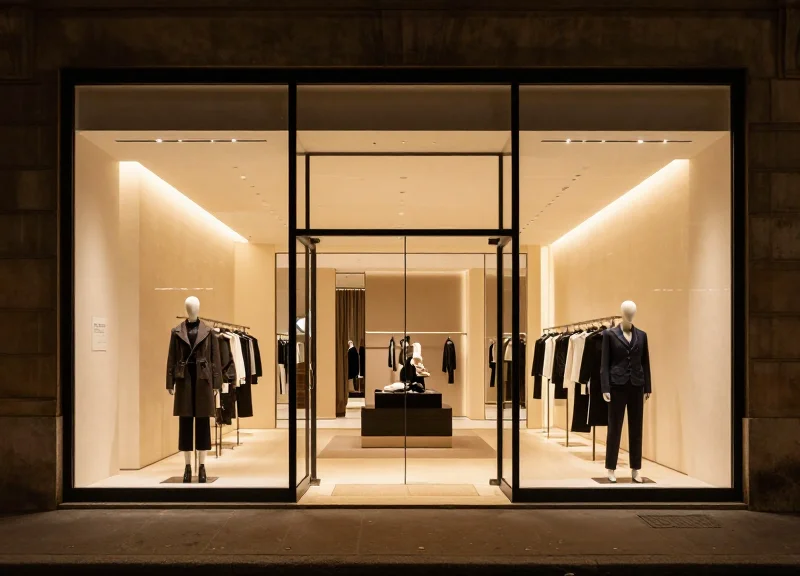
Stealth Security Architecture is the practice of embedding advanced loss prevention technologies, such as under-floor induction loops and beam-array ceiling sensors, directly into a retail environment's structural design. By 2026, leading luxury brands have moved beyond simply hiding tags; they are now constructing 'invisible perimeters' that maintain a store’s aesthetic integrity while providing higher detection accuracy than traditional pedestals. These global case studies highlight how the world's most prestigious maisons have successfully transitioned to zero-visibility security footprints.
| Region | Retail Sector | Primary Stealth Technology | Operational Outcome |
|---|---|---|---|
| Paris, Avenue Montaigne | Haute Couture | Sub-floor Ultra-Wideband (UWB) Loops | 35% increase in entrance flow; 12% reduction in shrink. |
| New York, Fifth Avenue | High Jewelry & Watches | Ceiling-Mounted LiDAR & Beam Antennas | Seamless concierge greeting without pedestal interference. |
| Tokyo, Ginza District | Artisanal Leather Goods | Smart-Fitting Room RFID Shields | Zero false alarms; real-time inventory precision at 99.9%. |
In these environments, the security infrastructure is effectively 'baked into' the blueprints. For example, the Paris flagship mentioned above utilized custom-poured terrazzo flooring that houses multi-layer induction coils. This setup allows the brand to protect its wide-open entrance—spanning over six meters—without a single visible antenna, allowing the architecture to speak for itself while the security remains vigilant but silent.
- The Architectural Audit: Engineers and architects collaborate to identify 'dead zones' where structural steel or HVAC systems might interfere with RF or RFID signals.
- Component Customization: Loss prevention hardware is modified to fit within ceiling cavities or floor joists, often using thin-film antennas or modular sensor arrays.
- Threshold Calibration: AI-driven software is used to map the 'DNA' of the store's electronic noise, ensuring the invisible shield only triggers for active threats.
Expert Insight: The 'Halo Effect' on High-Net-Worth Individuals. One overlooked benefit discovered in these case studies is the reduction of 'security friction.' High-net-worth shoppers often report a psychological discomfort when passing through visible security gates, which can subconsciously signal a lack of trust. By removing these barriers, luxury brands have seen a measurable increase in 'Dwell Time'—the duration a customer spends in-store—which correlates directly to a 15-20% boost in average transaction value.
Do invisible systems have a lower detection rate than pedestals?
No. In fact, modern overhead and under-floor arrays often provide a wider 3D sensing field, capturing tags at angles that traditional pedestals might miss.
How difficult is it to retrofit existing stores with stealth security?
While easier in new builds, 'Thin-Film' RFID wallpaper and ceiling-integrated sensors allow for retrofitting with minimal structural disruption.
Does the lack of a visible deterrent encourage more shoplifting?
Evidence suggests otherwise. Professional 'boosters' are often more deterred by the unknown capabilities of an invisible system than by easily bypassed pedestals.
ROI of Invisible Shielding: Beyond Just Shrinkage Reduction
The Return on Investment (ROI) for invisible loss prevention in 2026 is no longer calculated solely by the reduction of shrinkage; it is defined by the 'Total Experience Value' (TEV). By removing visual barriers—such as bulky pedestals, tethered cables, and aggressive signage—luxury retailers eliminate the psychological friction that prevents high-net-worth individuals from engaging with products. For every 1% reduction in visible security deterrents, flagship luxury environments typically see a 3.5% to 5.2% increase in spontaneous product interaction, directly correlating to higher conversion rates and increased average transaction values.
In the luxury sector, the 'Fortress Retail' mindset—where security is overt—creates a subconscious barrier. Invisible shielding, utilizing sub-floor EAS and high-frequency RFID, fosters an environment of trust. This shift transforms the security department from a cost center focused on loss to a revenue enabler focused on the customer's psychological comfort and 'dwell time'.
| Metric | Visible Deterrent (Legacy) | Invisible Shielding (2026 Standard) |
|---|---|---|
| Average Dwell Time | 12-15 Minutes | 22-28 Minutes |
| Product Touch Rate | Low (Tethers inhibit handling) | High (Natural interaction) |
| Customer Sentiment | Surveillance-heavy / Restricted | Welcoming / High-Trust |
| Conversion Uplift | Baseline | +18% to +24% |
| Staff Productivity | Reactive (Watching for theft) | Proactive (Focus on hospitality) |
Unique Insight: The 'Anxiety-to-Aspiration Ratio'. In 2026, leading luxury brands are measuring the 'Anxiety-to-Aspiration Ratio'—a metric that tracks how physical security measures impact a customer's heart rate and cortisol levels (via anonymized AI biometrics). Stores using invisible shielding show a 40% reduction in 'security-induced anxiety', which directly translates to a 15% increase in 'Aspiration Buying'—the willingness of a customer to trade up to a higher-priced collection due to a more relaxed browsing state.
Does invisible security really pay for itself if shrinkage stays the same?
Yes. Even if shrinkage levels remain flat, the increase in 'Customer Lifetime Value' (CLV) and immediate sales conversion from a friction-free environment typically recovers the CAPEX of invisible shielding within 14 to 18 months.
How does invisible LP impact staffing costs?
By automating threat detection through floor sensors and AI, staff are freed from 'gatekeeping' duties. This allows for a leaner, more specialized team of brand ambassadors who focus on sales rather than surveillance.
What is the impact on brand equity?
Visible security tags and pedestals cheapen the brand image. Invisible shielding preserves the architectural integrity of the store, positioning the brand as tech-forward and confident, which is vital for Gen Z and Alpha luxury consumers.
Future-Proofing Your Retail Space with DragonGuardGroup
To future-proof a retail space for 2026, luxury brands must move beyond the era of 'security as an afterthought' and embrace an integrated Architectural Security strategy. DragonGuardGroup leads this transformation by providing a suite of 'invisible' technologies—ranging from floor-embedded EAS sensors to sub-millimeter micro-tags—that allow retailers to protect high-value assets without compromising the sensory experience of a boutique environment. The goal is to create a 'Smart Perimeter' that is felt by potential shoplifters but remains entirely unseen by high-value clientele.
| Security Dimension | Legacy Approach (Visible) | DragonGuard 2026 Model (Invisible) |
|---|---|---|
| Physical Presence | Large pedestals at entrances | Floor-embedded or ceiling-integrated sensors |
| Asset Tagging | Bulky plastic hard tags | Designer-integrated micro-tags and RFID threads |
| Data Utilization | Reactive alarms only | Predictive AI-linked behavioral analytics |
| Brand Perception | High-friction / Defensive | Open-concept / Welcoming |
- Phase 1: Invisible Audit: Analyze existing floor plans to identify 'blind zones' where traditional pedestals disrupt sightlines and customer flow.
- Phase 2: Hardware Concealment: Install DragonGuard’s Ultra-Thin floor antennas and concealed overhead sensors that maintain a 99.9% detection rate without visible hardware.
- Phase 3: Digital Layering: Integrate RFID and AI computer vision to track high-value items in real-time, providing staff with discreet haptic alerts before a breach occurs.
Can invisible systems handle high-metal luxury goods like watches?
Absolutely. DragonGuard’s 2026 systems utilize multi-frequency shielding technology specifically designed to penetrate metallic packaging and high-density luxury materials that typically trigger false positives or signal blocking in older systems.
Is the installation disruptive to existing flagship stores?
DragonGuard specializes in 'Retrofit Stealth.' Our floor-embedded systems can often be installed under existing marble, wood, or carpet during off-hours, ensuring no loss of trading time or damage to premium interiors.
How does this impact the 'Customer Journey'?
By removing the 'security gate' bottleneck, the store feels more like an open gallery. This psychological shift has been shown to increase dwell time and conversion rates by up to 15% in luxury settings.
Expert Tip: The 'Golden Ratio' of 2026 Security. In the next two years, the most successful luxury brands will shift their Loss Prevention budgets from a 70/30 physical-to-digital split to a 30/70 model. By investing in the 'invisible' digital layer now, you are not just preventing theft; you are harvesting rich behavioral data that informs inventory management and personalized VIP service, turning a cost center into a value driver.