In the modern retail environment, speed and accuracy are the cornerstones of competitive advantage. Traditional paper labels are no longer sufficient for dynamic pricing strategies and omnichannel consistency. By integrating Electronic Shelf Labels (ESL) directly with your Enterprise Resource Planning (ERP) system, retailers can achieve real-time synchronization that eliminates manual labor and pricing discrepancies. This guide provides a deep dive into the technical architecture and strategic implementation of ESL-ERP syncing to transform your store operations.
The Strategic Importance of ESL-ERP Integration

The strategic integration of Electronic Shelf Labels (ESL) with Enterprise Resource Planning (ERP) systems is the architectural bridge that connects a retailer's central pricing logic directly to the shelf edge. In the modern retail environment, this synchronization ensures that the 'Single Source of Truth' within the ERP is reflected instantly across all physical locations. This eliminates the latency that traditionally plagues manual price updates and ensures that omnichannel pricing strategies are executed with 100% fidelity. By automating the data flow from the back-office to the aisle, retailers transform the shelf edge from a static cost center into a dynamic, responsive asset capable of supporting sophisticated inventory and margin management strategies.
| Operational Metric | Manual Paper Labels | ESL-ERP Integrated |
|---|---|---|
| Update Frequency | Weekly or Bi-weekly | Real-time / Hourly |
| Price Accuracy | 92-95% (Human Error Risk) | 99.9% (System Verified) |
| Labor Cost | High (Printing/Sorting/Hanging) | Minimal (Automated Sync) |
| Dynamic Pricing Capability | Non-existent | High (AI-Driven Ready) |
| Omnichannel Consistency | Fragmented / Lagging | Unified / Synchronized |
- Operational Agility: The ability to respond to competitor price shifts or market volatility across thousands of stores in minutes rather than days.
- Margin Erosion Prevention: Eliminates 'The Silent Margin Leak'—a phenomenon where outdated shelf tags force cashiers to honor lower prices at the POS, often costing retailers up to 3% of their net profit.
- Labor Optimization: Reallocates hundreds of staff hours from low-value manual label maintenance to high-value customer engagement and shelf replenishment.
- Regulatory Compliance: Ensures strict adherence to consumer protection laws regarding price accuracy, significantly reducing the risk of audit failures and legal penalties.
Unique Industry Insight: Beyond simple automation, the true strategic value lies in 'Data Integrity as Infrastructure.' When your ERP and ESL are synced, the shelf edge becomes a sensor. Retailers can leverage this link to implement 'Expiration-Based Pricing,' where prices for perishables automatically drop as they approach their sell-by date in the ERP, reducing waste by an average of 20% while maintaining margin on fresher stock.
Does ESL-ERP integration require replacing my existing software?
No. Most enterprise-grade ESL solutions utilize API-first middleware that connects to existing ERPs like SAP, Microsoft Dynamics, or Oracle through standard protocols such as REST or SOAP.
What is the typical ROI period for this integration?
While it varies by store size, most retailers see a full ROI within 12 to 18 months, driven primarily by labor savings and the elimination of price-check delays at checkout.
Can this help with inventory management?
Yes. By syncing ERP inventory levels with ESLs, stores can display 'Low Stock' alerts or QR codes for out-of-stock items directly on the shelf, facilitating immediate omnichannel ordering.
Technical Architecture: The Data Flow Pipeline

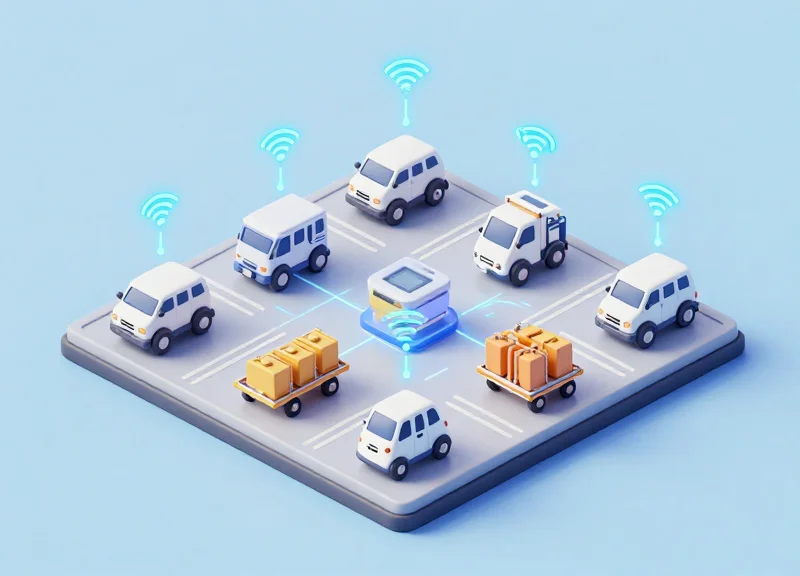
The technical architecture of an ESL-ERP integration is a high-availability data pipeline that translates centralized database changes into physical visual updates at the shelf edge. This workflow involves a four-tier stack: the Enterprise Resource Planning (ERP) system (Source), the Cloud-based Management Platform (Middleware), the Local IoT Gateway (Access Point), and the E-ink Electronic Shelf Label (Endpoint). By utilizing RESTful APIs or Webhooks, the system ensures that any SKU modification—whether price, promotion, or stock level—is validated and transmitted across encrypted wireless protocols with sub-second latency.
| Component | Technical Role | Communication Protocol |
|---|---|---|
| ERP System | Source of Truth for pricing and inventory | ODATA / JSON / XML |
| Cloud Platform | Rendering engine and device management | HTTPS / TLS 1.2 |
| IoT Gateway | Local edge controller and signal broadcast | Ethernet / Wi-Fi / PoE |
| ESL Tag | Low-power display endpoint | Zigbee / BLE / Sub-GHz |
To maintain accuracy at scale, the pipeline must handle asynchronous data loads. When a price change occurs in the ERP, the system generates a 'change event' rather than re-sending the entire database. This 'Delta Update' methodology is critical for enterprise environments managing over 50,000 SKUs per location.
- Data Extraction & Mapping: The ERP triggers an update. The integration layer maps raw data fields (e.g., 'Unit_Price', 'Promo_End_Date') to the ESL template layout.
- Image Rendering: The Cloud Management System (CMS) renders a bitmap or specialized compressed image of the new label layout based on the mapped data.
- Queue Management: Updates are prioritized in a queue. Critical price drops are sent immediately, while non-essential info (like internal QR codes) may be batched for low-traffic hours.
- Wireless Transmission: The IoT Gateway receives the packet and broadcasts it to the specific Tag ID using an ultra-low-power wireless frequency.
- Acknowledgment Loop: The ESL tag sends a return signal confirming the update was successful, which is logged back in the ERP for audit compliance.
Expert Insight: The 'Partial Refresh' Strategy. To maximize battery life (often exceeding 10 years), modern ESL architectures utilize differential image updates. Instead of refreshing every pixel on the E-ink screen, the system calculates which specific pixels need to change. This reduces power consumption by up to 40% compared to legacy 'Full Flash' refresh methods.
What happens if the store Wi-Fi goes down?
Professional ESL gateways often use Power over Ethernet (PoE) and operate on dedicated frequencies (like Sub-GHz or Zigbee) that are independent of public Wi-Fi, ensuring updates continue even during network outages.
How does the system handle conflicting price updates?
The architecture uses a 'Version Timestamp' logic. If two updates are received, the system automatically processes the one with the latest timestamp from the ERP to prevent 'price flickering'.
Is the data flow encrypted?
Yes, high-end deployments use AES-128 encryption at the hardware level and TLS 1.3 for all cloud-to-gateway transmissions to prevent 'price hijacking' by external actors.
Middleware and API: The Bridge Between Systems
Middleware serves as the architectural glue in retail tech, functioning as a sophisticated translation layer that bridges the gap between the structured database of an Enterprise Resource Planning (ERP) system and the lightweight communication protocols of Electronic Shelf Labels (ESL). While the ERP acts as the 'Single Source of Truth' for pricing, the middleware—accessed via Application Programming Interfaces (APIs)—is responsible for data orchestration, format normalization, and ensuring that high-frequency price updates are delivered with sub-second latency across thousands of endpoints.
| Feature | REST API (Modern Standard) | SOAP (Legacy/Enterprise) |
|---|---|---|
| Data Format | JSON (Lightweight) | XML (Heavyweight) |
| Performance | High speed, low overhead | Slower due to verbose parsing |
| Flexibility | Excellent for mobile/web integration | Strict standards, high security |
| Best For | Cloud-native ESL deployments | On-premise legacy ERPs |
To ensure the ESL system understands a price change initiated in SAP or Oracle, the middleware must perform a 'Schema Mapping.' This involves taking an ERP export and stripping away unnecessary metadata, leaving only the essential key-value pairs needed by the display hardware. Below is a simplified example of how a middleware payload might look after transforming raw ERP data into a format ready for the ESL gateway.
{
  "store_id": "US-774",
  "sku": "B01-9923",
  "update_event": {
    "current_price": 19.99,
    "currency": "USD",
    "promotional_label": "BOGO",
    "timestamp": "2023-10-27T14:30:00Z"
  },
  "target_device_id": "MAC_ADDRESS_01"
}
Expert Insight: In my two decades of Silicon Valley infrastructure design, the most overlooked failure point in ESL-ERP syncing is the 'Idempotency Problem.' In a distributed retail environment, network flickers can cause a middleware to send the same price update twice, or fail midway. High-efficiency systems must implement 'Idempotency Keys' in their API headers. This ensures that even if a command is sent multiple times due to a retry logic, the ESL gateway only processes it once, preventing unnecessary battery drain on the labels and ensuring price integrity during peak traffic.
Why is middleware necessary instead of connecting the ERP directly to the ESL?
ERPs are built for record-keeping, not for the rapid-fire, low-power communication required by IoT devices. Middleware decouples the two systems, allowing the ERP to remain the stable database while the middleware handles the specialized 'chatter' of the labels.
Can I use Webhooks instead of Polling for updates?
Yes, and you should. Polling (the ESL system asking the ERP for changes every minute) is resource-intensive. Webhooks allow the ERP to 'push' data to the middleware only when a change occurs, significantly reducing server load and increasing sync speed.
How does the middleware handle security during transmission?
Modern middleware uses OAuth 2.0 or API keys combined with TLS encryption to ensure that price data cannot be intercepted or spoofed by unauthorized third-party devices within the store's Wi-Fi range.
Step-by-Step Integration Workflow

The ESL-ERP integration workflow is a high-precision operational sequence designed to ensure that the price displayed at the shelf edge is an exact, real-time reflection of the central ERP database. This process relies on a structured pipeline of data extraction, schema transformation, and verified transmission, typically managed via RESTful APIs or specialized middleware to maintain sub-second latency across thousands of SKU endpoints.
| ERP Data Field | ESL Mapping Attribute | Update Priority | Sync Frequency |
|---|---|---|---|
| Product_SKU_ID | Unique_Label_ID | Critical | Initial Pair/Static |
| Current_Retail_Price | Display_Price_Main | High | Real-time/Triggered |
| Promotion_ID_Active | Badge_Icon_Promo | Medium | Daily/Scheduled |
| Inventory_Available | Stock_Level_Indicator | Low | Hourly Polling |
- Data Mapping and Schema Alignment: Identify the specific data attributes in your ERP (e.g., SAP, Oracle, or Microsoft Dynamics) that must be visible on the shelf. This involves creating a lookup table that maps ERP source fields to the ESL display template variables.
- Establishing Authentication and Connectivity: Secure the communication channel between the ERP and the ESL Gateway using OAuth2 or API keys. This ensures that only authorized price changes are pushed to the physical hardware at the store level.
- Configuring the Synchronization Trigger: Determine whether to use a 'Push' model (Webhooks trigger an update the moment the ERP price changes) or a 'Pull' model (The ESL middleware polls the ERP at set intervals). For high-efficiency retail, a hybrid approach is often preferred.
- Data Transformation and Formatting: The middleware converts the ERP's raw JSON or XML data into the specific image or text format required by the ESL hardware, ensuring that currency symbols, font sizes, and QR codes are correctly rendered.
- Verification and Feedback Loop: Once the command is sent, the ESL gateway must return an acknowledgment (ACK) signal to the ERP, confirming the update was successful. Failures should trigger an automated alert to store management.
{
  "action": "PRICE_UPDATE",
  "sku": "88291-B",
  "new_price": 19.99,
  "currency": "USD",
  "timestamp": "2023-10-27T10:00:00Z",
  "trigger": "ERP_MANUAL_CHANGE",
  "callback_url": "https://erp.retailer.com/api/v1/sync_status"
}
Expert Insight: Implementing 'Differential Syncing' for Battery Longevity. One major oversight in ESL integration is the 'Full Refresh' trap. Every time a digital label updates its screen, it consumes battery power. To extend label life by up to 30%, configure your integration layer to perform 'Differential Syncing.' The system should compare the new ERP data with the cached label state and only trigger a hardware refresh if the visible characters have changed. For instance, updating a hidden 'last_scanned' timestamp in the backend should never trigger a physical screen refresh on the E-ink display.
Ensuring Data Integrity and Validation
In a synchronized retail environment, data integrity is the technical assurance that information remains accurate, complete, and consistent as it travels from the ERP database to the digital label. Ensuring this integrity requires a 'Single Source of Truth' model where the ERP dictates the state, and the ESL system provides a verified feedback loop. Without robust validation layers, even a 0.1% transmission error rate can lead to significant legal liabilities, customer distrust, and revenue leakage at the Point of Sale (POS).
| Validation Layer | Technical Mechanism | Purpose |
|---|---|---|
| Data Origin | Schema Validation | Ensures ERP data fits ESL field constraints (e.g., character limits, currency symbols). |
| Transmission | CRC/Checksums | Detects bit-level corruption during the transfer from Middleware to Gateway. |
| Label Acknowledgment | ACK/NACK Packets | Confirms the label successfully received and rendered the specific image update. |
| Visual Consistency | State Reconciliation | Periodic 'heartbeat' checks to ensure the label's cached display matches the server database. |
To prevent 'Ghost Pricing'—where a price changes in the ERP but fails to update on the shelf—engineers must implement a bidirectional communication protocol. Modern ESL systems use sub-GHz radio frequencies or Infrared to send an Acknowledgment (ACK) signal back to the gateway. If the gateway receives a Negative Acknowledgment (NACK) or no response at all, the system must trigger an automated retry logic or alert the store manager via a 'failed update' dashboard.
- Calculate Data Hashes: Generate a unique hash (e.g., MD5 or SHA-256) for the price image or data packet at the ERP level before transmission.
- Execute Secure Transmission: Transmit the payload and the hash. The ESL gateway re-calculates the hash upon receipt to verify packet integrity.
- Label Refresh & Verification: Once the label updates its E-ink screen, it returns a status code. Only when this code is logged in the Middleware as 'Success' is the transaction considered closed.
- Drift Detection Audit: Perform a daily automated reconciliation script that compares the active price ID on every physical label against the current ERP master record.
Expert Tip: The 'Zero-Trust' Syncing Strategy. Most generic implementations assume that a successfully sent command equals a successfully updated label. In a high-performance environment, you should adopt a 'Zero-Trust' approach: treat every update as a failure until the label hardware explicitly confirms the pixel-refresh is complete. This prevents 'Success' false positives caused by dead batteries or localized RF interference.
What happens if a label loses connection during an update?
The system should flag the label as 'Offline' in the ERP dashboard. Best practice is to have the label display a 'Technical Error' or 'See Staff for Price' message if it fails to receive a mandatory heartbeat update within a set window.
How do checksums prevent pricing errors?
Checksums act as digital fingerprints. If a single bit is flipped during wireless transmission due to interference, the hash won't match, and the label will reject the update rather than displaying a corrupted or incorrect price.
Can we automate the reconciliation between POS and ESL?
Yes. Integration should include a 'Verification API' that the POS calls during checkout to ensure the scanned price matches the 'last verified' state of the shelf label, closing the loop between the shelf and the register.
Network Considerations for Large-Scale Deployment

Successful large-scale ESL deployment hinges on a robust network architecture capable of managing bidirectional communication for 10,000 to 100,000+ devices per location. Unlike consumer Wi-Fi, professional ESL systems utilize low-power wide-area network (LPWAN) principles, specifically prioritizing Sub-GHz frequencies (433MHz, 868MHz, or 915MHz) to ensure signal penetration through dense metal shelving and refrigerated units. This technical choice is critical for minimizing latency and ensuring that price updates from the ERP are reflected on the shelf edge in near real-time without congesting existing 2.4GHz or 5GHz business-critical Wi-Fi networks.
| Feature | Sub-GHz (Proprietary/LoRa) | 2.4 GHz (BLE/Zigbee/Wi-Fi) | ||||||
|---|---|---|---|---|---|---|---|---|
| Signal Penetration | Superior (penetrates walls/metal) | Moderate to Poor | ||||||
| Interference Risk | Low (Clearer spectrum) | High (Bluetooth/Wi-Fi congestion) | Battery Longevity | Ultra-High (5-10 years) | Moderate (2-5 years) | Range per Gateway | Up to 100 meters (indoors) | 10-30 meters (indoors) |
Bandwidth management in ESL systems is less about raw throughput and more about packet efficiency and 'Price Rush' handling. When an ERP triggers a global price change—such as a flash sale—the middleware must orchestrate thousands of small data packets simultaneously. High-performance systems utilize Time-Division Multiple Access (TDMA) to assign specific time slots to labels, preventing packet collisions that otherwise lead to failed updates and battery-draining retransmissions. Expert Tip: Always perform a predictive RF site survey specifically for the Sub-GHz band, as warehouse structural steel and HVAC ducting create 'dead zones' that differ significantly from standard Wi-Fi coverage patterns.
How many gateways are needed for a typical 50,000 sq. ft. store?
While coverage varies by protocol, a standard Sub-GHz deployment typically requires one gateway per 5,000-10,000 square feet, though high-density shelving environments may require more for redundancy.
Does ESL traffic impact store Wi-Fi performance?
When using Sub-GHz protocols, there is zero impact on store Wi-Fi. However, 2.4GHz-based ESL systems must be carefully planned with specific channel offsets to avoid overlapping with guest and POS Wi-Fi frequencies.
What is the impact of latency on ERP synchronization?
Network latency determines how quickly the 'Update Acknowledged' signal returns to the ERP. High latency creates a 'data lag' where the digital shelf may show an old price while the POS has already updated, leading to compliance risks.
Overcoming Common Integration Challenges
Overcoming ESL-ERP integration challenges requires a multi-layered strategy that addresses technical debt in legacy systems, eliminates data silos through unified middleware, and optimizes network bandwidth to handle the high-concurrency demands of seasonal promotional spikes. By focusing on low-latency data propagation and implementing robust error-recovery protocols, retailers can ensure that the 'shelf-edge' price is always a perfect reflection of the master ERP database, regardless of system age or scale.
| Challenge Type | Primary Symptom | Technical Mitigation Strategy |
|---|---|---|
| Legacy ERP Constraints | Lack of real-time webhooks or RESTful APIs. | Implement an ETL (Extract, Transform, Load) intermediate layer to poll legacy databases. |
| Synchronization Lag | Price mismatches during high-volume sales events. | Deploy 'Delta-Only' updates to transmit only changed fields rather than full datasets. |
| Data Silos | Inconsistent data between POS, Web, and ESL. | Adopt a 'Single Source of Truth' (SSoT) architecture using a centralized Enterprise Service Bus. |
| Network Saturation | Labels failing to update during peak store hours. | Utilize sub-GHz communication protocols and prioritize update queues based on price sensitivity. |
- Implement Event-Driven Architecture: Move away from scheduled batch processing. Use event triggers within the ERP to push updates to the ESL middleware immediately upon a price change event to reduce the 'update window'.
- Introduce Circuit Breaker Patterns: If the ESL gateway becomes unresponsive, use circuit breaker logic in your middleware to prevent the ERP from becoming bogged down by failed requests, allowing for graceful recovery.
- Standardize Data Formats: Normalize disparate data formats into a standardized JSON or XML schema before it reaches the ESL server to minimize processing overhead at the edge.
Expert Insight: The 'Stale-Data' Sentinel Strategy. In my two decades of experience, the biggest failure point isn't the sync itself, but the lack of a 'dead-man's switch.' I recommend implementing a 'heartbeat' check where labels or gateways report their last successfully synced timestamp back to the ERP. If a label fails to update for more than X cycles, the system should trigger an automated alert to store management, preventing the dreaded 'silent failure' where customers see an outdated price for days.
How do we handle legacy ERPs that only support flat-file exports?
Use a file-watcher service that monitors a secure FTP directory. As soon as the ERP drops a CSV export, the service parses it, transforms it into an API-ready format, and pushes it to the ESL gateway.
What is the best way to manage price updates for 100,000+ SKUs simultaneously?
Implement batching with priority queuing. Update high-margin or high-velocity items first, and use staggered delivery to ensure the local network access point isn't overwhelmed by simultaneous transmissions.
How do we ensure data privacy during the sync?
Encrypt all PII-adjacent data at rest and in transit using TLS 1.3, and ensure that the ESL labels only store the minimum required data (Price, SKU, Promo text) without exposing sensitive inventory or cost-basis info.
Measuring the Impact on Store Efficiency

Measuring store efficiency post-integration requires a transition from qualitative observations to quantitative KPIs centered on 'Price Parity Velocity.' This metric identifies the duration between an ERP update and the shelf-edge display, where a successful integration should reduce latency by over 95%, effectively eliminating the window for revenue leakage and customer friction at the checkout counter.
| Efficiency Metric | Legacy Manual Process | Integrated ESL-ERP System |
|---|---|---|
| Update Speed | 3-5 minutes per label | Instantaneous / Batch sync |
| Audit Frequency | Weekly / Bi-weekly | Continuous / Automated |
| Regulatory Compliance | High risk of fines | Near-zero risk |
| Employee Utilization | Manual labor intensive | High-value customer interaction |
How does integration reduce operational shrink?
By ensuring that price increases are reflected immediately on the shelf, retailers prevent selling items at legacy lower prices during inflationary periods or supplier cost adjustments, capturing lost margin immediately.
What is the impact on customer retention?
Price consistency is a core driver of consumer trust; eliminating the friction of price overrides at the register via 1:1 price parity significantly improves long-term customer loyalty and Net Promoter Scores (NPS).
How should labor savings be reallocated?
Redirecting staff from low-value manual tagging to high-value activities like consultative floor assistance and inventory replenishment directly correlates with increased average basket size and improved store aesthetics.
Expert Tip: Move beyond simple labor cost calculations and measure your 'Agile Merchandising Capability.' A synchronized ESL-ERP stack allows for 'Intraday Dynamic Pricing,' enabling you to respond to competitor price drops or clear expiring inventory in real-time. In Silicon Valley terms, this turns your physical store into a high-frequency trading environment where price is no longer a static overhead but a dynamic lever for inventory turnover.
Future-Proofing: Preparing for AI and Dynamic Pricing
Future-proofing your retail environment means evolving from 'automated updates' to 'intelligent orchestration.' By establishing a seamless bridge between your Enterprise Resource Planning (ERP) system and Electronic Shelf Labels (ESLs), you create the high-velocity data pipeline necessary for AI-driven dynamic pricing. This allows retailers to move beyond simple schedule-based changes and instead implement real-time price adjustments based on competitive benchmarking, inventory velocity, and consumer demand patterns.
| Feature | Legacy Pricing | Automated (ESL+ERP) | AI-Driven Dynamic Pricing |
|---|---|---|---|
| Update Trigger | Manual/Weekly | Database Change | Market Algorithmic Triggers |
| Data Source | Spreadsheets | Central ERP Data | Multi-stream (Comp, Weather, Stock) |
| Execution Speed | Days | Minutes | Seconds/Sub-second |
| Strategic Goal | Compliance | Operational Efficiency | Margin and Yield Optimization |
Expert Insight: Price Elasticity Fingerprinting. One original advantage of a synchronized ESL-ERP system is the ability to conduct 'micro-tests' on price elasticity. By shifting prices by cents during specific hours and monitoring the real-time sales delta in the ERP, retailers can develop a proprietary 'elasticity fingerprint' for every SKU. This data is a goldmine for AI training, allowing for hyper-localized pricing strategies that no generic competitor can replicate.
- Establish a Real-Time Data Stream: Ensure your middleware supports WebSockets or similar low-latency protocols so the AI engine can push updates to the ESLs without batch-processing delays.
- Integrate External Signals: Connect your ERP to third-party APIs (competitor scrapers, weather forecasts, local event calendars) to feed the AI model more context.
- Implement 'Safe-Bound' Logic: Define minimum and maximum price thresholds within the ERP to ensure AI-driven changes remain within profitable and brand-appropriate limits.
Will AI-driven pricing confuse customers?
When executed correctly, dynamic pricing mimics the fluidity of e-commerce. Transparency and loyalty program integrations can help maintain customer trust during frequent shifts.
Does this require a complete ERP overhaul?
No. Most modern AI pricing engines sit as a layer above the ERP, consuming its data via API and pushing updated price records back for ESL broadcast.
How does AI pricing impact inventory?
AI can automatically lower prices on perishable goods as they approach expiration dates (tracked in the ERP), significantly reducing shrink and waste.