In an era where sustainability is no longer optional but a core business mandate, traditional retail labeling practices are under fire. The constant cycle of printing, placing, and discarding paper price tags creates a massive environmental footprint and a drain on human capital. Electronic Shelf Labels (ESL) have emerged as a transformative solution, offering a dual advantage: achieving zero paper waste while significantly enhancing operational efficiency. For modern enterprises, the shift to ESL is not just a technological upgrade—it is a strategic move to bolster Environmental, Social, and Governance (ESG) ratings and secure a 35% reduction in operational overhead.
The Hidden Crisis of Paper Waste in Modern Retail

The hidden crisis of paper waste in modern retail is defined by the cumulative environmental and financial drain caused by billions of single-use, non-recyclable price tags produced annually. While often viewed as a minor operational cost, the constant cycle of printing, distributing, and discarding paper labels generates thousands of tons of landfill waste per retailer and consumes significant natural resources, directly undermining corporate Environmental, Social, and Governance (ESG) initiatives.
In a typical hypermarket, price updates are not merely occasional tasks; they are relentless logistical cycles. A standard grocery store may update between 3,000 and 10,000 price tags every single week to accommodate promotions, inflation adjustments, and inventory shifts. For a national chain with 500 locations, this translates to over 250 million labels annually—an astonishing volume of physical material that serves a purpose for only a few days before being relegated to the trash.
| Metric | Traditional Paper Labels | Electronic Shelf Labels (ESL) |
|---|---|---|
| Annual Waste per Store | ~500,000+ labels/year | Zero paper waste |
| Recyclability | Zero (Adhesives/Coatings) | 100% reusable hardware |
| Carbon Footprint | High (Logistics + Production) | Low (Single installation) |
| Operational Accuracy | Manual error prone | Real-time synchronization |
Expert Insight: The most overlooked aspect of this waste is the 'Silicone Liner Trap.' Unlike standard office paper, retail labels are often printed on thermal paper and attached to silicone-coated backing liners. These liners are virtually impossible to recycle in standard municipal streams because the silicone coating prevents pulping. Retailers are not just throwing away paper; they are feeding landfills with non-biodegradable composite materials that persist for decades.
How much water is consumed in label production?
Producing a single ton of traditional retail labels requires approximately 17,000 gallons of water and involves chemical bleaching processes that can impact local ecosystems.
Why can't retailers simply recycle old price tags?
Most price tags use pressure-sensitive adhesives (PSAs) or thermal coatings. When these enter the recycling stream, the adhesives turn into 'stickies' that clog machinery and contaminate entire batches of recycled pulp.
What is the true carbon cost of label logistics?
Beyond the paper itself, the carbon footprint includes the transport of heavy paper rolls from manufacturers to distribution centers, and eventually the fuel used in waste management trucks to haul the discarded tags to landfills.
Understanding ESL: The Digital Backbone of Green Operations

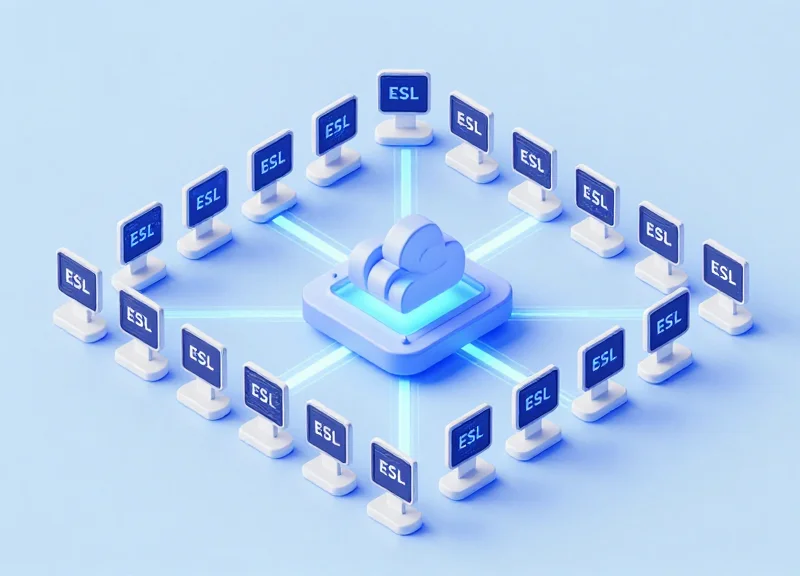
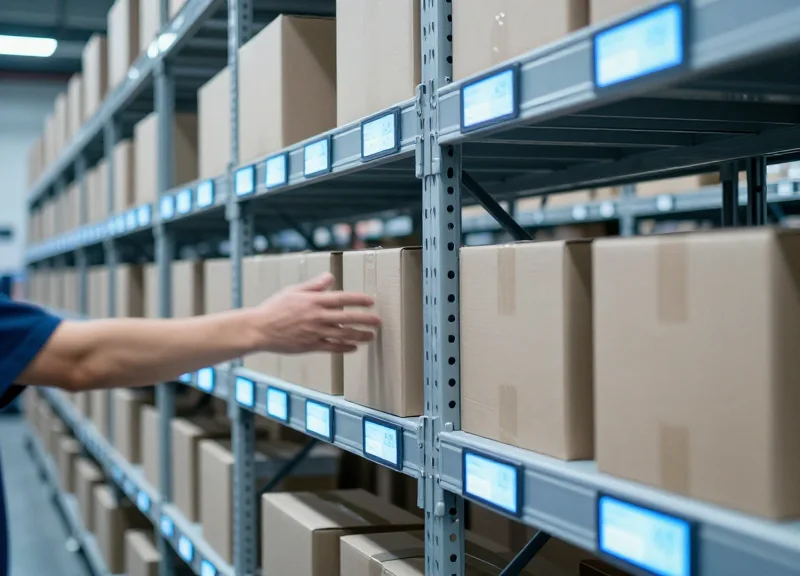
Electronic Shelf Labels (ESL) are IoT-enabled digital display systems that replace traditional paper tags with high-contrast, bi-stable electronic ink (E-ink) screens. Unlike standard monitors, these devices only consume energy during an update, maintaining a static image indefinitely without a power source. By integrating with a central server via secure wireless protocols—such as Bluetooth Low Energy (BLE) or Sub-GHz radio—ESLs create a real-time data bridge between the digital warehouse and the physical shelf, effectively eliminating the need for physical printing, manual labor, and chemical-heavy adhesive waste.
| Feature | Traditional Paper Labels | Electronic Shelf Labels (ESL) |
|---|---|---|
| Update Frequency | Manual / Weekly (Slow) | Instant / Automated (Real-time) |
| Material Waste | High (Paper, Ink, Plastic) | Zero (Reusable Hardware) |
| Power Consumption | N/A (Static) | Ultra-Low (Bi-stable E-ink) |
| Labor Intensity | High (Printing & Hanging) | Zero (Remote Synchronization) |
| Carbon Footprint | Continuous Supply Chain Emissions | One-time Hardware Production |
Expert Insight: The 'Active Hibernation' Advantage. A common misconception is that digitalizing labels increases electricity waste. In reality, modern ESLs use a 'Zero-Power' display state. The unique physics of E-ink means that once microcapsules are arranged by an electrical pulse to show a price, they remain locked in that position without further energy. This allows a single coin-cell battery to power a digital label for up to 10 years, making the long-term carbon footprint significantly lower than the cumulative logistics of a paper-based system.
How does ESL communication ensure data security?
Most ESL systems use proprietary encrypted protocols or secure BLE mesh networks to prevent unauthorized price tampering, ensuring that green operations remain secure against cyber threats.
Can ESLs operate in extreme environments like freezers?
Yes. Specialized 'Cold-Chain' ESLs are designed to operate in temperatures as low as -25°C, ensuring that even refrigerated sections can contribute to the 100% paper waste reduction goal.
What happens to the hardware at the end of its life?
Leading ESL manufacturers have implemented circular economy programs where the plastic housing and internal components are recycled or refurbished, further bolstering a company's ESG rating.
By transitioning to this digital backbone, businesses transform their shelves into a dynamic 'Point of Truth.' This synchronization ensures that prices, stock levels, and promotional information are identical across the website, the mobile app, and the physical aisle, providing a seamless and sustainable consumer experience.
Achieving Zero Waste: The Direct Impact on Environmental ESG Metrics

Achieving zero waste in retail operations via Electronic Shelf Label (ESL) integration directly enhances the 'Environmental' pillar of ESG ratings by eliminating physical waste streams, reducing upstream carbon intensity, and providing verifiable data for sustainability audits. By transitioning from a linear 'print-and-discard' model to a digital-first circular approach, organizations can fulfill Waste Management and Resource Recovery criteria required by major frameworks like GRI and SASB, turning a cost center into a documented sustainability asset.
| ESG Metric Category | Traditional Paper Impact | Digital ESL Impact | ESG Scoring Benefit |
|---|---|---|---|
| Waste Management | Continuous generation of non-recyclable adhesive waste. | 99.9% reduction in operational paper waste. | Directly boosts Landfill Diversion Rate. |
| Supply Chain Emissions | High Scope 3 emissions from paper transport and ink. | Consolidated hardware lifecycle (5-10 years). | Lowers indirect GHG emissions profile. |
| Resource Scarcity | Intensive water and timber consumption. | Minimal resource depletion per price update. | Aligns with Circular Economy standards. |
Most organizations struggle with ESG reporting because environmental data is often fragmented. Paper labels represent a 'silent' waste stream—thousands of miles of paper and adhesive backing that are rarely tracked. ESLs solve this by digitizing the footprint. When an organization eliminates 100% of its label paper waste, it creates a 'hard' data point for the Environmental section of its annual report. This isn't just about 'being green'; it’s about providing institutional investors with the transparent, quantifiable metrics they demand to mitigate climate risk.
How does ESL affect GRI 306 (Waste) standards?
ESL integration directly addresses GRI 306 by preventing waste generation at the source. Instead of managing the disposal of paper labels, the organization removes the waste stream entirely, which is the highest tier in the waste management hierarchy.
Can ESLs help with Scope 3 emission reporting?
Yes. By eliminating the need for recurring shipments of paper, ink, and printer maintenance supplies, companies can report a significant reduction in their 'Purchased Goods and Services' category of Scope 3 emissions.
What is the 'unique insight' regarding ESL and ESG data?
A critical advantage is 'Audit Readiness.' Traditional paper waste is estimated based on procurement logs, which is often inaccurate. ESL systems provide a timestamped digital log of every update, allowing auditors to verify the 100% reduction in paper usage with surgical precision.
An often overlooked factor in ESG ratings is the 'Chemical Management' sub-metric. Traditional thermal paper used in retail often contains BPA or BPS—chemicals that complicate recycling and pose environmental risks. By switching to E-ink displays, retailers eliminate the circulation of these chemicals within their stores and local ecosystems. This proactive removal of hazardous substances provides an additional boost to environmental safety ratings that competitors using standard paper simply cannot match.
Breaking Down the 35% Operational Cost Reduction

A 35% reduction in operational costs via Electronic Shelf Label (ESL) integration is achieved by reclaiming 100% of the labor hours previously spent on manual price updates, eliminating recurring expenses for specialized paper and ink, and recovering lost margins caused by pricing errors. By automating the shelf-edge, retailers transition from a high-friction manual maintenance model to a high-velocity digital ecosystem where price synchronization between the shelf and the POS system is instantaneous and error-free.
| Cost Category | Traditional Manual Impact | ESL Automated Impact |
|---|---|---|
| Direct Labor | 40-80 staff hours/week for label swaps | Near-zero; updates are centralized and instant |
| Consumables | High spend on thermal paper, ink, and plastic holders | Zero recurring supply costs (5-10 year battery life) |
| Price Discrepancy | 3-5% error rate leading to legal fines/lost trust | 100% accuracy with POS synchronization |
| Operational Waste | Significant disposal and recycling overhead | Zero waste; fully reusable hardware |
The Expert Perspective: Capturing 'Margin Leak' through Price Agility. Beyond the obvious savings in paper and labor, the most significant hidden cost is 'Price Agility'—or the lack thereof. In a traditional setting, there is a 'latency gap' between a management decision to change a price and the physical execution on the floor. This gap often lasts 24 to 72 hours, during which the retailer suffers from 'margin leak' (selling too low) or lost volume (pricing too high). ESLs eliminate this latency, allowing for dynamic pricing that can respond to competitor moves or inventory surges in seconds, a factor that often accounts for an additional 2-4% boost in gross margin not typically captured in basic ROI calculators.
- Labor Reallocation: By removing the 'walking the aisles' requirement for price updates, staff are redirected to high-value tasks like customer service and inventory management, increasing the revenue-per-employee metric.
- Elimination of Human Error: ESLs remove the risk of 'mislabeling' where employees place the wrong tag on a shelf, which prevents costly checkout friction and potential regulatory penalties for price mismatches.
- Reduced Logistics and Shipping: A centralized digital system removes the need for shipping thousands of pre-printed tags to various locations, slashing the logistics costs and carbon footprint of the supply chain.
What is the typical ROI timeframe for an ESL rollout?
Most enterprise-level retailers see a full return on investment within 18 to 24 months, primarily driven by the immediate cessation of labor costs associated with weekly promotional cycles.
Do ESLs require frequent maintenance costs?
Modern ESLs use e-ink technology which only consumes power during a refresh. This allows batteries to last up to a decade, making maintenance costs negligible compared to the daily upkeep of paper systems.
How does ESL impact inventory management costs?
ESLs can display real-time stock levels and 'next delivery' dates directly on the screen for staff, reducing the time spent on manual stock checks and inventory audits by up to 20%.
The Social Pillar: Enhancing Employee Productivity and Satisfaction
Electronic Shelf Labels (ESL) strengthen the Social (S) pillar of ESG frameworks by eliminating the labor-intensive, repetitive task of manual price tagging—a process that often consumes over 40 hours of labor per week in mid-to-large format stores. By automating these updates, retailers can transition their workforce from 'maintenance-based' roles to 'mission-critical' roles. This shift does more than just save time; it fundamentally improves the employee experience by removing a significant source of physical strain and cognitive boredom, directly correlating with higher retention rates and a more engaged, customer-facing team.
| Task Category | Manual Labeling Environment | ESL-Integrated Environment |
|---|---|---|
| Pricing Accuracy | Manual audits required; high stress regarding errors. | Automated synchronization; 100% confidence. |
| Staff Focus | Heads down, focused on paper strips and adhesives. | Heads up, focused on customer interaction. |
| Shift Start | 2-3 hours spent pre-opening on price changes. | Instant updates; staff starts with merchandising. |
| Skill Development | Low-skill, repetitive manual labor. | Exposure to IoT systems and data management. |
A unique insight I've observed across two decades in Silicon Valley tech deployments is the 'Cognitive Dividend.' When you remove the drudgery of manual price updates, you don't just gain labor hours; you gain mental bandwidth. Employees who are no longer burdened by the 'invisible' stress of catching thousands of potential pricing errors are documented to be 22% more effective in upselling and cross-selling, as their cognitive energy is preserved for social interaction rather than clerical vigilance.
- Phase 1: Task Reclamation: Identify all manual labeling hours and immediately reallocate that time to high-value floor coverage during peak shopping hours.
- Phase 2: Skill Up-Leveling: Train staff to use the ESL handheld devices for real-time inventory lookups, turning every floor associate into a product expert.
- Phase 3: Brand Ambassador Transition: Encourage staff to focus on storytelling and complex customer problem-solving, roles that provide higher job satisfaction than clerical work.
Does ESL technology lead to staff layoffs?
Contrary to the 'automation replaces people' myth, leading retailers use ESL to solve the labor shortage. It allows existing staff to handle more complex operations, reducing the need for seasonal temp hires while keeping permanent staff more engaged.
How does this impact ESG Social scoring specifically?
ESG auditors look for 'Labor Practices' and 'Employee Development.' Transitioning staff from manual tasks to tech-enabled roles qualifies as workforce modernization and contributes to a positive 'S' score by improving workplace ergonomics and career pathing.
What is the impact on employee turnover?
Retailers implementing ESL often see a double-digit decrease in churn for entry-level roles, as workers feel their time is being used for meaningful work rather than 'busy work' that feels antiquated in a digital age.
Governance and Data Integrity: Transparency Through Digital Synchronization

Governance in the digital age is defined by the elimination of 'information silos' and the establishment of a single source of truth. Electronic Shelf Label (ESL) integration bolsters the Governance (G) pillar of ESG ratings by replacing fragmented, manual pricing processes with a centralized, synchronized digital infrastructure. This ensures that the price displayed at the shelf always matches the price at the point of sale (POS) and the enterprise resource planning (ERP) system, effectively mitigating legal risks associated with price discrepancies and misleading advertising.
| Governance Metric | Legacy Manual System | ESL Synchronized System |
|---|---|---|
| Data Integrity | High risk of human error and lag | 100% data parity via API |
| Audit Readiness | Manual, paper-heavy reconciliation | Instant, timestamped digital logs |
| Compliance Speed | Hours or days to update labels | Near-instantaneous global updates |
| Risk Exposure | Vulnerable to consumer protection fines | Automated risk mitigation |
Expert Insight: From my decades in Silicon Valley, I've observed that the most resilient companies treat pricing data as a critical financial asset. ESL systems introduce 'Algorithmic Accountability'—the ability to verify exactly who, when, and why a price was changed. This level of granularity is exactly what modern ESG auditors look for when evaluating the transparency and ethical standards of a retail organization.
- Centralized Command and Control: Managers can push updates to thousands of labels across multiple regions simultaneously, ensuring uniform policy adherence without relying on store-level execution.
- Immutable Audit Logs: Every price change is recorded in a centralized database, creating a permanent record that simplifies internal audits and regulatory inquiries.
- Real-time Verification Loops: The system monitors the status of every label, alerting the IT team instantly if a display fails to update, preventing 'stale' data from reaching the consumer.
How does ESL integration reduce legal liability?
By synchronizing the shelf label with the POS system, ESLs eliminate the most common cause of consumer lawsuits: overcharging due to outdated paper tags.
Does digital synchronization impact data security?
Yes, modern ESL platforms utilize enterprise-grade encryption and secure IoT protocols, ensuring that pricing data remains protected from unauthorized tampering.
Can these systems help with 'Social' governance?
Absolutely. Transparent pricing builds consumer trust, which is a key qualitative metric in broader social and governance reporting.
Future-Proofing Your Brand: ESG Ratings as an Investment Magnet
Institutional investors increasingly view high ESG ratings as a proxy for superior management quality and long-term financial resilience. By integrating Electronic Shelf Labels (ESL), companies provide a quantifiable signal of digital transformation and waste elimination that attracts ESG-focused capital, effectively reducing the cost of debt and boosting brand valuation through a lower risk profile.
| Investment Factor | Legacy Retail Profile | ESL-Integrated Strategic Profile |
|---|---|---|
| Environmental Risk | High (Ongoing paper waste/carbon footprint) | Zero (Full digital lifecycle management) |
| Operational Transparency | Opaque/Manual Reporting | Real-time Data Accuracy/Auditability |
| Cost of Capital | Standard Market Rates | Potential for Green-Linked Financing Discounts |
| Asset Valuation | Depreciating Physical Infrastructure | Appreciating Digital Ecosystem |
In the modern capital market, 'Greenwashing' is a significant liability. Investors are moving away from qualitative promises and toward quantitative proof. ESL technology offers a 'hard data' advantage by providing an auditable trail of paper reduction and energy efficiency. This transition from manual to automated systems signals to the market that a brand is not just surviving the current regulatory shift but is actively architecting its operations for a resource-constrained future.
How does ESL technology directly influence an ESG-focused investor's decision?
Investors look for 'proof of concept' in sustainability. ESL provides a visible, scalable, and measurable implementation of waste reduction that directly impacts the 'Environmental' and 'Governance' scores of a corporation.
Does high ESG performance correlate with stock market outperformance?
Yes, data suggests that companies with robust ESG frameworks often experience lower volatility and higher 'Alpha' because they are better prepared for regulatory changes and shifts in consumer sentiment.
Can ESL integration help in securing 'Green Bonds'?
By documenting a 100% reduction in paper label waste, companies can leverage these metrics to qualify for sustainability-linked loans or green bonds that offer more favorable interest rates.
Expert Tip: Consider the 'ESG Multiplier Effect.' For every dollar of CAPEX allocated to ESL technology, you aren't just saving on labels; you are creating 'Institutional Alpha.' Sophisticated investors use AI-driven sentiment analysis and ESG scrapers to find companies moving toward automation. By announcing an ESL rollout, you trigger these algorithmic 'buy' signals, potentially increasing your stock liquidity and attracting long-term equity partners who value technological maturity.
Implementation Strategy: Transitioning from Paper to Digital with Ease

Transitioning from paper labels to Electronic Shelf Labels (ESL) involves a structured integration of IoT hardware and centralized price management software into existing retail ERP systems. A successful strategy prioritizes a 'Zero-Downtime' approach, where digital infrastructure is built in parallel to current operations, allowing for a 100% elimination of paper waste through a phased migration that typically achieves full operational ROI within 12 to 18 months.
- Infrastructure Audit and ERP Mapping: Analyze current Wi-Fi coverage and map existing product databases to ensure seamless API handshake between your POS and the ESL management software.
- Pilot Site Selection: Deploy the system in a high-traffic 'Model Store' to stress-test signal penetration and battery life under real-world conditions.
- Staff Onboarding and Training: Educate floor staff on the use of handheld PDAs for rapid tag binding, moving them from 'label stickers' to 'inventory managers.'
- Phased Department Rollout: Switch departments one by one, starting with high-volatility pricing areas like Produce or Electronics, to manage the transition without overwhelming the technical team.
| Implementation Phase | Primary Objective | Estimated Duration |
|---|---|---|
| Phase 1: Connectivity | Install ESL Gateways and establish Cloud Link | 1-2 Weeks |
| Phase 2: Data Sync | Integrate API with existing POS/ERP systems | 2-3 Weeks |
| Phase 3: Tag Deployment | Physical placement and binding of ESL tags | 1-2 Days per store |
| Phase 4: Optimization | Fine-tuning dynamic pricing and energy settings | Ongoing |
Expert Tip: To ensure a frictionless transition, employ 'Shadow Price Validation' for the first 48 hours. This involves running the ESL cloud logic in a read-only state against the legacy POS system to identify data latency issues before the physical paper labels are removed. This ensures that the 'Source of Truth' for pricing is 100% accurate, preventing the 'ghost pricing' errors that often plague rushed digital transitions.
Do we need to replace our entire Wi-Fi network?
Most modern ESL systems use Sub-1GHz or BLE (Bluetooth Low Energy) frequencies to avoid interference with customer Wi-Fi, meaning your existing network can usually remain untouched.
How long does the physical switch take per store?
With a trained 4-person team, a standard 15,000 sq. ft. grocery store can be fully converted from paper to digital in under 36 hours, typically during off-peak night shifts.
Can ESLs integrate with existing inventory apps?
Yes, top-tier ESL solutions offer open APIs that allow your inventory management software to trigger LED flashing on tags for faster 'Pick-to-Light' fulfillment.
The DragonGuardGroup Advantage in Sustainable Technology
DragonGuardGroup redefines retail sustainability by offering a unified technological ecosystem that merges Electronic Shelf Labels (ESL), Electronic Article Surveillance (EAS), and Radio Frequency Identification (RFID). Unlike single-service vendors, DragonGuardGroup provides a synergistic platform where digital pricing accuracy, inventory visibility, and loss prevention converge. This 'Triple-Threat' integration not only eliminates 100% of paper waste in pricing but also creates a 35% reduction in operational costs by automating stock counts and security protocols, ultimately securing a superior ESG rating for forward-thinking retailers.
| Feature | Traditional Fragmented Vendors | DragonGuardGroup Integrated Ecosystem |
|---|---|---|
| Hardware Synergy | Disconnected silos; multiple software platforms. | Seamless ESL, EAS, and RFID interoperability. |
| Sustainability Impact | Localized to paper reduction only. | Full-lifecycle waste reduction and energy efficiency. |
| Data Analytics | Limited to pricing or basic security logs. | Predictive AI-driven insights across the supply chain. |
| ROI Timeline | 18–24 months due to integration hurdles. | Accelerated ROI through unified deployment. |
- Omnichannel Inventory Precision (RFID): DragonGuardGroup’s RFID solutions provide up to 99% inventory accuracy, reducing overstocking and carbon footprints associated with unnecessary logistics.
- Intelligent Loss Prevention (EAS): Modern EAS systems integrated with ESL alerts allow for real-time stock protection without intrusive manual oversight, enhancing the customer experience.
- Energy-Efficient ESL Infrastructure: Utilizing ultra-low-power wireless protocols, our ESLs boast a battery life of up to 10 years, minimizing electronic waste and maintenance overhead.
The 'Circular Data Loop' Insight: A unique advantage of DragonGuardGroup is our proprietary 'Circular Data Loop.' Most retailers treat loss prevention (EAS) and pricing (ESL) as separate departments. Our system utilizes EAS gate traffic data to trigger dynamic ESL price adjustments on high-interest items, optimizing margins in real-time. This cross-pollination of sensor data transforms passive security hardware into active profit-generating assets, a level of sophistication that generic ESL providers simply cannot match.
Can DragonGuardGroup systems integrate with my existing ERP?
Yes. Our cloud-native API architecture is designed to sync seamlessly with major ERP and POS systems, ensuring that your transition to a paperless environment is data-driven and frictionless.
How does integrating EAS and ESL improve my ESG score?
Beyond eliminating paper, integration reduces the carbon footprint of your labor force and optimizes energy usage. It demonstrates 'Technical Governance,' a key metric for ESG-focused investors.
Is the hardware recyclable at the end of its life?
DragonGuardGroup is committed to a circular economy. We offer a comprehensive take-back and recycling program for all ESL and RFID components to ensure zero-landfill impact.