RFID Forklift and Pallet Management
A practical RFID deployment framework to capture pallet and handling-point identities within the receiving and put-away workflow, including equipment roles, site conditions and handover checks.
Discuss this solutionWhat the operation needs
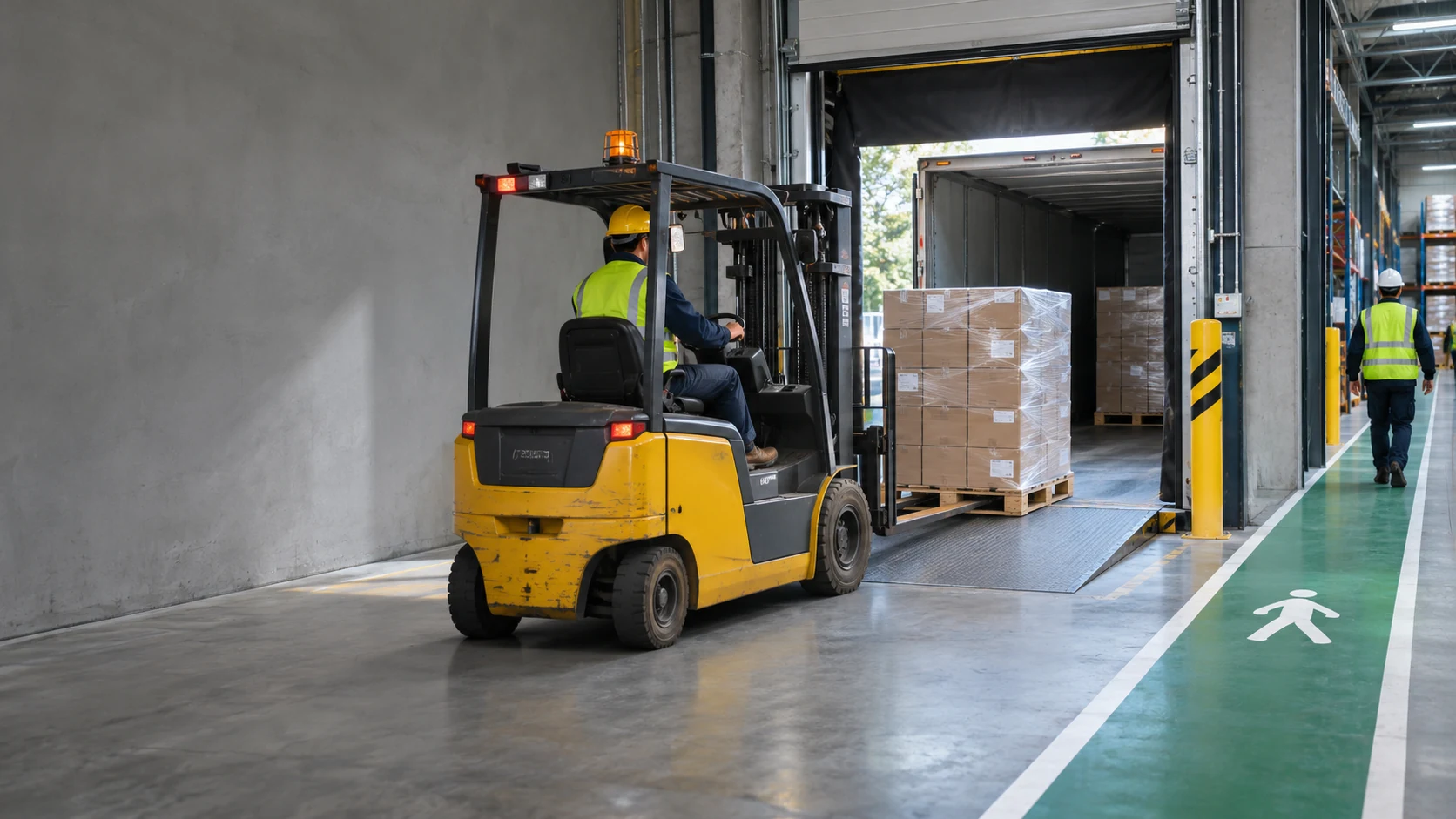
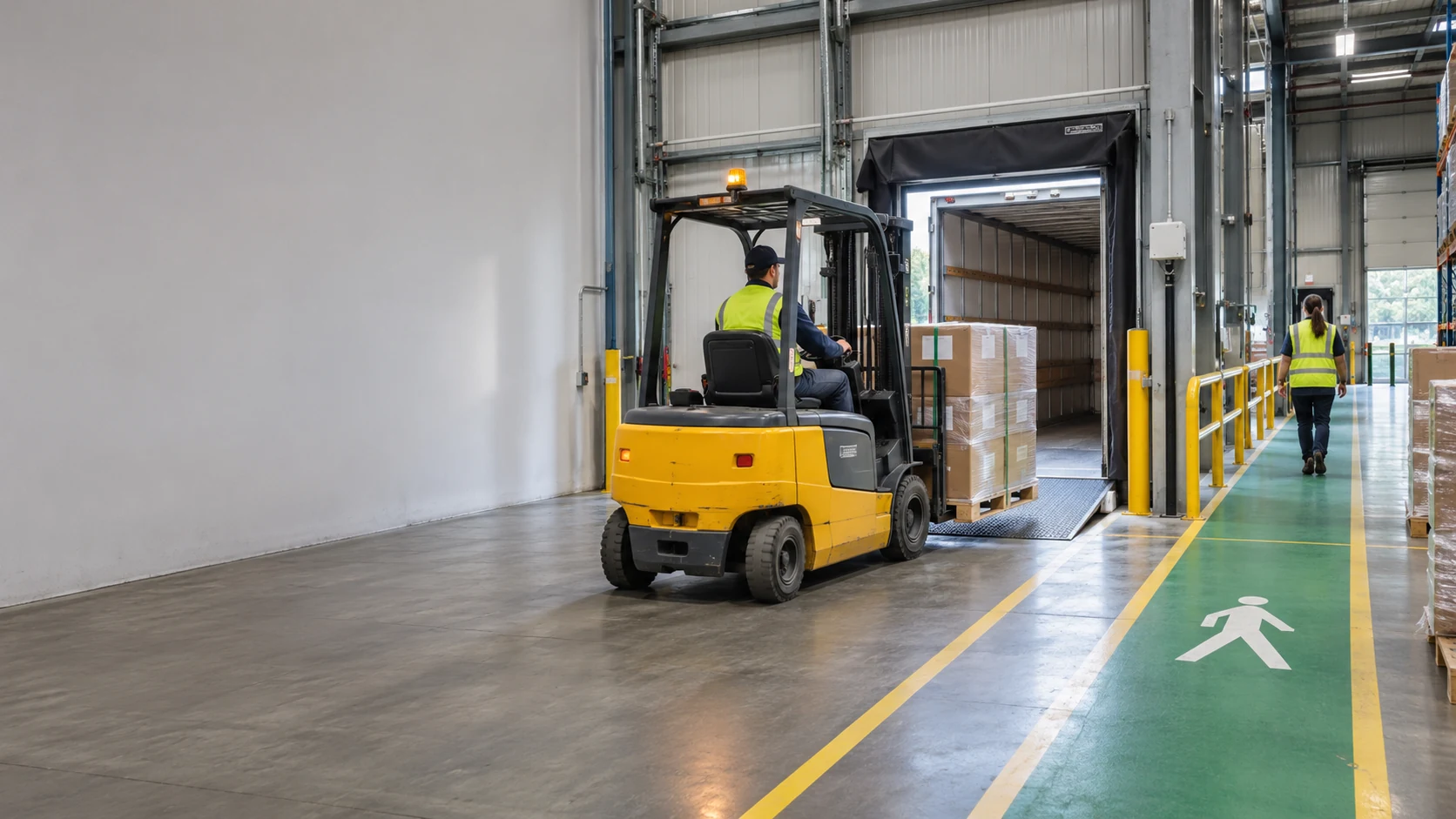
This solution is intended to capture pallet and handling-point identities within the receiving and put-away workflow. It brings together the equipment roles and operating decisions needed for a warehouse forklift approaching a pallet at a loading bay with clearly separated pedestrian lanes. The project brief should be owned jointly by warehouse supervisors, forklift operators and system integrators; the supplier and installer need the same description of the items, locations and actions that will be tested.
Define the read event around a particular load movement, such as pickup or put-away. An antenna reading several nearby pallets does not establish which pallet the driver is handling.
Equipment and responsibilities
- Pallet or load identifiers
- Suitable readers and antennas
- Operation triggers where provided
- Warehouse-system interface
Mounting must account for metalwork, vibration, impact and cable routing while keeping the driver’s sightline clear. Any trigger or location association must be specified in the selected configuration.
How the workflow is assembled
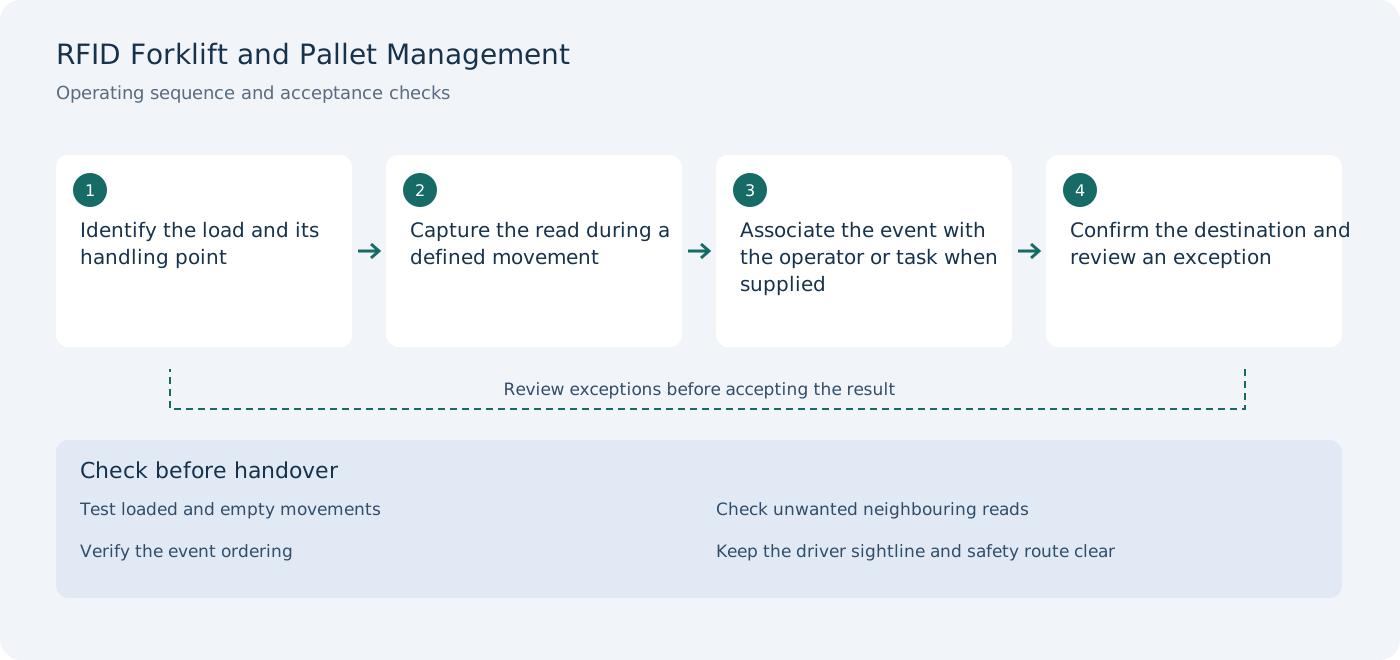
Identify the load and its handling point
Acceptance check: test loaded and empty movements.
Capture the read during a defined movement
Acceptance check: check unwanted neighbouring reads.
Associate the event with the operator or task when supplied
Acceptance check: verify the event ordering.
Confirm the destination and review an exception
Acceptance check: keep the driver sightline and safety route clear.
Site conditions to verify
- Forklift metalwork and vibration
- Reader mounting and cable protection
- Neighbouring pallets in the read zone
- Safety and driver visibility
Use these conditions to define a representative pilot rather than testing only an empty or ideal installation. The final quotation should identify the selected hardware variants, installation responsibilities and any external-system work.
Commissioning and handover
Run loaded and empty passes near neighbouring pallets. Review the event sequence against the actual task before allowing a warehouse record to change.
- Test loaded and empty movements
- Check unwanted neighbouring reads
- Verify the event ordering
- Keep the driver sightline and safety route clear
Keep the results with the selected product configuration and site layout. A photograph or demonstration from another environment does not establish the result for this installation. Related products below are candidates for selection; their specifications and application notes should be reviewed before the equipment list is fixed.
Discuss the deployment
Tell us the task, product types, site layout and installation conditions. We will help you verify the appropriate model and configuration for the project.