RFID Bottle Retail Inventory and Security
A practical RFID deployment framework to associate bottle identities with stock records and evaluate security at the selected operation points, including equipment roles, site conditions and handover checks.
Discuss this solutionWhat the operation needs
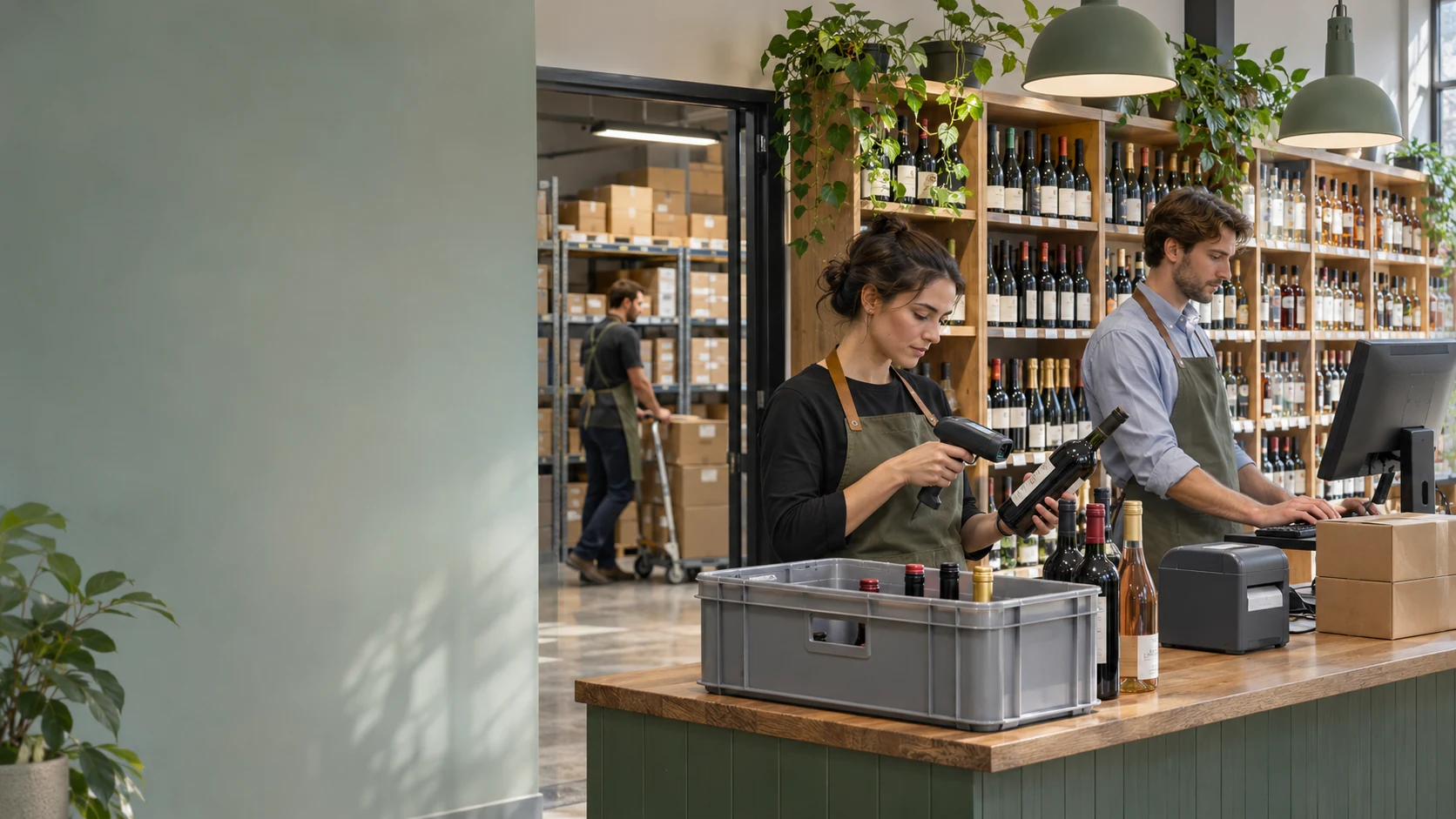
This solution is intended to associate bottle identities with stock records and evaluate security at the selected operation points. It brings together the equipment roles and operating decisions needed for a wine and spirits retail shop with bottle shelves, a stockroom and staff checking bottle identities at a counter. The project brief should be owned jointly by wine retailers, stockroom staff and RFID integrators; the supplier and installer need the same description of the items, locations and actions that will be tested.
Qualify the tag with the filled bottle, capsule and final label material. Water, alcohol-containing liquids and metallic decoration can make an empty-bottle demonstration misleading.
Equipment and responsibilities
- Bottle-suitable RFID tags
- Inventory or counter readers
- Optional compatible security equipment
- Item records
Choose whether the operation needs item-level inventory, a sale event or an interface to separate security equipment. A valid RFID read alone does not determine whether the bottle is paid.
How the workflow is assembled
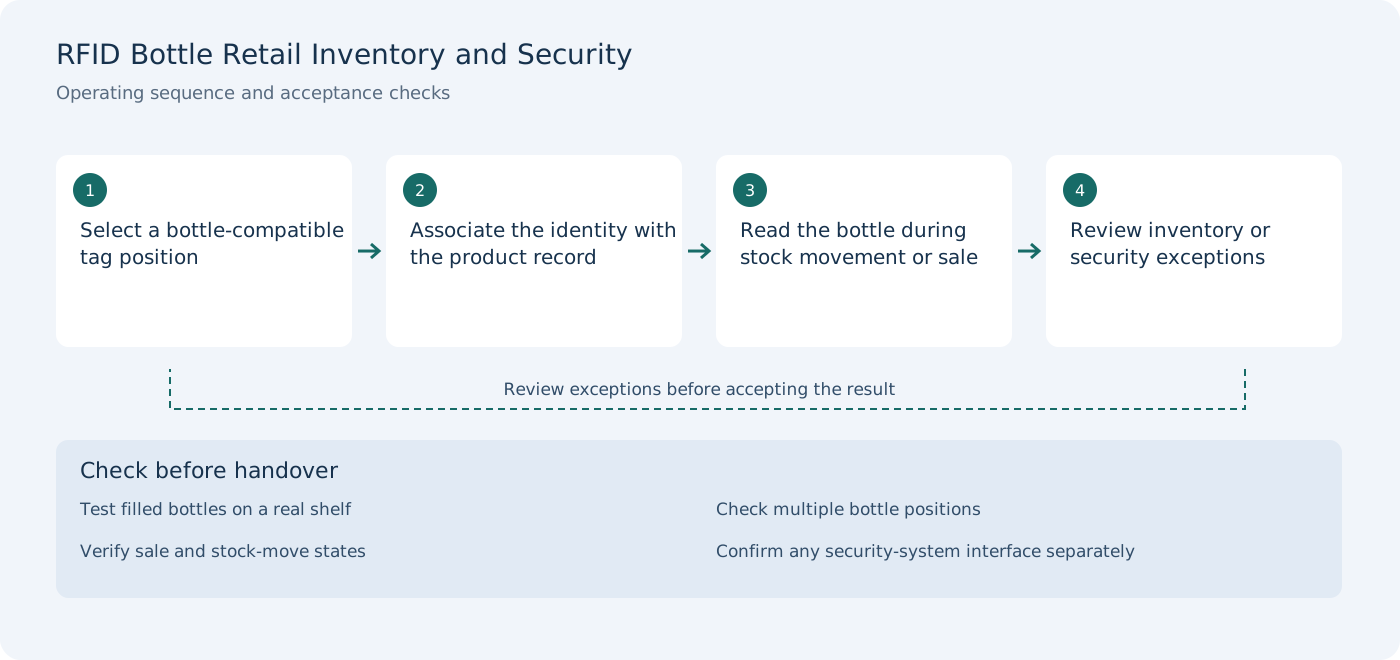
Select a bottle-compatible tag position
Acceptance check: test filled bottles on a real shelf.
Associate the identity with the product record
Acceptance check: check multiple bottle positions.
Read the bottle during stock movement or sale
Acceptance check: verify sale and stock-move states.
Review inventory or security exceptions
Acceptance check: confirm any security-system interface separately.
Site conditions to verify
- Liquid-filled bottles
- Foil capsules and metallic labels
- Close-packed shelves
- The difference between a read event and an alarm decision
Use these conditions to define a representative pilot rather than testing only an empty or ideal installation. The final quotation should identify the selected hardware variants, installation responsibilities and any external-system work.
Commissioning and handover
Test densely packed shelf positions and a normal stock movement. Keep the product-to-tag record consistent when a damaged label is replaced.
- Test filled bottles on a real shelf
- Check multiple bottle positions
- Verify sale and stock-move states
- Confirm any security-system interface separately
Keep the results with the selected product configuration and site layout. A photograph or demonstration from another environment does not establish the result for this installation. Related products below are candidates for selection; their specifications and application notes should be reviewed before the equipment list is fixed.
Discuss the deployment
Tell us the task, product types, site layout and installation conditions. We will help you verify the appropriate model and configuration for the project.