
RFID and ESL Library Information
A practical ESL deployment framework to keep shelf information aligned with catalogue or location data where an integration is provided, including equipment roles, site conditions and handover checks.
Discuss this solutionWhat the operation needs
This solution is intended to keep shelf information aligned with catalogue or location data where an integration is provided. It brings together the equipment roles and operating decisions needed for a contemporary library shelf with electronic shelf information and a reader searching for the correct section. The project brief should be owned jointly by librarians, collection managers and library-system integrators; the supplier and installer need the same description of the items, locations and actions that will be tested.
Decide whether the display represents a shelf, collection, category or catalogue search result. Shelf-level information and individual-book RFID identification should use distinct records connected through the library-system interface.
Equipment and responsibilities
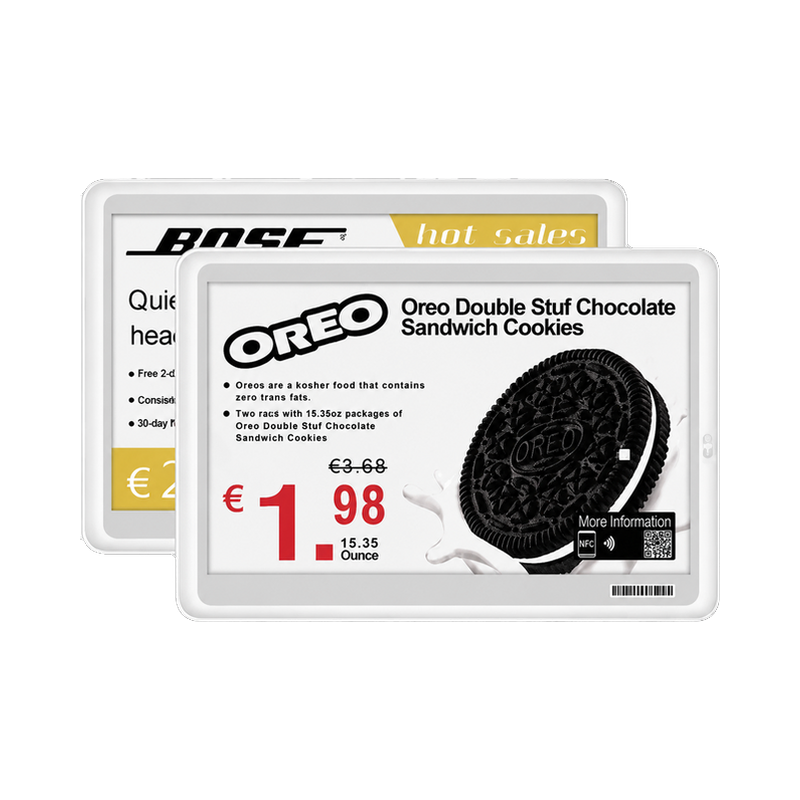
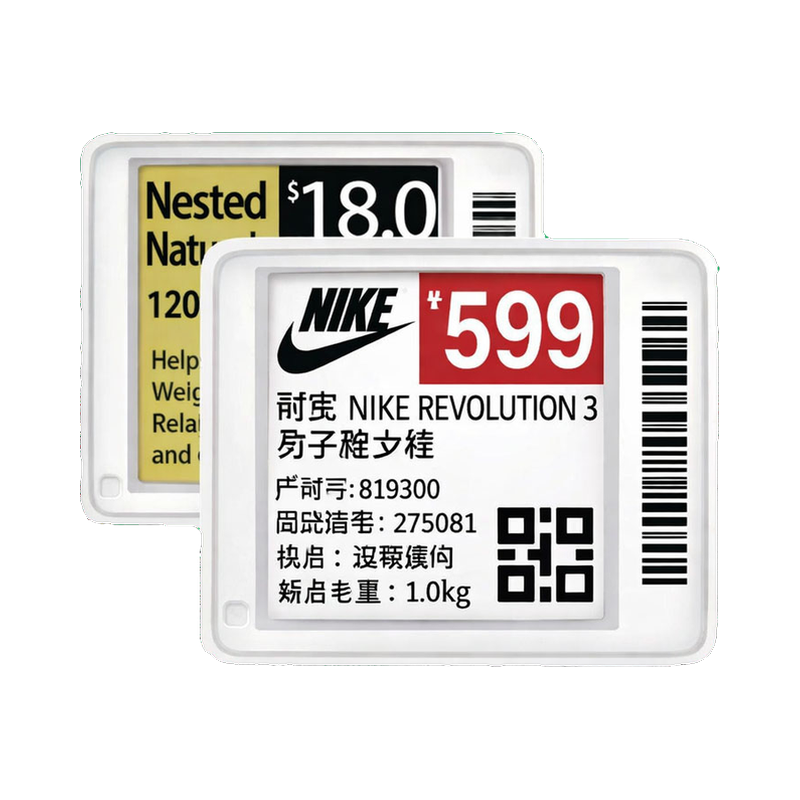
- Electronic shelf displays
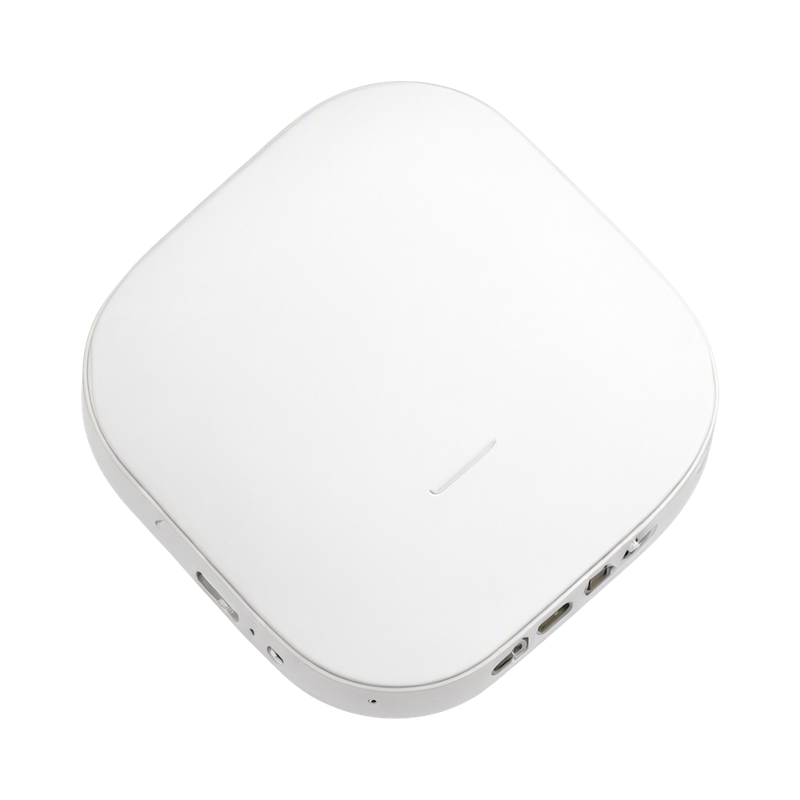
- Gateways
- Shelf-location records
- Catalogue data interface
- Optional matched RFID identification equipment and a defined host-system interface
Test long titles and multilingual content at the installed viewing distance. Readers need a useful section cue rather than an overcrowded electronic replica of the catalogue. If RFID circulation or inventory is included, specify its supported tag and reader protocol separately from the display network.
How the workflow is assembled
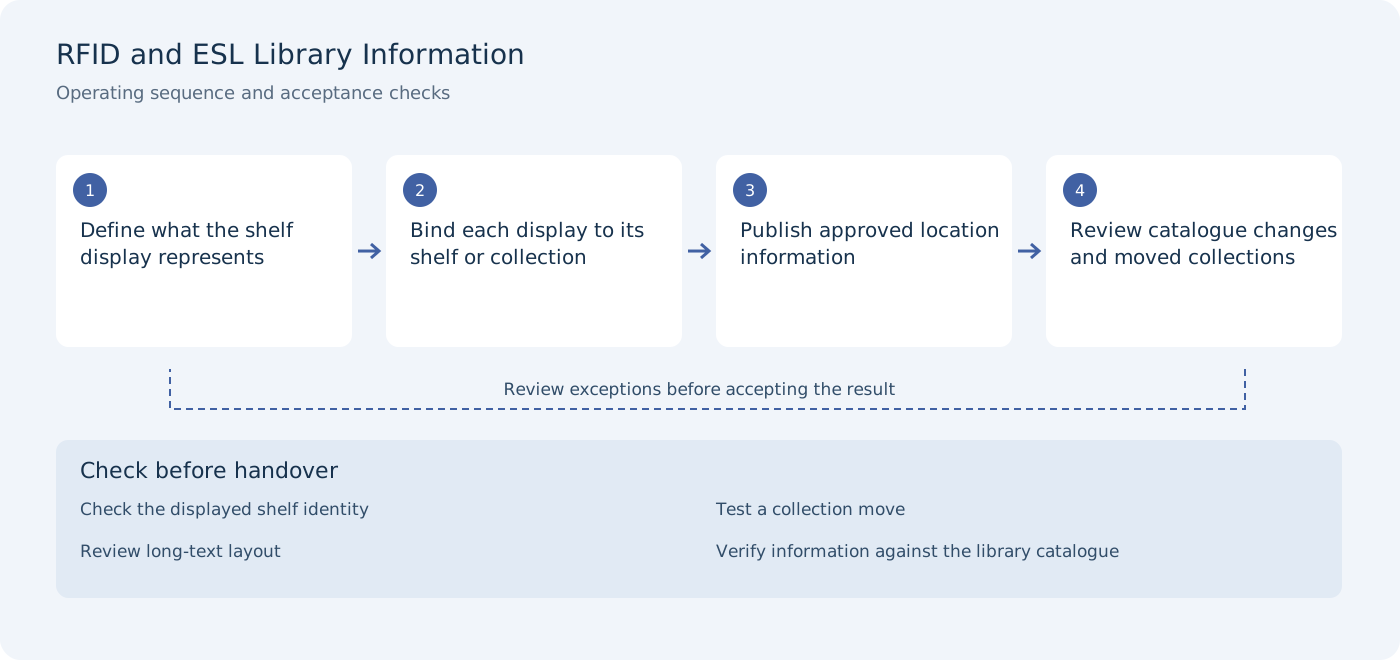
Define what the shelf display represents
Acceptance check: check the displayed shelf identity.
Bind each display to its shelf or collection
Acceptance check: test a collection move.
Publish approved location information
Acceptance check: review long-text layout.
Review catalogue changes and moved collections
Acceptance check: verify information against the library catalogue.
Site conditions to verify
- Readable type at shelf height
- Long titles and multilingual text
- Radio coverage among metal shelves
- The difference between shelf information and book-level tracking
Use these conditions to define a representative pilot rather than testing only an empty or ideal installation. The final quotation should identify the selected hardware variants, installation responsibilities and any external-system work.
Commissioning and handover
Move a small collection and verify the display and catalogue-location update together. Confirm who corrects a mismatch observed by a reader or librarian, and check a known book identity through the selected RFID workflow where supplied.
- Check the displayed shelf identity
- Test a collection move
- Review long-text layout
- Verify information against the library catalogue
Keep the results with the selected product configuration and site layout. A photograph or demonstration from another environment does not establish the result for this installation. Related products below are candidates for selection; their specifications and application notes should be reviewed before the equipment list is fixed.
Discuss the deployment
Tell us the task, product types, site layout and installation conditions. We will help you verify the appropriate model and configuration for the project.