Battery-powered Mobile Asset Location
A practical GPS deployment framework to select a battery-powered location device around the asset and its reporting requirement, including equipment roles, site conditions and handover checks.
Discuss this solutionWhat the operation needs
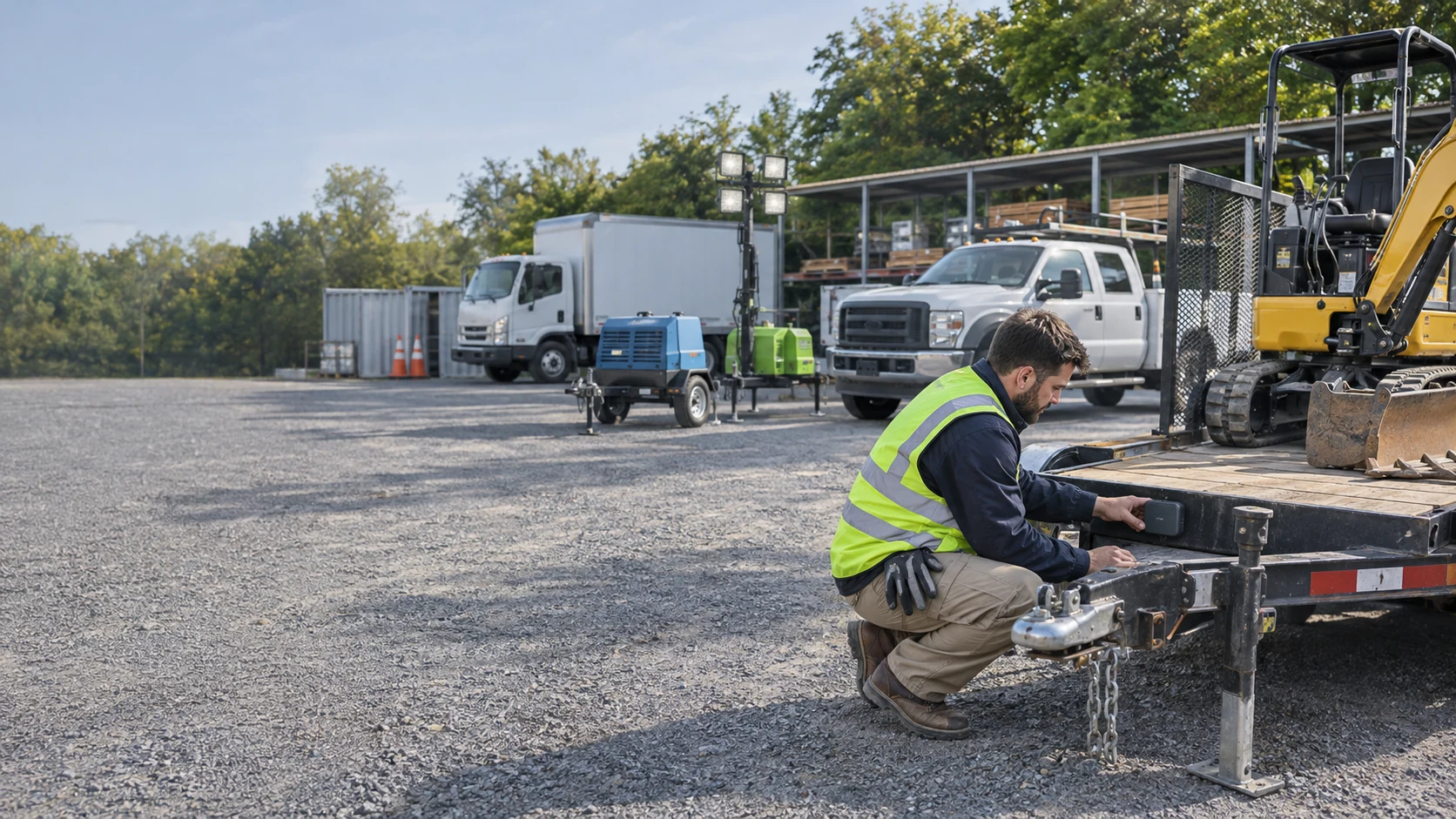
This solution is intended to select a battery-powered location device around the asset and its reporting requirement. It brings together the equipment roles and operating decisions needed for parked commercial vehicles and movable equipment in a storage yard with a worker checking an unobtrusive asset tracker. The project brief should be owned jointly by asset owners, equipment-rental teams and tracking-system integrators; the supplier and installer need the same description of the items, locations and actions that will be tested.
Choose the reporting pattern around the asset’s movement and service access. A frequently reporting battery device has a different power requirement from one checked only at scheduled intervals.
Equipment and responsibilities
- Asset-suitable location devices
- Appropriate fixing
- Mobile connectivity where required
- Supported platform
Validate the mounting on the real asset, including sheltered parking or metal structures that may obstruct reception. Magnetic attachment must also be acceptable for the asset and its handling.
How the workflow is assembled
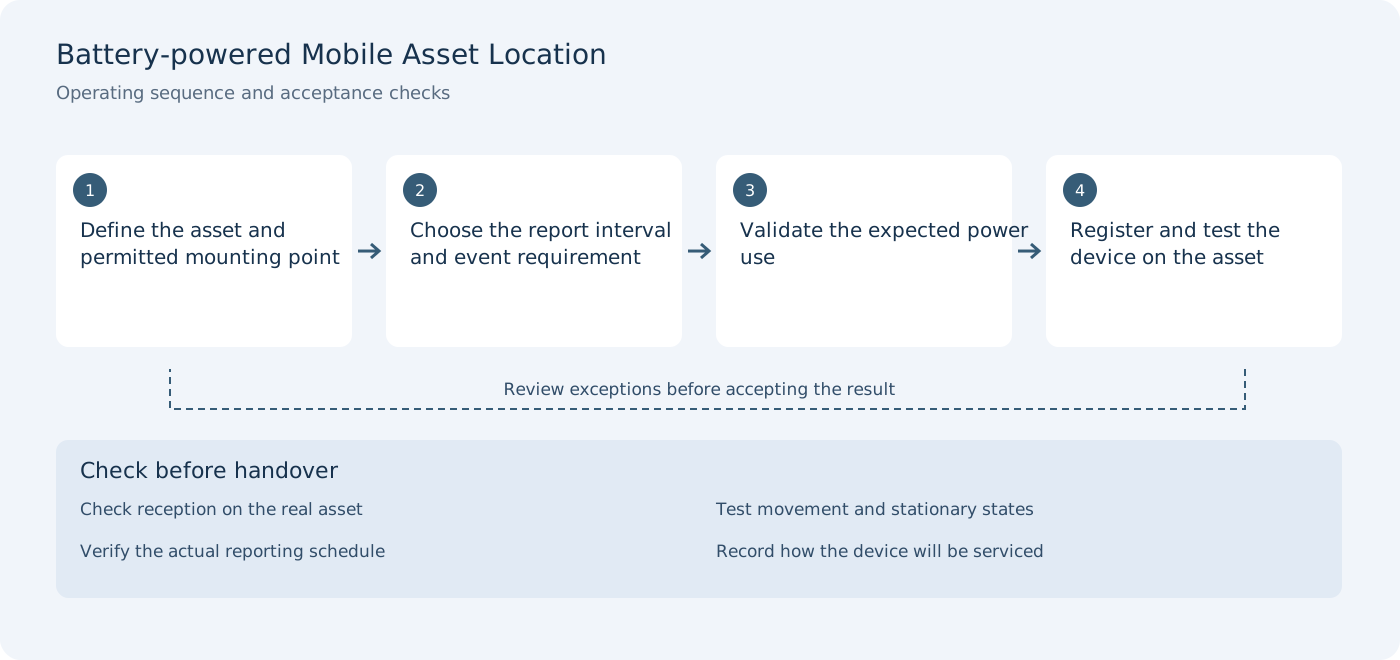
Define the asset and permitted mounting point
Acceptance check: check reception on the real asset.
Choose the report interval and event requirement
Acceptance check: test movement and stationary states.
Validate the expected power use
Acceptance check: verify the actual reporting schedule.
Register and test the device on the asset
Acceptance check: record how the device will be serviced.
Site conditions to verify
- Indoor or shielded parking
- Mounting orientation and removability
- Reporting frequency versus battery use
- Charging or replacement access
Use these conditions to define a representative pilot rather than testing only an empty or ideal installation. The final quotation should identify the selected hardware variants, installation responsibilities and any external-system work.
Commissioning and handover
Test stationary and moving periods under the agreed settings. Battery-life claims require the actual reporting pattern and operating conditions, so use the pilot to establish the service routine.
- Check reception on the real asset
- Test movement and stationary states
- Verify the actual reporting schedule
- Record how the device will be serviced
Keep the results with the selected product configuration and site layout. A photograph or demonstration from another environment does not establish the result for this installation. Related products below are candidates for selection; their specifications and application notes should be reviewed before the equipment list is fixed.
Discuss the deployment
Tell us the task, product types, site layout and installation conditions. We will help you verify the appropriate model and configuration for the project.