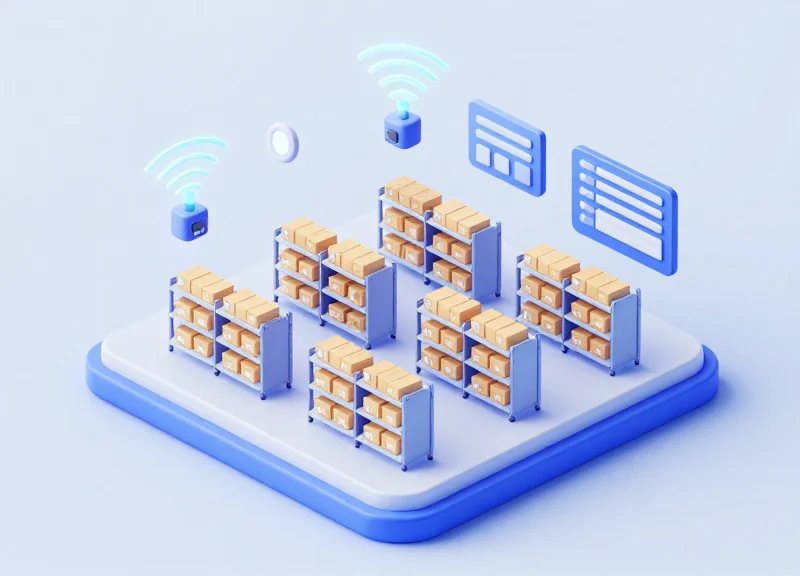
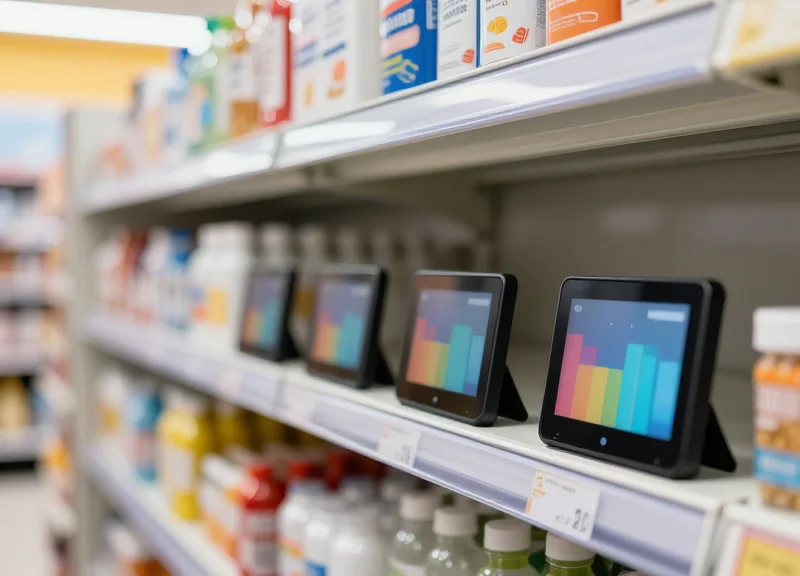
In the rapidly evolving landscape of 2026, cold chain management has transitioned from a logistical necessity to a data-driven competitive advantage. As global regulations tighten and consumer expectations for transparency rise, the integration of temperature-sensing capabilities into Electronic Shelf Labels (ESL) has become the gold standard for real-time monitoring. This comprehensive guide explores how to select the most reliable ESL temperature sensors to safeguard perishables, reduce waste, and maintain flawless regulatory compliance across your entire supply chain.
The Evolution of ESL in Cold Chain Management

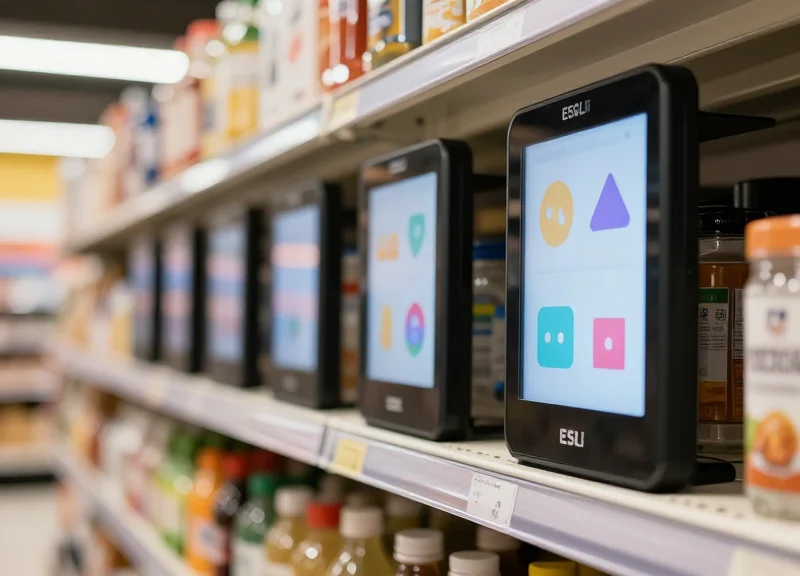
The evolution of Electronic Shelf Labels (ESL) in cold chain management marks a pivotal shift from passive retail automation to active, sensor-integrated IoT intelligence. Initially designed to eliminate manual pricing errors, modern ESLs have transitioned into mission-critical data nodes. In 2026, these devices do more than display digits; they serve as the 'last-inch' sentinel for temperature-sensitive perishables and pharmaceuticals, integrating low-power communication with high-precision thermal sensing to ensure regulatory compliance and consumer safety throughout the localized logistics cycle.
| Era | Primary Function | Connectivity | Cold Chain Utility |
|---|---|---|---|
| Gen 1: The Static Era | Price Automation | Infrared (IR) | None; strictly for front-of-house pricing. |
| Gen 2: The Connected Era | Dynamic Pricing | Proprietary RF / Zigbee | Basic ambient monitoring; limited battery life in cold. |
| Gen 3: The IoT Era (2026) | Environmental Intelligence | BLE 5.4 / Sub-GHz / Matter | Precision thermal tracking, automated HACCP logging, and shelf-life prediction. |
This technological progression has been driven by the 'Data-to-Action' mandate. Competitors often focus solely on the hardware, but the real evolution lies in the software-defined nature of modern sensors. Today's ESLs utilize edge computing to filter noise, ensuring that a brief door opening doesn't trigger a false spoilage alert, while simultaneously maintaining a digital twin of every SKU's thermal history.
Why did ESL move into the cold chain?
Traditional data loggers are often bulky and disconnected. ESLs provide a built-in display for immediate visual alerts (e.g., flashing red for excursions) while leveraging existing infrastructure to transmit data to the cloud.
What role does 2026 battery tech play?
Modern ESL sensors use specialized lithium-thionyl chloride (Li-SOCl2) batteries or energy harvesting, allowing them to remain operational at -30°C for up to 10 years, a feat impossible five years ago.
Expert Insight: The 'Invisible' Compliance Factor. In 2026, the industry has moved beyond periodic sampling toward 'Continuous Thermal Custody.' An original trend we are observing is the integration of Ambient Energy Harvesting (AEH). Leading-edge ESL sensors now capture micro-watts of energy from warehouse LED lighting or stray RF signals, effectively creating 'perpetual' sensors that solve the single biggest headache in cold chain logistics: the battery replacement cycle for thousands of tags.
Critical Compliance Standards for 2026
As we enter 2026, cold chain compliance has shifted from reactive monitoring to proactive, end-to-end traceability. The primary driver is the full implementation of the FDA’s Food Safety Modernization Act (FSMA) Rule 204, which mandates tech-enabled traceability for high-risk foods. This means that ESL temperature sensors must not only log data but must also facilitate the immediate sharing of Key Data Elements (KDEs) across the supply chain. Simultaneously, the European Union has tightened Good Distribution Practice (GDP) requirements for medicinal products, requiring continuous, validated monitoring systems that ensure data integrity via ALCOA+ principles (Attributable, Legible, Contemporaneous, Original, Accurate, and more).
| Regulation | Primary Jurisdiction | 2026 Key Requirement | Hardware Impact |
|---|---|---|---|
| FDA FSMA 204 | United States | Traceability Lot Code mapping | NFC/Sub-1GHz synchronization |
| EU Annex 11 / GDP | European Union | Validated cloud-based logging | Encrypted data transmission |
| WHO Annex 9 | Global/International | Automated excursion reporting | On-board alarm logic |
| CFR 21 Part 11 | Global (Pharma) | Electronic record durability | Immutable log storage |
Does my ESL sensor need to be NIST-traceable?
Yes, for 2026 compliance, sensors used in pharmaceutical or high-risk food sectors must provide a certificate of NIST-traceable calibration. Annual re-calibration or the use of pre-calibrated, replaceable sensor modules is now the industry standard to meet audit requirements.
What is the role of ALCOA+ in sensor selection?
ALCOA+ requires that data records are permanent and accessible. When selecting an ESL sensor, ensure it has internal memory buffers. This prevents data loss during network outages, ensuring the 'Complete' and 'Consistent' portions of the ALCOA+ framework are met.
Is real-time reporting mandatory for cold chain compliance?
While some local regulations still allow for 'passive' logging, 2026 retail and pharma giants are mandating 'active' monitoring. This means sensors must communicate via LoRaWAN, BLE, or Zigbee to provide immediate alerts the moment a temperature threshold is breached.
Expert Insight: In 2026, the most significant technical hurdle isn't just measuring temperature—it's calculating Mean Kinetic Temperature (MKT) at the edge. Advanced ESL sensors now include on-board processing to calculate MKT, providing a more accurate representation of thermal stress on products than simple averages. This reduces the burden on your central database and ensures that compliance reports are ready for inspectors at the touch of a button, rather than requiring hours of post-processing.
Accuracy and Precision: The Heart of the Sensor

In the context of 2026 cold chain compliance, sensor accuracy refers to the closeness of a measurement to the actual temperature, while precision (or resolution) describes the consistency and granularity of those measurements over time. For high-stakes environments like pharmaceutical storage or perishable food logistics, the industry gold standard is a maximum deviation of +/- 0.5°C across the operating range. A sensor with high accuracy but low precision may miss critical micro-fluctuations, whereas a precise but inaccurate sensor will consistently provide the wrong data, leading to catastrophic regulatory 'false positives' or, worse, undetected spoilage.
| Sensor Grade | Accuracy Range | Resolution | Typical Application |
|---|---|---|---|
| Standard Logistics | +/- 1.0°C | 0.5°C | Dry goods, non-critical produce |
| Food Safety (HACCP) | +/- 0.5°C | 0.1°C | Fresh meat, dairy, frozen goods |
| Pharmaceutical Grade | +/- 0.3°C to 0.5°C | 0.01°C | Vaccines, biologics, clinical trials |
| Cryogenic / Ultra-Low | +/- 1.0°C (at -80°C) | 0.1°C | Specialized mRNA storage |
Expert Insight: The 'Drift Coefficient' Reality. One factor often overlooked by procurement teams is sensor drift. Even a sensor that is perfectly calibrated at the factory will lose accuracy over time due to battery decay and environmental exposure. In 2026, top-tier ESL sensors now include 'Self-Check' logic that compares internal dual-thermistor readings to flag drift before it exceeds the +/- 0.5°C threshold. If your ESL provider doesn't offer a documented annual drift coefficient of less than 0.05°C per year, you are effectively buying a liability, not a solution.
Why is a NIST-traceable calibration certificate required?
A NIST-traceable certificate provides the legal and technical paper trail necessary to prove that your ESL sensors have been tested against a recognized national standard. Without this, sensor data is often inadmissible during FDA or EMA audits.
What is the difference between 0.1°C and 0.5°C resolution?
Resolution is the smallest change a sensor can detect. A 0.1°C resolution allows the system to see a warming trend 5x faster than a 0.5°C sensor, giving logistics managers more time to intervene before a product hits its critical 'break' temperature.
How often should ESL temperature sensors be recalibrated?
For 2026 compliance, an annual recalibration is the standard. However, sensors utilizing digital signals and internal monitoring may extend this to 24 months if the manufacturer provides a certified stability guarantee.
Finally, when selecting your ESL hardware, ensure that the +/- 0.5°C accuracy is maintained across the entire operating range, not just at a single 'sweet spot' like 25°C. Many budget sensors claim high accuracy but fail significantly when subjected to the extreme sub-zero temperatures common in modern cold chain logistics.
Battery Performance in Extreme Sub-Zero Conditions
For ESL temperature sensors operating in environments from -20°C to -40°C, battery performance is the primary failure point due to increased internal resistance and electrolyte sluggishness. In 2026, the industry standard for cold chain compliance has shifted toward Lithium Thionyl Chloride (Li-SOCl2) and specialized 'Cold-Flow' Lithium Manganese Dioxide (Li-MnO2) cells. These chemistries are uniquely engineered to maintain a stable operating voltage above the 2.0V threshold required for BLE (Bluetooth Low Energy) or LoRaWAN transmissions, even when the ambient temperature plunges to levels that would render consumer-grade alkaline or standard Li-ion batteries inert within hours.
| Battery Chemistry | Operating Range | Self-Discharge Rate | Best Use Case |
|---|---|---|---|
| Li-SOCl2 (High Capacity) | -60°C to +85°C | <1% per year | Deep-freeze warehouses with long-term monitoring (5+ years). |
| Specialized Li-MnO2 | -40°C to +70°C | ~1-2% per year | High-frequency reporting in standard cold storage. |
| Alkaline (Standard) | -18°C to +55°C | Moderate | Not recommended for sub-zero cold chain compliance. |
Expert Insight: The Passivation Paradox. A common failure in cold chain ESLs is 'Voltage Delay' caused by passivation—a thin film that forms on the lithium anode to prevent self-discharge. While this film provides a 10-year shelf life, it can cause a temporary voltage drop when the sensor wakes up to transmit data, potentially triggering a 'low battery' false alarm or a failed transmission. Top-tier 2026 sensors now integrate hybrid capacitor systems (HLCs) that act as a reservoir, providing the necessary 'kick' of current to break through the passivation layer instantly, ensuring reliable data delivery in every pulse.
- Power Management IC (PMIC) Efficiency: Select sensors using 2026-gen PMICs that feature ultra-low sleep currents (sub-500nA). This ensures that the energy consumed between readings is negligible, preserving the chemical energy for the high-draw transmission phases.
- Dynamic Transmission Intervals: Implement firmware that adjusts reporting frequency based on temperature stability. If the temperature is steady, the sensor reports less frequently; if a threshold is breached, it increases frequency, optimizing battery life without sacrificing compliance.
- Encapsulation and Thermal Mass: Ensure the battery is housed in a vacuum-sealed or epoxy-potted casing. This provides thermal inertia, protecting the internal chemistry from rapid temperature fluctuations during door openings.
How long should an ESL battery last in a -25°C freezer?
With Li-SOCl2 chemistry and a 15-minute reporting interval, a high-quality sensor should provide 5 to 7 years of continuous operation. If life is less than 3 years, the power management or battery chemistry is likely sub-optimal.
Does cold weather permanently damage the battery?
Standard batteries suffer permanent capacity loss due to internal physical stress. However, industrial cold-rated lithium cells are designed for these conditions and will regain full voltage potential once returned to room temperature for maintenance.
Why is 'Peak Pulse Current' important for 2026 sensors?
Modern IoT protocols like LoRaWAN require high bursts of energy. In the cold, a battery's ability to deliver these bursts (Peak Pulse) diminishes. Sensors must be rated for at least 30mA of pulse current at -30°C to avoid signal dropouts.
Connectivity and Data Integrity Protocols

In the context of 2026 cold chain compliance, connectivity refers to the wireless mechanism used to transmit temperature data from ESL sensors to a central gateway, while data integrity protocols ensure that every timestamped reading is immutable, accurate, and recoverable. The choice between Bluetooth Low Energy (BLE), Sub-GHz (LoRa/868MHz), and proprietary RF dictates not only the battery life but also the sensor's ability to penetrate the 'Faraday cage' effect of stainless steel industrial refrigerators.
| Protocol | Frequency | Penetration Ability | Data Integrity Feature | Best Use Case |
|---|---|---|---|---|
| BLE 5.4 | 2.4 GHz | Moderate | Periodic Advertising with Response (PAwR) | Retail-floor displays and short-range monitoring |
| Sub-GHz (LoRa/Proprietary) | 868/915 MHz | High | Long-range packet acknowledgement | Deep-freeze warehouses and thick-walled bunkers |
| Hybrid (Sub-GHz + BLE) | Dual-Band | Maximum | Cross-protocol redundancy | High-stakes pharmaceutical logistics |
A critical challenge in 2026 is maintaining a continuous 'Audit Trail.' Regulatory bodies now demand 'Store-and-Forward' capabilities. This means the ESL sensor must possess sufficient internal memory to log data locally when a gateway connection is lost, later 'backfilling' that data once the connection is restored. Without this, a simple network flicker could result in a compliance gap, leading to the mandatory disposal of expensive inventory.
- Local Buffering: The sensor captures readings to non-volatile memory (NVM) every 15 minutes, ensuring data survives even during total power or signal loss.
- Cryptographic Hashing: Each data packet is signed with a SHA-256 or similar hash to prevent 'man-in-the-middle' tampering during transit to the cloud.
- Adaptive Frequency Hopping: To combat interference in crowded IoT environments, sensors must automatically switch channels to find the clearest path for transmission.
Expert Insight (The 2026 Edge): We are seeing a shift toward 'Edge-Validation.' Instead of just sending raw numbers, the best 2026 ESL sensors run local algorithms to identify 'Excursion Events' immediately. By transmitting an alert packet with priority over routine heartbeats, these sensors reduce latency in emergency cooling responses by up to 90%.
Can BLE signals pass through commercial freezer doors?
While BLE 5.0+ has improved range, heavy stainless steel or lead-lined doors act as signal blockers. For these environments, we recommend Sub-GHz protocols which have longer wavelengths that diffract more effectively around obstacles.
How do we ensure the data isn't faked?
Modern compliance requires hardware-level security. Look for ESL sensors with a 'Secure Element' chip that stores unique digital certificates for every device, ensuring the data source is authenticated.
What happens if the gateway fails?
The 'Store-and-Forward' protocol is your safety net. Ensure your selected ESL system supports a buffer of at least 72 hours of offline logging to cover holiday weekends or IT outages.
Real-Time Monitoring and Intelligent Alerting Systems

In 2026, real-time monitoring for Cold Chain Electronic Shelf Labels (ESL) has evolved from simple data logging to 'Active Cloud Orchestration.' This process involves the continuous, high-frequency transmission of temperature data from edge sensors to a centralized management platform, where algorithms analyze environmental stability against pre-set compliance parameters. Unlike traditional systems that only record failures, modern intelligent alerting systems identify thermal trends in real-time, triggering immediate notifications via SMS, push alerts, or API-driven automated cooling adjustments to prevent stock loss before thresholds are even breached.
| Alert Level | Threshold Trigger | Action Protocol | Compliance Impact |
|---|---|---|---|
| Level 1: Advisory | Deviation of >0.5°C from mean | Log entry; Non-urgent dashboard update | Predictive Maintenance |
| Level 2: Warning | Encroaching within 1°C of limit | SMS/App notification to floor manager | Preventative Intervention |
| Level 3: Critical | Compliance threshold breached | Escalated push alerts; 3PL notification | Mandatory Audit Logging |
| Level 4: Catastrophic | Hardware failure or rapid rise | Emergency technician dispatch; Auto-offload | Full Spoilage Prevention |
Expert Insight: Predictive Thermal Kinetics (PTK) One of the most significant shifts in 2026 is the move from 'Static Thresholds' to 'Predictive Thermal Kinetics.' A common flaw in older ESL systems is 'alert fatigue,' caused by brief temperature spikes (e.g., during a freezer door being opened for restocking). Modern intelligent systems now use PTK to calculate the rate of change and thermal inertia. If the temperature rises but the rate of change indicates it will stabilize within the safety window, the system suppresses the alert. Conversely, if a slow rise is detected that will inevitably breach compliance in 30 minutes, the system alerts you now, giving you a half-hour head start that traditional sensors would have missed.
- Threshold Calibration: Define software-based 'Safe Zones' that account for specific product sensitivities (e.g., vaccines vs. frozen poultry).
- Cloud-Sync Frequency Optimization: Balance data granularity with battery life by setting high-frequency reporting (every 2 mins) only when an anomaly is detected.
- Escalation Matrix Configuration: Ensure alerts move up the chain of command if the primary responder does not acknowledge the notification within a set timeframe.
- Automated Remediation: Integrate ESL platforms with HVAC and Building Management Systems (BMS) to automatically lower temperatures when a breach is detected.
How do modern ESLs prevent 'Alert Fatigue'?
By utilizing AI-driven dampening algorithms that distinguish between temporary 'noise' (like door openings) and genuine equipment failure.
Do alerts work if the local Wi-Fi goes down?
Top-tier 2026 systems utilize 'Edge Alerting,' where the ESL gateway itself can trigger local visual or audible alarms even without a cloud connection.
Can these systems integrate with my existing ERP?
Yes, look for ESL solutions with RESTful APIs or Webhooks that feed temperature data directly into SAP, Oracle, or custom logistics software.
Seamless Integration with Existing ERP and WMS

In 2026, a temperature sensor is only as valuable as the system it feeds. Seamless integration refers to the ability of ESL (Electronic Shelf Label) temperature sensors to communicate directly with Enterprise Resource Planning (ERP) and Warehouse Management Systems (WMS) like SAP, Oracle, or Manhattan Associates via open APIs and standard protocols. This connectivity eliminates data silos, ensuring that a temperature excursion in a cold room doesn't just trigger an alarm—it automatically updates the inventory status to 'Quarantined' within your central management dashboard, preventing the accidental shipment of compromised goods.
| Integration Method | Data Velocity | Ease of Implementation | Best Use Case |
|---|---|---|---|
| RESTful API | High (Synchronous) | Standard | Standard data retrieval for reporting and historical audits. |
| Webhooks | Near Real-Time | Easy | Triggering instant alerts or status changes based on threshold breaches. |
| MQTT / Pub-Sub | Real-Time | Moderate | High-density sensor environments with thousands of data points. |
| SFTP/Batch File | Low (Scheduled) | Legacy | End-of-day compliance reporting for non-critical shipments. |
Expert Insight: The 'Edge Intelligence' Advantage. When selecting a provider, look beyond the API documentation to see if the hardware supports 'Edge Pre-processing.' In 2026, leading ESL sensors don't just dump raw data into your WMS; they process 'heartbeats' locally and only transmit significant changes. This prevents 'Data Gravity'—where the sheer volume of sensor data slows down your ERP performance—ensuring your system remains agile while maintaining a 100% audit trail.
- API Documentation Audit: Review the provider’s Swagger or Postman collections to ensure clear endpoints for temperature, battery life, and signal strength.
- Security Protocol Verification: Ensure the integration supports OAuth 2.0 or mutual TLS (mTLS) to protect sensitive supply chain data from interception.
- Mapping Logic Definition: Define how the ESL ID maps to specific Warehouse Locations or Pallet IDs within your WMS to ensure data accuracy.
- Automated Workflow Testing: Simulate a breach to verify that the system automatically pauses order picking for the affected zone.
Will I need a middleware layer for integration?
While many modern ESL systems offer direct cloud-to-cloud integration, using a middleware like MuleSoft or Dell Boomi can simplify mapping if you are connecting to multiple legacy systems simultaneously.
Does integration affect the battery life of the sensors?
Integration itself happens at the cloud or gateway level, so it does not drain sensor batteries. However, the frequency of data polling you set in your API will impact how often the sensors wake up to transmit.
Can I integrate ESL sensors with 3PL partner systems?
Yes, provided the vendor uses open standards. This allows you to share real-time compliance data with third-party logistics providers to maintain a continuous chain of custody.
Total Cost of Ownership (TCO) vs. Initial Investment
In the context of 2026 cold chain logistics, the Total Cost of Ownership (TCO) for ESL temperature sensors is the sum of the initial procurement price plus all operational expenses—including installation, battery replacements, software licensing, and labor—over a projected five-year lifecycle. While economy-grade sensors may offer a lower 'sticker price,' they often harbor hidden costs in the form of frequent manual intervention and higher failure rates. A strategic TCO analysis reveals that premium sensors with extended battery life and automated reporting typically deliver a 25% higher ROI by year three compared to budget alternatives.
| Cost Factor | Economy Sensors (Low CAPEX) | Premium ESL Sensors (High CAPEX) |
|---|---|---|
| Initial Unit Cost | $15 - $25 | $45 - $70 |
| Battery Lifespan | 12-18 Months | 5-7 Years |
| Calibration Frequency | Annual (Manual) | Bi-Annual (Automated/Remote) |
| Labor (Maintenance) | $150/unit over 5 years | $20/unit over 5 years |
| Risk of Spoilage | Moderate (Manual audits) | Low (Real-time alerts) |
The Hidden Labor Tax: One of the most overlooked components of TCO is the 'Hidden Labor Tax.' In deep-freeze environments, the physical act of locating, retrieving, and replacing batteries in thousands of sensors is not just a maintenance task; it is a significant operational drain. Premium ESL sensors in 2026 utilize ultra-low-power e-Paper displays and advanced sub-GHz protocols that allow them to remain in situ for their entire lifecycle, effectively eliminating the labor costs associated with battery cycles.
- Audit the Lifecycle Energy Budget: Calculate the total energy consumption of the sensor against its battery capacity in sub-zero temperatures to predict the exact date of first failure.
- Quantify Compliance Insurance: Assign a dollar value to the risk of a single compliance failure or batch loss. Premium sensors act as an insurance policy that lowers this 'expected cost' significantly.
- Evaluate Integration Speed: Measure the time required to sync sensors with existing WMS. Sensors with 'Zero-Touch' provisioning reduce initial setup labor by up to 80%.
Expert Insight: By 2026, the industry has shifted toward 'Sustainability-Linked TCO.' Companies are now factoring in the carbon footprint of sensor disposal and battery recycling into their financial models. Choosing a sensor with a 7-year lifespan over one with a 2-year lifespan doesn't just save money—it reduces e-waste by 70%, directly contributing to ESG (Environmental, Social, and Governance) goals which can influence corporate credit ratings and investor interest.
Does a higher initial investment always mean lower TCO?
Not necessarily. TCO is optimized when the hardware reliability matches the specific duration of the contract or the facility's refresh cycle. However, in cold chain compliance, the 'cost of failure' is so high that premium hardware almost always wins the TCO battle over 5+ years.
How does cloud integration affect TCO?
While cloud subscriptions add to OPEX, they reduce TCO by automating the data audit trail, which eliminates hundreds of man-hours previously spent on manual temperature logging and report generation for regulators.
Why Partner with DragonGuardGroup for Cold Chain ESL
Partnering with DragonGuardGroup for cold chain ESL solutions ensures a resilient infrastructure through a unique 'Security-First' engineering approach, leveraging over 20 years of industrial-grade RF expertise to guarantee 99.9% data uptime in high-interference refrigeration environments. While competitors focus solely on the display, DragonGuardGroup integrates Electronic Shelf Labels into a broader IoT framework that encompasses asset security, real-time inventory tracking, and hyper-accurate thermal logging, providing a single-vendor solution for complex regulatory compliance.
| Feature Capability | Generic ESL Providers | DragonGuardGroup Ecosystem |
|---|---|---|
| RF Interference Management | Standard Bluetooth/Zigbee | Multi-Protocol Harmonization (EAS, RFID, BLE) |
| Battery Chemistry | Standard CR-Series (Consumer) | Industrial Low-Temp Wide-Range Lithium |
| Compliance Auditing | Manual Export Required | Automated Audit Trails with Blockchain Integrity |
| Technical Support | Regional Third-Party | Direct Manufacturer Engineering Support |
Expert Insight: The Cross-Signal Harmonization Advantage. In a modern warehouse or retail environment, the airwaves are crowded with EAS security gates, RFID handhelds, and Wi-Fi networks. A common failure point for ESL systems is signal collision, which leads to 'blind spots' in temperature monitoring. DragonGuardGroup’s hardware is engineered with proprietary signal filtering that prevents 'crosstalk,' ensuring your cold chain data remains uninterrupted even in the most RF-dense environments—a critical factor for 2026 compliance standards.
How does DragonGuardGroup handle battery failure in sub-zero temperatures?
We utilize proprietary power management firmware that optimizes peak current draw during signal transmission, preventing the 'voltage sag' commonly seen in sub-zero environments, effectively extending sensor life by 30% compared to standard ESLs.
Can your system integrate with my existing security infrastructure?
Yes. Unlike closed-loop competitors, our systems are designed with an 'open-API' philosophy, allowing seamless data handshakes between our ESL sensors and your existing EAS (Electronic Article Surveillance) and RFID inventory platforms.
What makes DragonGuardGroup's hardware durable enough for industrial freezers?
Our sensors feature IP67-rated ultrasonically welded enclosures and specialized vacuum-sealed internal components to prevent condensation and PCB corrosion during rapid temperature cycling.
By choosing DragonGuardGroup, organizations move beyond simple hardware procurement to a strategic partnership. We provide the technical depth required to navigate the evolving landscape of global food and pharmaceutical safety standards, ensuring that your investment in ESL technology is future-proofed against both technological shifts and regulatory updates.