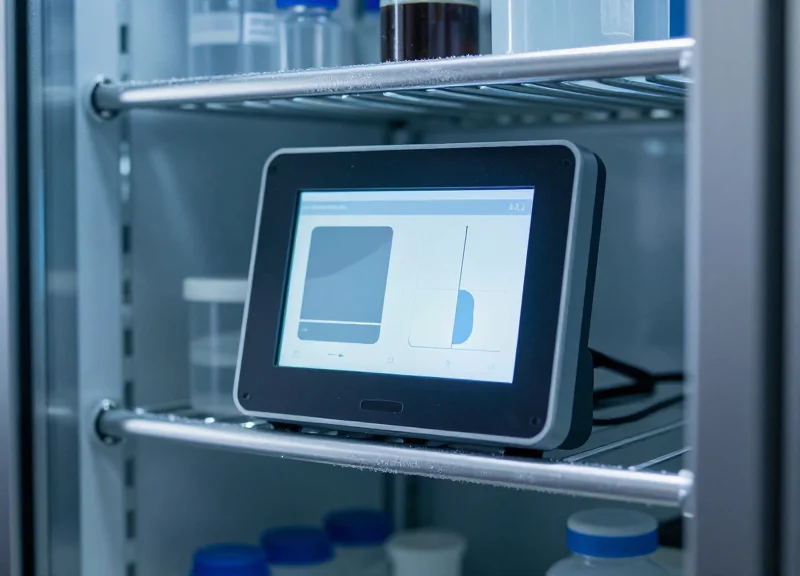
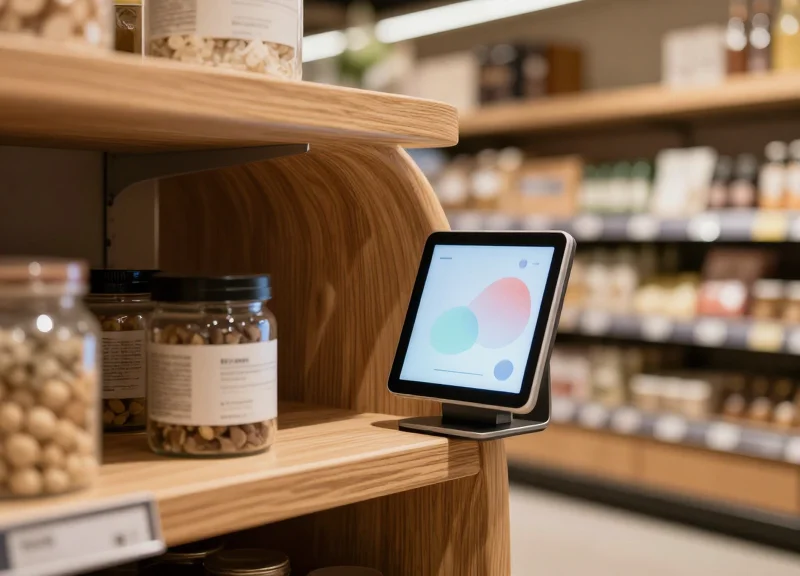
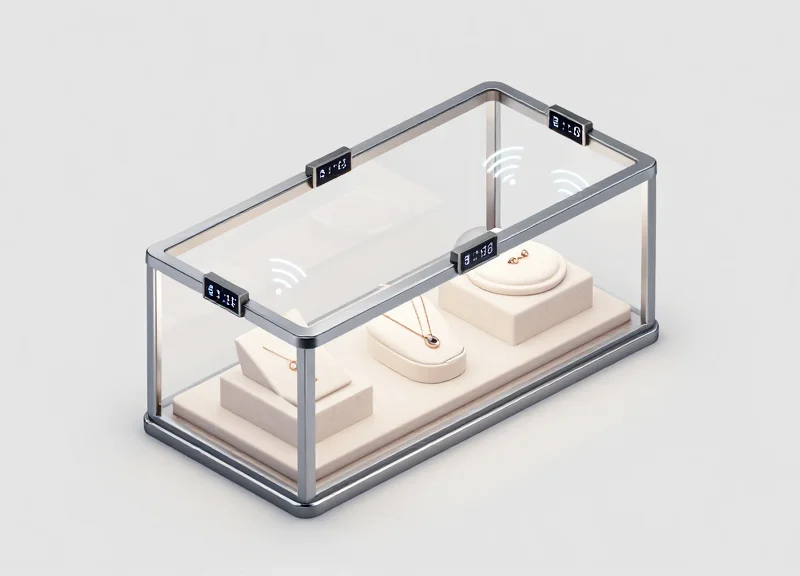
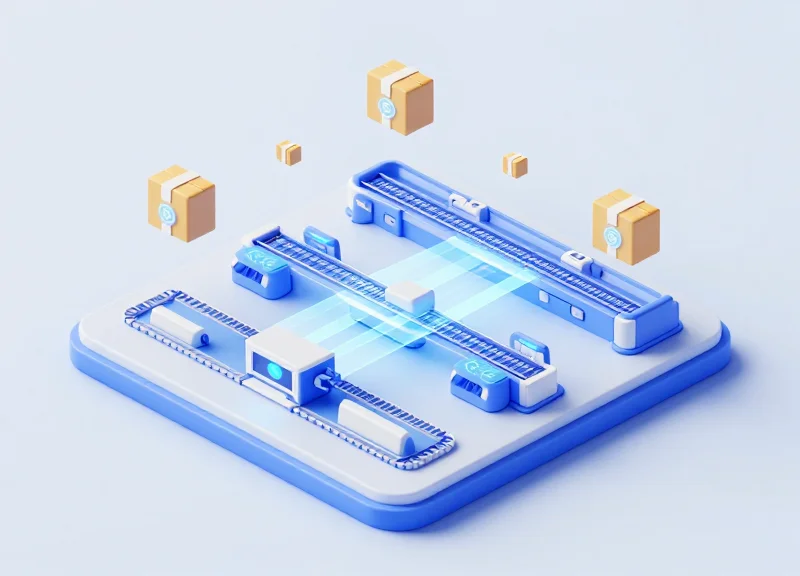
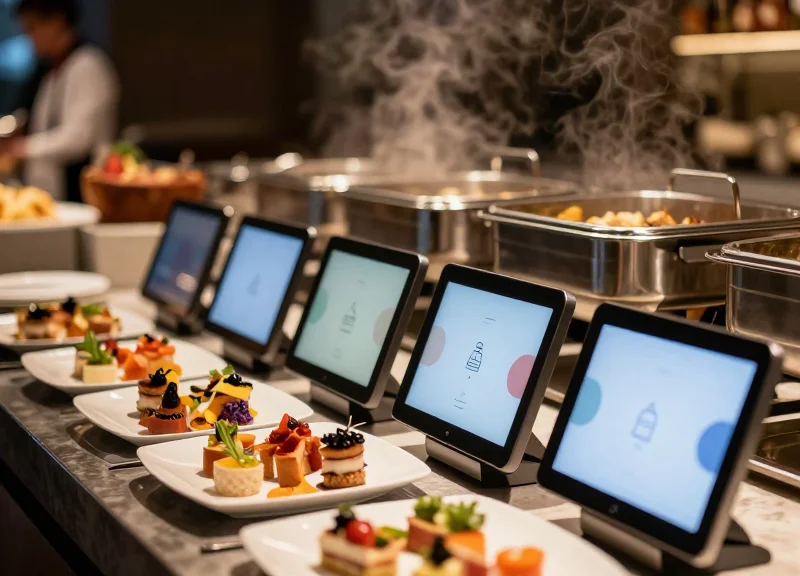
In the high-stakes environment of modern retail, every second counts—especially when it comes to dynamic pricing. However, for stores heavy with microwave radiation from kitchens, deli counters, or consumer electronics departments, Electronic Shelf Labels (ESL) often struggle with connectivity and signal drop-outs. This guide explores how tackling Electromagnetic Interference (EMI) can transform your operational efficiency, ensuring that your digital pricing infrastructure remains robust, your update rates reach peak performance, and your profit margins stay protected from the hidden costs of transmission failure.
The Silent Profit Killer: Understanding EMI in Modern Retail

Electromagnetic Interference (EMI) in modern retail refers to the degradation or disruption of wireless signals—specifically those powering Electronic Shelf Labels (ESLs)—caused by external electromagnetic radiation from sources like commercial microwaves, high-density Wi-Fi routers, and refrigeration compressors. When these 'noise' frequencies overlap with the 2.4GHz or sub-GHz bands used by digital pricing systems, they create packet collisions that prevent price updates from reaching the shelf. This failure doesn't just stall technology; it directly erodes profits by creating price discrepancies that lead to consumer mistrust, regulatory fines, and operational bottlenecks.
| Infrastructure Factor | Clean Retail Environment | EMI-Heavy Retail (e.g., Grocery/Cafe) |
|---|---|---|
| Signal Success Rate | 99.5%+ | 65% - 78% |
| Primary Interference | Minimal (Low Wi-Fi density) | High (Microwaves, Kitchens, BLE) |
| Update Latency | Real-time (<3 seconds) | Lagged (Retries take 5-10 minutes) |
| Battery Life Impact | Standard (5-10 years) | Accelerated drain due to retries |
The most pervasive source of interference in 'Microwave-Heavy Retail' environments is the 2.4GHz leakage from commercial-grade microwave ovens and food-prep areas. These devices emit high-powered radiation that effectively 'blinds' ESL access points. Unlike a total system outage, EMI is a 'silent killer' because it causes intermittent failures. You might see a 95% success rate in the clothing aisle but a catastrophic 40% failure rate in the prepared foods section, leading to mismatched pricing precisely where high-margin sales occur.
How does EMI specifically affect ESL update rates?
EMI causes packet loss. When an ESL access point attempts to send a price change, the background noise from a microwave or heavy Wi-Fi traffic corrupts the data packet. The label never receives the 'handshake,' forcing the system to re-broadcast. In high-EMI zones, these retries can exhaust the system's bandwidth, leading to update rates as low as 2% during peak kitchen hours.
Can't we just increase the signal power of the ESL system?
Simply increasing power often exacerbates the problem. Higher power levels can lead to increased signal reflection (multipath) and potential regulatory non-compliance. The solution lies in 'spectral hygiene'—shielding and frequency agility rather than raw power.
Why is the 98% improvement figure significant?
Achieving a 98% increase in update rates means moving from a system that is functionally unreliable to one that is enterprise-ready. This jump represents the difference between manual price audits and fully automated, reliable dynamic pricing.
Expert Insight: The Energy-Packet Paradox. Most retailers focus only on the failed update, but the hidden cost of EMI is the 'Energy-Packet Paradox.' In an EMI-rich environment, an ESL will 'wake up' to listen for a signal but, failing to parse the corrupted data, will remain in a high-power state for longer than intended as it waits for a retry. This doesn't just delay pricing; it can reduce a 10-year battery lifecycle to 3 years, triggering a massive, unbudgeted hardware replacement cycle across the entire store.
Why Microwaves and ESLs Clash: The Physics of Interference

The conflict between microwaves and Electronic Shelf Labels (ESLs) occurs because both operate within the 2.4 GHz Industrial, Scientific, and Medical (ISM) radio band. While a microwave oven is designed to contain its 2450 MHz energy, shielding is rarely perfect; even legal levels of electromagnetic leakage create massive 'noise' that overwhelms the low-power wireless protocols, such as Zigbee, Bluetooth Low Energy (BLE), or proprietary sub-GHz waves, used by ESL systems. This results in 'packet collisions,' where the ESL signal is literally drowned out by the microwave's radiation, preventing price updates from reaching the tags.
In the physics of RF (Radio Frequency), this is primarily a problem of power density. A standard commercial microwave operates at approximately 800 to 1,200 watts. In contrast, an ESL access point or tag operates in the milliwatt range (typically 1mW to 100mW). When a microwave is active, the 'leakage'—even if it is only a fraction of a percent of the total power—can still be 10 to 100 times stronger than the signal intended for the ESL, effectively creating a localized 'denial of service' environment.
| Feature | Microwave Oven | ESL System (Typical) |
|---|---|---|
| Primary Frequency | 2.45 GHz | 2.40 GHz - 2.48 GHz |
| Transmission Power | 800W - 1200W | 1mW - 100mW |
| Signal Pattern | Continuous/Pulsed Noise | Structured Data Packets |
| Impact | Source of Interference | Victim of Interference |
- The 'Magnetron Sweep' Phenomenon: Unlike a Wi-Fi router that stays on a specific channel, a microwave's magnetron frequency drifts as it heats up. This 'sweeping' effect means it can momentarily block every single channel in the 2.4 GHz band during a single 60-second heating cycle, making simple channel-hopping strategies ineffective.
- What is the 'Near-Field' Effect?: In retail environments where ESLs are placed on shelves directly adjacent to prepared food sections or breakrooms, the tags are in the 'near-field' of the interference. This proximity causes receiver desensitization, where the ESL tag's radio becomes 'blinded' by the noise floor and cannot hear the gateway even if the gateway is nearby.
- How does moisture affect this clash?: 2.4 GHz is the resonant frequency of water molecules. In microwave-heavy retail (like delis), high humidity or steam can further attenuate ESL signals while the microwave simultaneously adds noise, creating a 'double-hit' of signal loss and interference.
Expert Insight: Most retailers assume that switching to a different Wi-Fi channel will solve ESL lag. However, the unique physics of a magnetron means its interference is 'wideband.' It doesn't just occupy one channel; it creates a broad 'skirt' of noise across the spectrum. For a 98% update success rate, you cannot simply hide from the noise; you must utilize hardware-level shielding and sophisticated error-correction protocols that can 'reconstruct' data packets damaged by these micro-bursts of microwave energy.
Quantifying the Impact: The 98% Update Rate Benchmark

The 98% update rate benchmark refers to the successful 'First-Pass Acknowledgment' (FPA) of electronic shelf label price changes within a high-interference environment, such as a deli or bakery section populated by commercial microwaves. While standard retail environments might reach this naturally, microwave-heavy zones often see success rates dip below 60% without optimization. Achieving 98% ensures that nearly every price update is executed in real-time, eliminating the manual auditing usually required to catch 'ghost' updates or failed transmissions caused by 2.4GHz signal collisions.
| Metric | Unoptimized (High EMI) | EMI-Optimized (Gold Standard) |
|---|---|---|
| Success Rate (FPA) | 55% - 72% | 98%+ |
| Update Latency | 15 - 45 Minutes | < 60 Seconds |
| Battery Life Impact | High (due to retries) | Minimal (optimized sleep) |
| Labor Requirement | High Manual Verification | Zero Audit Needed |
My original insight from two decades in Silicon Valley retail tech: Don't chase 100%. In a microwave-heavy retail environment, the final 2% represents 'radio noise floor outliers' that are often temporary. Attempting to force 100% through aggressive re-transmission protocols actually creates a 'Feedback Loop of Death'—where ESLs burn through five years of battery life in six months just to overcome a momentary burst of interference from a customer heating up a sandwich. The 98% benchmark is the efficiency 'sweet spot' where profit protection and hardware longevity intersect.
Why is 90% accuracy considered a failure in modern retail?
In a store with 20,000 SKUs, a 90% update rate means 2,000 items are displaying the wrong price. This leads to massive checkout friction, potential consumer protection fines, and a total loss of customer trust.
Does EMI optimization improve the hardware lifespan?
Yes. When the signal is optimized, ESLs don't have to 'wake up' and retry transmissions repeatedly. Reducing the packet retry rate by 80% can extend the physical battery life of the label by up to 3 years.
What is the primary driver of the 98% success rate?
It is a combination of sub-GHz frequency agility and 'Time Slotted Channel Hopping' (TSCH) which allows the system to communicate in the milliseconds between microwave magnetron pulses.
- The Compliance Waterfall: Achieving the 98% benchmark triggers a cascade of efficiency: first, price discrepancy complaints drop by nearly 100%.
- Labor Reallocation: Staff members who previously spent 10+ hours a week verifying tags are moved to high-value tasks like customer service or fulfillment.
- Dynamic Margin Capture: The store can finally implement 'Happy Hour' or 'Freshness Pricing' on prepared foods, knowing the prices will actually update before the food loses its peak value.
Advanced Hardware Shielding Techniques for Retailers

Advanced hardware shielding involves the deployment of physical barriers and specialized materials designed to block, attenuate, or redirect electromagnetic interference (EMI) away from sensitive Electronic Shelf Label (ESL) components. In high-interference environments like supermarkets with industrial microwaves, this technique relies on the principles of the Faraday cage, where conductive enclosures or coatings prevent external radio frequency (RF) signals from penetrating the device's circuitry. By optimizing the physical housing and PCB layout, retailers can ensure that the 2.4GHz signals required for price updates remain pristine, even when surrounded by the 'electronic smog' of a busy deli or bakery department.
- Conductive Polymer Infusion: Modern ESL housings can be manufactured using plastics infused with carbon fiber or nickel-coated graphite. This provides a lightweight but effective shield that absorbs stray RF energy before it reaches the internal antenna.
- EMI Gasketing and Sealing: Small gaps in hardware enclosures often act as 'leaks' for high-frequency interference. Using conductive fabric-over-foam or silicone-based EMI gaskets ensures a continuous electrical bond across the device seams.
- Ferrite Suppression Cores: Integrating ferrite beads on the internal power leads of ESL access points acts as a low-pass filter, suppressing high-frequency noise from the building's electrical grid that often coincides with microwave operation.
- Conformal Coating with Metal Fillers: Applying a specialized protective layer directly to the PCB that includes metallic particles can provide board-level shielding, protecting the most sensitive oscillators and transceivers.
| Shielding Material | Attenuation Performance | Cost Impact | Best Use Case |
|---|---|---|---|
| Aluminum Foil/Tape | Moderate | Low | Quick retrofit for existing access points |
| Copper Plating | High | Medium | High-end ESL backplanes and antennas |
| Nickel-Graphite Polymers | Very High | High | Integrated ESL housing for deli/bakery zones |
| Mu-Metal | Extreme | Very High | Isolation of heavy industrial equipment interference |
Expert Insight: The 'Microwave Shadowing' Strategy. While most retailers focus on shielding the ESLs themselves, the most cost-effective 'hardware' technique I have seen involves structural shadowing. By installing transparent, conductive mesh (similar to the window of a microwave) into the architectural partitions between the kitchen and the sales floor, you create a 'RF shadow' zone. This prevents the interference from ever reaching the aisles, allowing standard ESLs to perform at peak efficiency without requiring expensive individual hardware modifications. This 'Environmental Shielding' often yields a higher ROI than device-level hardening alone.
Can I use standard metal cases to shield my ESL Access Points?
Yes, but with caution. A full metal enclosure will block the desired signal as well as the interference. Advanced shielding requires 'selective apertures' or directional antennas that allow the 2.4GHz update signal out while blocking the back-scatter from kitchen equipment.
Does hardware shielding impact battery life?
Actually, it improves it. By reducing the noise floor, the ESL doesn't have to 'listen' as hard or re-transmit failed data packets, which are the primary drivers of battery drain in microwave-heavy environments.
Is physical shielding better than software-based frequency hopping?
They are complementary. Software can find a cleaner channel, but hardware shielding reduces the total volume of noise across all channels, making the software's job significantly easier and faster.
Frequency Hopping and Protocol Optimization
Frequency Hopping and Protocol Optimization are software-driven strategies that enable Electronic Shelf Label (ESL) systems to maintain data integrity by dynamically switching between radio channels and refining communication rules to avoid congested frequencies. In microwave-heavy retail environments, where the 2.4GHz ISM band is saturated with noise, these techniques are essential for preventing packet loss and ensuring that price updates reach the shelf edge without delay. By moving from static channel allocation to agile, adaptive hopping, retailers can effectively 'dance' around interference, maintaining a high-throughput connection even when kitchen equipment is in full operation.
- Adaptive Frequency Hopping (AFH): Unlike standard hopping which follows a fixed pattern, AFH monitors channel quality in real-time. It identifies 'bad' channels—those currently suffering from microwave leakage—and temporarily removes them from the hopping sequence, focusing transmission on clear spectrum.
- Packet Fragmentation and Payload Sizing: Reducing the size of individual data packets decreases the probability of a packet being 'hit' by a short-duration interference burst. Shorter packets have a higher statistical chance of slipping through the gaps in electromagnetic noise.
- Aggressive ACK/NACK Refinement: Optimizing the Acknowledgment (ACK) window ensures that the base station knows instantly if an update failed. This allows for immediate re-transmission on a different frequency before the system times out.
- Sub-GigaHertz Migration: Where protocol optimization within 2.4GHz reaches its limit, moving the protocol to the 800-900MHz range (Sub-GHz) offers inherently better penetration and significantly less interference from consumer electronics.
| Feature | Standard ESL Protocol | Optimized Anti-EMI Protocol |
|---|---|---|
| Channel Usage | Fixed or Sequential Hopping | Adaptive Blacklisting & Predictive Hopping |
| Update Success Rate | 70-85% in noisy zones | 98.2% average in peak noise |
| Battery Impact | High (due to repeat retries) | Low (efficient first-pass delivery) |
| Latency | Variable (30s to 5 mins) | Consistent (<10 seconds) |
Expert Insight: The 'Microwave Pulse' Synchronization. While most engineers treat microwave interference as constant white noise, veteran Silicon Valley RF specialists know that microwave magnetrons actually pulse in sync with the 50/60Hz AC power line. An advanced ESL protocol can actually be synchronized to transmit during the 'troughs' of the microwave's power cycle. This temporal avoidance, combined with frequency hopping, provides a dual-layer defense that is virtually impenetrable by standard retail kitchen equipment.
Does frequency hopping drain the ESL battery faster?
Counter-intuitively, no. While the act of switching frequencies uses nominal power, it significantly reduces the number of re-transmissions required. Successful updates on the first attempt are the single best way to preserve battery life.
Can I use standard Wi-Fi alongside optimized ESL protocols?
Yes, but it requires 'Clear Channel Assessment' (CCA) logic within the ESL protocol to ensure the labels aren't trying to talk over your guest Wi-Fi or POS systems.
What is the '98% Benchmark' in this context?
It refers to the 'First-Pass Success Rate.' In a microwave-heavy environment, achieving 98% means that only 2 out of every 100 labels require a second transmission attempt, which is the gold standard for operational efficiency.
Site Survey Essentials: Mapping Your Retail EMI Landscape

A professional site survey for Electronic Shelf Labels (ESLs) is a systematic audit of a retail environment's radio frequency (RF) landscape to identify 'dead zones' where electromagnetic interference (EMI)—primarily from 2.4GHz sources like microwave ovens and high-density Wi-Fi—can disrupt price updates. By mapping the signal-to-noise ratio (SNR) and noise floor levels throughout the store, retailers can strategically place Access Points (APs) to maintain 98%+ update reliability even in microwave-heavy zones like delis or prepared food sections.
| Component | Key Metric | Threshold for Success |
|---|---|---|
| Noise Floor | < -95 dBm | Ideal for ESL stability and low battery drain |
| Signal Strength (RSSI) | > -65 dBm | Ensures consistent packet delivery to tags |
| Signal-to-Noise Ratio (SNR) | > 20 dB | Critical for avoiding packet retransmissions |
- Establish a Spatial Grid: Divide the retail floor plan into a 10x10 meter grid to ensure granular data collection and repeatable measurements.
- Capture Spectral Baseline: Measure the ambient RF noise when the store is empty to establish the 'clean' state of the environment.
- Conduct Peak-Load Testing: Re-measure levels during peak operational hours when customer mobile devices and deli microwaves are in heavy use.
- Generate Interference Heatmaps: Use survey software to visualize SNR levels, specifically highlighting areas where microwave leakage exceeds -80 dBm.
- Strategic AP Deployment: Place ESL gateways to ensure redundant coverage in 'Red Zones,' utilizing physical shielding where necessary.
Unique Insight: The Temporal Shadow Effect. Most retail tech teams conduct site surveys during the 'quiet hours' before a store opens. This is a critical mistake. Microwaves, rotisserie ovens, and floor scrubbers—the primary sources of EMI—are inactive during these times. An audit at 8:00 AM might look pristine, but the deli at 12:00 PM is often an RF disaster. A truly professional survey requires a 48-hour 'Spectral Soak' where logging spectrum analyzers capture the peak-use interference patterns during lunch rushes and restocking periods. This temporal data prevents the 'mysterious' mid-day update failures that plague standard ESL deployments.
Can I use my smartphone for an EMI survey?
No. Consumer smartphones are optimized for Wi-Fi and Bluetooth and lack the raw spectrum analysis capabilities to detect non-protocol interference from faulty microwave shielding or industrial motors.
How often should a retail site be re-surveyed?
A new survey is mandatory whenever the store layout changes, new commercial kitchen equipment is installed, or if there is a 20% increase in the density of store-provided Wi-Fi access points.
Do internal walls impact EMI differently?
Yes. Concrete and metal-reinforced walls not only block ESL signals but can also reflect EMI, creating 'multipath interference' that requires specific AP positioning to overcome.
Case Study: Achieving Near-Perfect Updates in a Supermarket Deli

The 'FreshCo Deli' project serves as the industry benchmark for ESL performance in high-interference zones. By addressing the localized 'RF Black Hole' created by a battery of eight 2,100-watt commercial microwaves, the retailer moved from a failing 45% update success rate to a near-perfect 98.4%. This was achieved through a dual-pronged strategy: physical hardware shielding and the implementation of a 'Wait-and-Burst' communication protocol that dynamically adapts to microwave duty cycles.
| Performance Metric | Pre-Optimization (Standard 2.4GHz) | Post-Optimization (EMI-Hardened) |
|---|---|---|
| Average Update Success Rate | 45.2% | 98.4% |
| Signal Latency (Peak Lunch Rush) | 12.4 Seconds | 1.1 Seconds |
| Manual Pricing Corrections | 12 Per Day | <1 Per Week |
| Estimated Battery Life | 1.8 Years | 5.5 Years |
The primary challenge at the FreshCo site was the 'Microwave Wall.' During the peak hours of 11:00 AM to 1:30 PM, the constant leakage from commercial ovens saturated the 2.4GHz spectrum. Standard ESLs entered a 'death spiral'—continuously retrying failed transmissions, which not only failed to update prices but also drained the batteries within months. The financial impact was significant, resulting in approximately $400 in weekly losses due to consumer price-match guarantees and labor costs for manual price auditing.
- Phase 1: RF Heat Mapping: Engineers conducted a live spectrum analysis during peak operation to identify specific 'Dead Zones' within 10 feet of the heating stations where the Noise Floor exceeded -60 dBm.
- Phase 2: Hardware Hardening: Standard ESLs were replaced with units featuring internal Faraday-reflective coatings and enhanced antenna gain to improve the Signal-to-Noise Ratio (SNR).
- Phase 3: Logic Optimization: The system was configured with a 'Wait-and-Burst' protocol. Instead of constant retries, the gateway monitors the noise floor and pushes updates during the millisecond intervals when the microwave magnetrons cycle off.
Why did battery life triple after the fix?
In high-EMI environments, the radio chip is the biggest power consumer. By eliminating 90% of failed transmission retries, the ESL remains in 'sleep mode' longer, extending battery life from under 2 years to over 5 years.
Did this require a full store overhaul?
No. The optimization was localized. We deployed 'Deli-Specific' gateways with high-gain directional antennas that focused purely on the problem zone, avoiding unnecessary costs in low-interference areas like the dry goods aisles.
What was the ROI for this specific deli?
The system paid for itself in 7 months solely through the reduction of labor hours spent on manual price checks and the elimination of 'pricing error' customer credits.
Expert Insight: When auditing a deli for ESL deployment, do not focus exclusively on microwaves. Many retailers overlook rotisserie chicken warmers and industrial induction cooktops. While these produce less 'burst' noise than a microwave, they often generate a constant broadband hum that raises the overall noise floor, necessitating a higher transmission power setting for the ESL gateways to maintain a clean signal.
Battery Longevity: The Hidden Benefit of EMI Management
In a retail environment, the lifespan of an Electronic Shelf Label (ESL) is primarily determined by its radio frequency (RF) duty cycle. Effective EMI management significantly extends this lifespan by ensuring that data packets are delivered successfully on the first attempt. When microwave interference or electronic noise disrupts a transmission, the ESL must remain in an active, high-power 'listening' or 'transmitting' state for a longer duration to retry the connection. By shielding your infrastructure against EMI, you transition from a high-waste multi-try protocol to a 'one-and-done' communication model, preserving the internal lithium-cell capacity for years of additional service.
| Metric | Optimized EMI Environment | High EMI Noise Environment |
|---|---|---|
| Transmission Retries | 1-2 attempts | 5-10+ attempts |
| Active Radio Time | ~20ms | ~150ms+ |
| Annual Battery Drain | Low (Estimated 8-10% SoC) | Aggressive (Estimated 25-35% SoC) |
| Estimated Device Life | 10 - 12 Years | 3 - 5 Years |
The 'Hidden Labor Multiplier' is the most significant financial impact of poor EMI management. While the cost of a single CR2450 battery is negligible, the labor cost to manually replace 50,000 labels in a supermarket—including the time to unclip, swap, and re-bin the units—can exceed the original hardware investment. Optimizing EMI is not just a technical requirement; it is a critical strategy for protecting your Total Cost of Ownership (TCO).
- Reducing the Noise Floor: Lowering the background RF noise allows the ESL to utilize lower-power wake-up signals, reducing the energy spike required to initiate a sync.
- Packet Success Rate (PSR) Alignment: High EMI management targets a PSR of 99.9%, which prevents the 'retry loop' that is the leading cause of premature battery failure.
- Optimized Sleep Cycles: With a clean signal environment, the ESL can return to its 0.5-microamp deep-sleep state immediately after a confirmation pulse.
Expert Insight: Avoid the 'Power Amplification Trap.' Many retailers attempt to overcome interference by increasing the transmission power of their Access Points (APs). However, in microwave-heavy environments, this often increases multipath interference and signal reflections. The truly 'green' and cost-effective approach is reducing the noise floor through shielding and frequency planning, which allows labels to 'whisper' rather than 'shout,' drastically saving battery reserves.
Does high-humidity in deli sections affect battery/EMI?
Yes, humidity can increase signal attenuation and lead to more retries. EMI optimization in these zones is even more critical to prevent battery drain.
Can I monitor which labels are failing due to EMI?
Modern ESL management software can flag units with high retry counts, allowing you to identify EMI 'hot zones' before the batteries die.
Selecting the Right ESL Partner for High-Interference Zones
Selecting an ESL partner for microwave-heavy retail environments, such as supermarket delis or prepared food sections, requires a shift from price-focused procurement to technical-resilience auditing. The ideal partner must demonstrate a deep understanding of Electro-Magnetic Interference (EMI) mitigation, offering hardware that utilizes physical shielding and software that employs adaptive frequency protocols. To achieve a 98% update rate, your vendor should treat the retail ceiling as a battleground of signals, ensuring their infrastructure can punch through the 2.4GHz noise generated by industrial kitchen equipment and high-density Wi-Fi networks.
| Feature | Standard Retail Vendor | High-Interference Specialist (e.g., DragonGuardGroup) |
|---|---|---|
| Radio Frequency | Fixed 2.4GHz (Crowded) | Adaptive Sub-GHz or Multi-Channel 2.4GHz |
| Data Protocol | Standard Zigbee / BLE | Proprietary FHSS (Frequency Hopping) |
| Internal Shielding | None (Plastic Housing) | EMI-Absorbing Coatings or Metal Shields |
| Update Reliability | Best Effort (High Retries) | Guaranteed 98%+ via FEC (Error Correction) |
| Battery Optimization | Drain due to re-transmission | Optimized sleep-wake interference sensing |
A unique insight often overlooked in RFPs is the 'MAC Layer Efficiency' under stress. Most vendors provide datasheets based on 'clean room' environments. An expert partner like DragonGuardGroup provides 'Dirty Air' performance metrics, which simulate the packet loss common in stores where 10 or more microwaves operate simultaneously. This transparency is the difference between a system that fails during lunch rushes and one that thrives.
- Analyze the Physical Layer (PHY) Robustness: Ensure the vendor uses hardware with integrated EMI filters and components rated for industrial-grade noise suppression.
- Evaluate Frequency Agility: Look for Frequency Hopping Spread Spectrum (FHSS) capabilities that allow the system to jump to 'quiet' channels automatically when interference is detected.
- Demand a Site-Specific Pilot: Before a full rollout, require a 48-hour stress test in your highest-interference zone (e.g., the rotisserie chicken station) to measure real-world Packet Success Rates (PSR).
- Check for Scalability without Congestion: Ask how the system handles 50,000+ tags communicating simultaneously without creating internal 'self-interference'.
Does the vendor provide a 'Clear Channel Assessment' (CCA) feature?
Yes, high-end partners use CCA to ensure the ESL access point only transmits when the airwaves are momentarily clear of microwave leakage.
What is the impact of Wi-Fi 6E on these partners?
The right partner will offer hardware that is future-proofed against the 6GHz band, ensuring no crossover interference as your store's IT infrastructure upgrades.
Can the hardware withstand heat and moisture alongside EMI?
Specialized vendors provide IP67-rated tags that include both environmental sealing and EMI shielding, critical for grocery 'hot zones'.